




Stainless Steel Expansion PEX Ball Valves
 --%3E %3Csvg version='1.1' id='Fill' xmlns='http://www.w3.org/2000/svg' xmlns:xlink='http://www.w3.org/1999/xlink' x='0px' y='0px' viewBox='0 0 100 100' enable-background='new 0 0 100 100' xml:space='preserve'%3E %3Cpath fill='%23F15C02' d='M79.44,0.95H20.56C9.78,0.95,0.95,9.78,0.95,20.56v58.87c0,10.79,8.82,19.61,19.61,19.61h58.87 c10.79,0,19.61-8.83,19.61-19.61V20.56C99.05,9.78,90.22,0.95,79.44,0.95z M65.38,58.24l9.38,29.58L49.69,69.78L24.5,87.82 l9.34-29.6L8.8,39.6l30.73-0.17c0,0,6.98-19.61,10-28.93c0.54,1.36,9.88,29.1,9.88,29.1H91.2L65.38,58.24z'/%3E %3C/svg%3E)

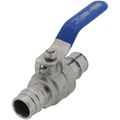
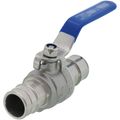

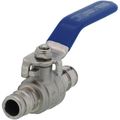
Stainless steel expansion PEX ball valves are shutoff valves built with a stainless steel body and an expansion-style PEX connection, letting a plumber add an isolation valve directly into a PEX plumbing run without switching to a different pipe material or fitting method. The expansion connection works by stretching a PEX ring and pipe end over the valve's barbed connection, which then contracts back down to form a seal as the PEX memory returns to its original size. Stainless steel construction gives the valve better corrosion resistance than brass in certain water conditions, which is why it's specified in some installations over a standard brass PEX ball valve. Choosing the correct expansion system size for the PEX tubing already in use keeps the connection method consistent throughout a plumbing run.
Subcategories
- Full Port Ball Valves: These have a bore diameter matching the pipe's inside diameter, so they create minimal flow restriction when fully open. Plumbers use these where flow rate through the isolation point matters, such as a main shutoff. They're typically the standard choice unless space is a limiting factor.
- Standard Port Ball Valves: With a smaller bore than the connected pipe, these valves are more compact but restrict flow slightly more than a full port design. They suit applications where a tighter installation space matters more than maximum flow. Branch line shutoffs are a common use.
- Valves with Drain Ports: These include a small secondary port for draining the line downstream of the valve, useful for winterizing or servicing a section of plumbing without draining the entire system. This feature adds convenience for seasonal properties and systems that need periodic isolated draining.
Buying Guide
Confirm the expansion connection system matches the PEX tubing already installed, since expansion fittings are generally not interchangeable across different expansion-tool systems. Using a mismatched ring or expansion head can result in a seal that looks correct initially but fails under pressure.
Stainless steel versus brass construction is a real decision, not just a preference. Stainless steel expansion PEX ball valves are worth the added cost in water conditions where corrosion resistance matters more, while brass remains a perfectly serviceable and more common choice for typical residential and light commercial plumbing.
Port size affects both flow and installation space. Full port valves minimize flow restriction and suit main shutoffs, while standard port valves fit into tighter spaces at the cost of a small amount of flow capacity.
A drain port is worth specifying on any valve isolating a section of plumbing that may need seasonal draining, such as an outdoor hose bib line or a vacation property's water system.
Pressure and temperature ratings should be checked against the system's operating conditions before ordering, particularly on hot water or hydronic heating lines where ratings can vary between valve models.
Frequently Asked Questions
Can I mix expansion PEX fittings from different manufacturers on the same line?
This isn't recommended. Expansion ring and tool systems are generally designed to work together as a matched set, and mixing components across systems risks a seal that doesn't hold under pressure.
Is a stainless steel PEX ball valve necessary, or is brass good enough?
Brass is a fully serviceable choice for most residential and light commercial plumbing. Stainless steel becomes worth the added cost mainly in water conditions where corrosion resistance is a specific concern.
What's the difference between full port and standard port ball valves?
A full port valve has a bore matching the pipe's inside diameter, minimizing flow restriction. A standard port valve has a smaller bore, which is more compact but slightly restricts flow when the valve is open.
Why would I choose a valve with a drain port?
A drain port lets you empty the line downstream of the valve without draining the whole plumbing system, which is useful for winterizing a seasonal property or servicing an isolated section of pipe.
How does the expansion connection method work on a PEX ball valve?
An expansion tool stretches a PEX ring and the pipe end over the valve's connection point, and the PEX tubing's memory then contracts it back down to form a tight seal as it returns toward its original size.
