




Filters
SORT
Product Availability –
Brand –
Size –
Review Score –
 --%3E %3Csvg version='1.1' id='Fill' xmlns='http://www.w3.org/2000/svg' xmlns:xlink='http://www.w3.org/1999/xlink' x='0px' y='0px' viewBox='0 0 100 100' enable-background='new 0 0 100 100' xml:space='preserve'%3E %3Cpath fill='%23F15C02' d='M79.44,0.95H20.56C9.78,0.95,0.95,9.78,0.95,20.56v58.87c0,10.79,8.82,19.61,19.61,19.61h58.87 c10.79,0,19.61-8.83,19.61-19.61V20.56C99.05,9.78,90.22,0.95,79.44,0.95z M65.38,58.24l9.38,29.58L49.69,69.78L24.5,87.82 l9.34-29.6L8.8,39.6l30.73-0.17c0,0,6.98-19.61,10-28.93c0.54,1.36,9.88,29.1,9.88,29.1H91.2L65.38,58.24z'/%3E %3C/svg%3E)
Price Range –
Stainless Steel Insert Stiffeners





 --%3E %3Csvg version='1.1' id='No-RB' xmlns='http://www.w3.org/2000/svg' xmlns:xlink='http://www.w3.org/1999/xlink' x='0px' y='0px' viewBox='0 0 100 100' enable-background='new 0 0 100 100' xml:space='preserve'%3E %3Cpath fill='%23CECECE' d='M79.44,0.95H20.56C9.78,0.95,0.95,9.78,0.95,20.56v58.87c0,10.79,8.82,19.61,19.61,19.61h58.87 c10.79,0,19.61-8.83,19.61-19.61V20.56C99.05,9.78,90.22,0.95,79.44,0.95z M65.38,58.24l9.38,29.58L49.69,69.78L24.5,87.82 l9.34-29.6L8.8,39.6l30.73-0.17c0,0,6.98-19.61,10-28.93c0.54,1.36,9.88,29.1,9.88,29.1H91.2L65.38,58.24z'/%3E %3C/svg%3E)




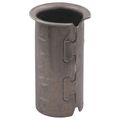
Stainless steel insert stiffeners are rigid sleeves inserted into the end of flexible tubing before a compression or crimp fitting is applied. Plumbing and mechanical contractors rely on them anywhere soft-walled tubing needs internal support so it holds its shape under the clamping force of a fitting, keeping the seal tight and the connection leak-free. Choosing a stainless steel stiffener over a brass or nylon one matters most in potable water lines, chemical feed systems, and high-temperature hydronic loops, where stainless resists the corrosion and pitting that can eventually compromise a softer material. Stiffeners are sized to match the inside diameter of the tubing they support, so fit is not optional. An undersized stiffener lets the tubing walls flex and deform under the fitting, while an oversized one will not seat past the tubing's inner wall at all. Keeping a range of sizes on hand covers most residential and light commercial tubing runs without a special order.
Subcategories
- PEX Insert Stiffeners: Sized for cross-linked polyethylene tubing, these stiffeners slide into the tube end so a crimp or clamp ring can compress the tubing against a barbed fitting without collapsing the wall. Contractors reach for them on residential water distribution and radiant heating lines where PEX is the primary material. Matching stiffener diameter to nominal tube size keeps the fitting's barbs fully seated against tubing that holds its round shape.
- Polyethylene Insert Stiffeners: Built for polyethylene pipe used in water service and irrigation, these stiffeners support thicker pipe walls than typical PEX stiffeners and stand up to the higher clamping force that hose-clamp style fittings apply. Underground water service installers use them at transitions to metal fittings, where a stable, round pipe end is necessary for a lasting seal. Wall thickness varies by pipe SDR rating, so stiffener length and diameter need to match the specific pipe spec in use.
- High-Temperature Stiffeners: Rated for use in hydronic heating loops and other lines that see sustained elevated temperatures, these stiffeners hold their shape and resist deformation where standard-duty stiffeners could soften. Hydronic and radiant heat installers specify them anywhere tubing runs near a boiler or manifold outlet, where temperatures run well above typical domestic water service. Full stainless steel construction, rather than a plated finish, keeps these dependable through repeated heating and cooling cycles.
- Small-Diameter Stiffeners: Made for tubing in the smaller end of the size range, these stiffeners support thin-wall applications like ice maker lines, small branch runs, and instrumentation tubing. Fitting one requires care since the wall of small tubing is thinner and more prone to splitting if the stiffener is forced rather than seated by hand. Technicians working on appliance hookups and small commercial branch lines keep an assortment of these sizes on a truck stock shelf.
Buying Guide
Selecting the right stainless steel insert stiffener starts with matching the stiffener's outer diameter to the inner diameter of the tubing it will support. A stiffener that is too small allows the tubing wall to flex under a fitting's clamping force, which can lead to a slow leak that is not obvious until a wall or ceiling is opened during a later repair. A stiffener that is too large will not seat fully into the tubing, leaving it perched at the opening instead of extending past the fitting's grip zone. Beyond size, contractors should confirm the stiffener is rated for the tubing material in use since PEX, polyethylene, and other tubing types can call for different wall profiles even at the same nominal diameter.
Material choice also affects long-term reliability. Stainless steel stiffeners cost more upfront than brass or plastic alternatives but resist corrosion in potable water systems, chemical feed lines, and any application where a plated or bare metal part could degrade over years of service. For hydronic heating and other high-temperature lines, confirming the stiffener's temperature rating before installation matters since not every stiffener on the market is built for sustained heat near a boiler or manifold.
Buying in bulk assortments by size, rather than one-off packs, keeps a service vehicle stocked for whatever tubing size shows up on a job. Stainless steel insert stiffeners cost little relative to the cost of a callback, so stocking a full range of sizes is a low-cost way to avoid a return trip for the wrong part.
Frequently Asked Questions
What does a stainless steel insert stiffener do?
It is a rigid sleeve inserted into the end of flexible tubing before a compression or crimp fitting is applied. The sleeve keeps the tubing wall from collapsing under the fitting's clamping force, so the connection can seal properly and hold pressure over time.
How is the correct stiffener size determined?
Stiffener diameter needs to match the tubing's inside diameter, and stiffener length should extend past the fitting's grip zone once seated. An undersized stiffener lets the tubing flex under the fitting, while an oversized one will not seat into the tube at all.
Why choose stainless steel over brass or plastic stiffeners?
Stainless steel resists corrosion and pitting better than brass or plastic in potable water lines, chemical feed systems, and other demanding applications. Over years of service, a plated or plastic stiffener can degrade in ways that stainless steel typically does not.
Are stainless steel stiffeners rated for hot water or hydronic heating lines?
Many are, but temperature ratings vary by product, so confirming the rated maximum temperature before installing one near a boiler or manifold outlet is important. Standard-duty stiffeners not rated for sustained heat can soften in high-temperature service.
Can the same stiffener work with both PEX and polyethylene tubing?
Not always. PEX and polyethylene tubing can have different wall thicknesses even at the same nominal size, so a stiffener sized for one material may not seat correctly in the other. Checking the tubing manufacturer's specification for wall profile before selecting a stiffener helps avoid a poor fit.
