




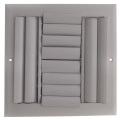
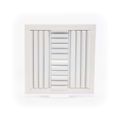
Stamped Aluminum 4-Way Curved Blade Registers (A614 Series)

 --%3E %3Csvg version='1.1' id='Fill' xmlns='http://www.w3.org/2000/svg' xmlns:xlink='http://www.w3.org/1999/xlink' x='0px' y='0px' viewBox='0 0 100 100' enable-background='new 0 0 100 100' xml:space='preserve'%3E %3Cpath fill='%23F15C02' d='M79.44,0.95H20.56C9.78,0.95,0.95,9.78,0.95,20.56v58.87c0,10.79,8.82,19.61,19.61,19.61h58.87 c10.79,0,19.61-8.83,19.61-19.61V20.56C99.05,9.78,90.22,0.95,79.44,0.95z M65.38,58.24l9.38,29.58L49.69,69.78L24.5,87.82 l9.34-29.6L8.8,39.6l30.73-0.17c0,0,6.98-19.61,10-28.93c0.54,1.36,9.88,29.1,9.88,29.1H91.2L65.38,58.24z'/%3E %3C/svg%3E)
 --%3E %3Csvg version='1.1' id='No-RB' xmlns='http://www.w3.org/2000/svg' xmlns:xlink='http://www.w3.org/1999/xlink' x='0px' y='0px' viewBox='0 0 100 100' enable-background='new 0 0 100 100' xml:space='preserve'%3E %3Cpath fill='%23CECECE' d='M79.44,0.95H20.56C9.78,0.95,0.95,9.78,0.95,20.56v58.87c0,10.79,8.82,19.61,19.61,19.61h58.87 c10.79,0,19.61-8.83,19.61-19.61V20.56C99.05,9.78,90.22,0.95,79.44,0.95z M65.38,58.24l9.38,29.58L49.69,69.78L24.5,87.82 l9.34-29.6L8.8,39.6l30.73-0.17c0,0,6.98-19.61,10-28.93c0.54,1.36,9.88,29.1,9.88,29.1H91.2L65.38,58.24z'/%3E %3C/svg%3E)

Stamped aluminum 4-way curved blade registers in the A614 series are supply air grilles that mount over a duct opening and direct conditioned air in four directions across a room using fixed curved blades. Installers select this style when a room needs even air distribution from a single ceiling or wall opening rather than a directional throw toward one wall. The aluminum construction resists corrosion better than steel in humid installations, such as bathrooms or basements, and the stamped curved-blade design spreads airflow into a wide pattern instead of concentrating it into a narrow jet. Because the blades are fixed rather than adjustable, these registers work best in rooms where the duct layout already delivers air at roughly the right volume and the goal is distribution rather than directional control. Contractors commonly specify the A614 series for retrofit and new-construction jobs where a simple, low-profile stamped register fits the ceiling or wall opening without needing a bulkier adjustable diffuser.
Subcategories
- Ceiling-Mount A614 Registers: Ceiling-mount A614 registers direct air downward and outward in four directions from a ceiling duct opening, spreading conditioned air evenly across the room below. Contractors specify these most often in office spaces, hallways, and rooms with a centrally located duct drop, where even distribution matters more than directional throw. The stamped aluminum frame sits flush against the ceiling surface with a slim border that suits drop-ceiling or drywall ceiling installations alike. Because the blades are fixed, ceiling height and duct velocity should be checked against the register's rated airflow before installation to avoid a pattern that feels either too weak or too drafty.
- Sidewall-Mount A614 Registers: Sidewall-mount A614 registers install into a wall opening rather than a ceiling, directing the same four-way curved-blade pattern outward from the wall surface into the room. These are common in bedrooms and living spaces where ductwork runs through interior walls rather than overhead. The curved blade geometry reduces the risk of a direct air stream blowing onto nearby furniture or a bed positioned close to the register. Sidewall installations depend on correct duct sizing behind the wall opening since, like the ceiling-mount version, the blades cannot be adjusted after installation to compensate for excess or insufficient airflow.
- Replacement A614 Register Frames: Replacement A614 register frames let a technician swap a damaged, bent, or heavily corroded register without disturbing the surrounding duct opening or finished wall or ceiling surface. Property managers use these on turnover jobs in rental units, where a prior tenant's damage to a register is common but the duct opening itself is unaffected. Matching the replacement frame's exact dimensions to the existing opening avoids gaps around the border that would otherwise need to be patched with additional trim or filler.
Buying Guide
Selecting stamped aluminum 4-way curved blade registers in the A614 series starts with confirming the duct opening dimensions and whether the installation is ceiling-mount or sidewall-mount, since the two mounting styles are not interchangeable. Measuring the existing opening precisely before ordering avoids a register that requires cutting or patching the surrounding surface to fit.
Airflow volume from the connected duct run should match the register's rated capacity range. Because these registers use fixed curved blades rather than adjustable louvers, there is no way to throttle airflow at the register itself if the duct is oversized or undersized for the room, so any airflow balancing needs to happen upstream at the duct damper rather than at the grille. Contractors doing retrofit work should check existing duct velocity before assuming a straight swap from an old register to a same-size A614 unit will feel identical.
Finish and material considerations matter for long-term appearance and durability. Aluminum resists corrosion better than steel in humid rooms like bathrooms, laundry areas, or basements, making it the more durable choice for those locations even though steel registers are common elsewhere in a house. Confirming border style and overall dimensions against the surrounding ceiling or wall finish, particularly in a retrofit where an older register is being replaced, avoids a visible gap or mismatch once the new register is installed.
Frequently Asked Questions
Can the airflow direction on an A614 register be adjusted after installation?
No. The A614 series uses fixed curved blades that distribute air in a four-way pattern, and this pattern cannot be changed after installation the way an adjustable louver register can. Airflow balancing for these registers needs to happen at the duct damper rather than at the grille.
Is the A614 series suitable for both ceiling and wall installations?
The series includes both ceiling-mount and sidewall-mount versions, but they are not interchangeable, since each is designed for airflow direction relative to its specific mounting orientation. Confirming which version matches the planned installation before ordering avoids a mismatch.
Why choose an aluminum register over a steel one?
Aluminum resists corrosion better than steel, which makes it a more durable choice in humid installations such as bathrooms, laundry rooms, or basements where a steel register would be more likely to rust over time.
What should be measured before ordering a replacement A614 register frame?
The existing duct opening dimensions and the register's overall frame size should both be measured and matched precisely, since a mismatched replacement frame can leave a visible gap around the border that requires additional trim or patching to cover.
Does duct velocity affect how an A614 register performs?
Yes. Since the blades are fixed rather than adjustable, a duct run that delivers too much or too little airflow for the room will produce a pattern that feels either drafty or weak, and this can only be corrected by adjusting the duct damper upstream rather than the register itself.
