




Filters
SORT
Product Availability –
Size –
Review Score –
 --%3E %3Csvg version='1.1' id='Fill' xmlns='http://www.w3.org/2000/svg' xmlns:xlink='http://www.w3.org/1999/xlink' x='0px' y='0px' viewBox='0 0 100 100' enable-background='new 0 0 100 100' xml:space='preserve'%3E %3Cpath fill='%23F15C02' d='M79.44,0.95H20.56C9.78,0.95,0.95,9.78,0.95,20.56v58.87c0,10.79,8.82,19.61,19.61,19.61h58.87 c10.79,0,19.61-8.83,19.61-19.61V20.56C99.05,9.78,90.22,0.95,79.44,0.95z M65.38,58.24l9.38,29.58L49.69,69.78L24.5,87.82 l9.34-29.6L8.8,39.6l30.73-0.17c0,0,6.98-19.61,10-28.93c0.54,1.36,9.88,29.1,9.88,29.1H91.2L65.38,58.24z'/%3E %3C/svg%3E)
T-Cone Plugs

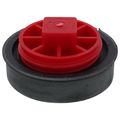

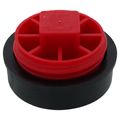
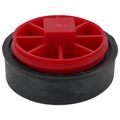
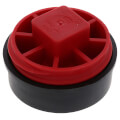
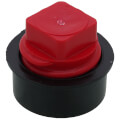
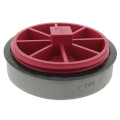

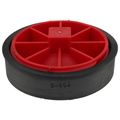
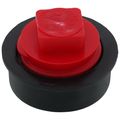

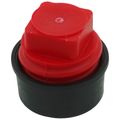

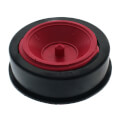

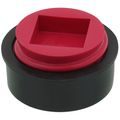

T-Cone plugs repair a damaged or corroded cleanout fitting without replacing the entire fitting, sealing directly against the inside of the existing cleanout threads. A two-part epoxy or sealant compound bridges worn or stripped threads before the cone-shaped plug seats and tightens against the pipe stop, creating a seal that holds against normal drain, waste, and vent system pressure. Plastic and rubber construction makes these plugs rust-proof and reusable, unlike a traditional metal cleanout plug that can seize or corrode in place over time. Sizes cover the common range of DWV pipe diameters, and most versions work across cast iron, PVC, and copper DWV fittings rather than requiring a material-specific plug. Keeping a few common sizes stocked saves a full cleanout fitting replacement on jobs where only the threads have failed.
Subcategories
- Cleanout Repair Plugs: Repair plugs are built specifically for cleanouts with damaged or stripped threads, sealing against a compound rather than relying on the original threads to hold pressure. A two-part sealant gets pressed across the old threads before the plug is inserted and tightened, creating a new sealing surface. Repairing the threads this way avoids cutting out and replacing the entire cleanout fitting.
- Combination Test Plugs: Combination plugs are sized to test more than one pipe type or diameter from a single plug, such as covering both a specific PVC schedule 40 size and a smaller cast iron hub in one part number. Contractors testing a DWV system before final inspection use these to cut down on the number of different plugs carried on the truck. Checking which pipe sizes and materials a specific combination plug covers avoids buying a plug that doesn't match the job.
- Flush Mount Cleanouts with Cover Plates: Flush mount versions pair the T-Cone plug with a cover plate that sits level with the finished floor or wall surface, keeping the cleanout accessible without leaving a fitting protruding into a finished space. Remodel jobs where the cleanout falls inside a finished floor, tiled shower base, or similar visible area typically call for this version specifically. The cover plate is removable for future access without disturbing the plug or seal underneath.
- Sizes and Wrenches: T-Cone plugs are sized to the cleanout opening, commonly from two-inch through six-inch or larger, and most manufacturers offer a two-way wrench sized specifically for tightening and later removing the plug. Using the correct wrench avoids damaging the plug's drive surface, which can make a later removal more difficult. Keeping the matching wrench on the truck alongside a stock of common plug sizes speeds up repeat cleanout repair calls.
Buying Guide
Picking the right T-Cone Plugs starts with confirming the cleanout's actual pipe material and diameter, since a plug sized for PVC schedule 40 won't necessarily seat correctly in a cast iron hub of a similar nominal size. Combination plugs that cover more than one pipe type in a single part number cut down on the number of different plugs a truck needs to carry, which matters most for contractors handling a mix of older cast iron and newer plastic DWV systems in the same service area.
Condition of the existing cleanout threads determines whether a repair plug is even the right fix. Threads that are stripped or corroded but otherwise structurally sound are exactly what these plugs are designed to seal against, using a sealant compound rather than the damaged threads themselves to hold pressure. A cleanout fitting that's cracked or broken beyond the threads needs full replacement instead, since a repair plug can't compensate for a structural failure in the fitting body.
Flush mount versions with a cover plate are worth specifying up front on any remodel where the cleanout sits inside a finished floor or wall, rather than swapping to that style after the finished surface is already in place. Stocking the correct two-way wrench alongside common plug sizes keeps a service call from stalling over a missing tool, since standard pipe wrenches don't grip the plug's drive surface cleanly.
Frequently Asked Questions
Can a T-Cone plug fix a cleanout with stripped threads?
Yes, that's the specific problem these plugs are designed to solve. A two-part sealant compound bridges the damaged threads before the plug is inserted and tightened against the pipe stop, creating a new seal that doesn't depend on the original threads holding pressure. A cleanout that's cracked or broken beyond just the threads needs full replacement instead.
Do these plugs work on both plastic and cast iron cleanouts?
Many versions are built as combination plugs specifically to cover more than one pipe material or diameter in a single part number, such as a size that fits both a PVC schedule 40 opening and a smaller cast iron hub. Checking the specific sizes and materials listed for a given plug before ordering confirms it matches the job. A plug sized for the wrong material or diameter won't seat and seal correctly even if it looks close.
What tool is needed to tighten a T-Cone plug?
Most manufacturers offer a two-way wrench sized specifically for these plugs, built to grip the drive surface without damaging it. Standard pipe wrenches don't fit the plug's drive shape cleanly and can chew up the surface, making a future removal harder. Keeping the correct wrench on the truck alongside common plug sizes avoids that problem.
Are these plugs reusable, or one-time use?
Plastic and rubber construction makes most versions rust-proof and reusable, unlike a traditional metal cleanout plug that can seize in place over time. A plug can typically be removed and reinstalled for future drain service without needing a full replacement. Reusability is one of the main advantages over a standard threaded metal plug in a cleanout that gets opened periodically.
When does a flush mount version with a cover plate make sense?
Flush mount versions make sense whenever the cleanout sits inside a finished floor, tiled shower base, or similar visible area where a protruding fitting isn't acceptable. The cover plate keeps the cleanout accessible for future service while sitting level with the finished surface. Specifying this version during the original remodel avoids a retrofit later if the plain version turns out to be in the wrong spot.
