




Taco Circulator Pumps
Taco pumps are circulator pumps used in hydronic heating systems to move hot water through boilers, baseboard radiators, radiant floor loops, and other closed-loop heating equipment. Contractors specify Taco pumps across new boiler installations and as direct replacements when an aging circulator fails on a service call.
Pump body material and mounting style both affect which Taco pump fits a given system. Bronze and stainless models are built for potable water and open systems. Cast iron pumps are intended for closed hydronic loops where oxygen intrusion is less of a concern.
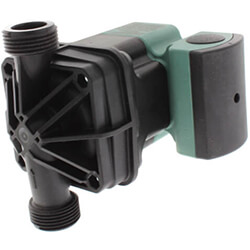
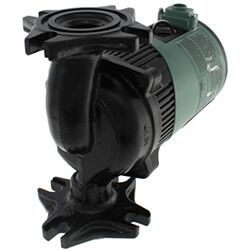


Subcategories
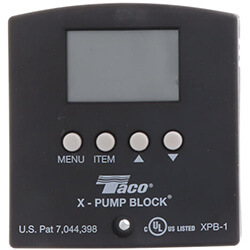
- Priority Zoning Taco Pumps: Priority Zoning Taco pumps are built into zone control packages that let a single boiler serve multiple heating zones. They prioritize domestic hot water demand over space heating zones when both call for heat at once.
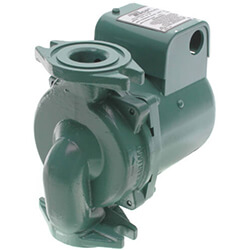
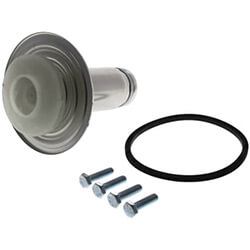
- Taco 100 Series Three-Piece In-Line Pumps: The Taco 100 Series is a three-piece in-line circulator design, meaning the motor cartridge can be serviced or replaced without draining the system or disturbing the pipe flanges.
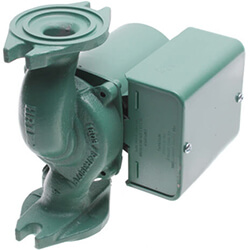
- Taco 1600 Series In-Line Pumps: The Taco 1600 Series covers in-line circulators sized for larger residential and light commercial hydronic systems that need higher flow than a standard residential pump provides.
- Taco 2400 Series In-Line Pumps: The Taco 2400 Series is built for commercial and larger residential hydronic applications, handling higher head and flow requirements than Taco's smaller in-line pump series.
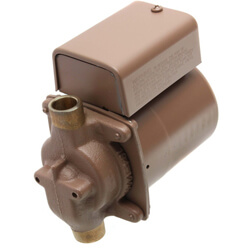
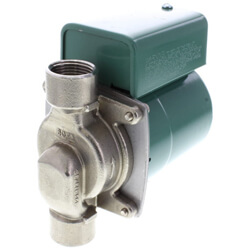
- Taco Bronze Pumps: Taco bronze pumps are built with bronze wetted components suited to potable water and open-loop systems where a cast iron pump's corrosion risk would be a concern.
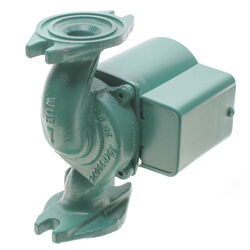
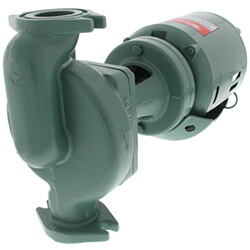
- Taco Cast Iron Pumps: Taco cast iron pumps are intended for closed-loop hydronic heating systems. The body material handles continuous circulation of treated system water without the corrosion concerns that come with an open or potable water application.
Buying Guide
Matching pump body material to the system type is the first decision on any Taco pump replacement. Cast iron pumps belong on closed hydronic heating loops. Bronze and stainless models are for potable water and open systems where corrosion resistance matters more.
Three-piece in-line pumps let a technician swap a failed motor cartridge without cutting into the piping or draining the whole system. This can save significant time on a service call compared with a pump that requires full removal.
Sizing a replacement pump means matching the original unit's flow and head specifications, not just its physical footprint. A same-brand replacement is not automatically a correct match if the original pump has been discontinued or superseded by a different series.
Zoning applications add another layer of pump selection. A system using zone valves for multiple heating areas may call for a different pump configuration than a system using multiple dedicated circulators, one per zone.
Commercial and larger residential systems that need higher flow or head than a standard in-line pump can deliver typically move up to a larger series built for that higher-capacity range. This is generally preferred over running two smaller pumps to compensate.
Frequently Asked Questions
How do I know which Taco pump replaces my old one?
Match the flow and head specifications of the failing pump, along with its body material and mounting configuration, rather than assuming an identical model number is still available. Older pumps are sometimes superseded by a different series with equivalent performance.
What's the difference between a bronze and cast iron Taco pump?
Bronze pumps are built for potable water and open-loop systems where corrosion resistance is a priority. Cast iron pumps are intended for closed hydronic heating loops circulating treated system water.
Can a Taco pump be serviced without draining the system?
Three-piece in-line models are designed so the motor cartridge can be removed and serviced without disturbing the pipe flanges or draining the full system. Pumps that require full removal do not offer this advantage.
When does a hydronic system need a larger Taco pump series?
Systems with higher flow or head requirements than a standard residential circulator can handle typically call for a larger in-line series built for that range. Commercial and larger residential systems are common examples.
What are priority zoning pumps used for?
Priority zoning pump packages let one boiler serve multiple heating zones. They give domestic hot water demand priority over space heating zones when both call for heat at the same time.
Resources

 --%3E %3C!DOCTYPE svg PUBLIC '-//W3C//DTD SVG 1.1//EN' 'http://www.w3.org/Graphics/SVG/1.1/DTD/svg11.dtd'%3E %3Csvg version='1.1' id='Layer_1' xmlns='http://www.w3.org/2000/svg' xmlns:xlink='http://www.w3.org/1999/xlink' x='0px' y='0px' width='90px' height='90px' viewBox='0 0 90 90' enable-background='new 0 0 90 90' xml:space='preserve'%3E %3Crect x='27' y='23' fill='%23FFFFFF' width='43' height='44'/%3E %3Cg%3E %3Cdefs%3E %3Crect id='SVGID_1_' width='90' height='90'/%3E %3C/defs%3E %3CclipPath id='SVGID_2_'%3E %3Cuse xlink:href='%23SVGID_1_' overflow='visible'/%3E %3C/clipPath%3E %3Cpath clip-path='url(%23SVGID_2_)' fill='%234186AD' d='M45,0C20.1,0,0,20.1,0,45c0,24.9,20.1,45,45,45c24.9,0,45-20.1,45-45 C90,20.1,69.9,0,45,0'/%3E %3C/g%3E %3Cpath fill='%23FFFFFF' d='M60.6,47.4l-22.5,14c-0.5,0.3-1,0.399-1.5,0.399s-0.9-0.1-1.4-0.399c-0.9-0.5-1.4-1.4-1.4-2.5v-28 c0-1,0.6-2,1.4-2.5c0.9-0.5,2-0.5,2.9,0.1l22.5,14.1C61.4,43.1,61.9,44,61.9,45S61.4,46.9,60.6,47.4'/%3E %3C/svg%3E)



Subcategories
- Priority Zoning Taco Pumps: Priority Zoning Taco pumps are built into zone control packages that let a single boiler serve multiple heating zones. They prioritize domestic hot water demand over space heating zones when both call for heat at once.
- Taco 100 Series Three-Piece In-Line Pumps: The Taco 100 Series is a three-piece in-line circulator design, meaning the motor cartridge can be serviced or replaced without draining the system or disturbing the pipe flanges.
- Taco 1600 Series In-Line Pumps: The Taco 1600 Series covers in-line circulators sized for larger residential and light commercial hydronic systems that need higher flow than a standard residential pump provides.
- Taco 2400 Series In-Line Pumps: The Taco 2400 Series is built for commercial and larger residential hydronic applications, handling higher head and flow requirements than Taco's smaller in-line pump series.
- Taco Bronze Pumps: Taco bronze pumps are built with bronze wetted components suited to potable water and open-loop systems where a cast iron pump's corrosion risk would be a concern.
- Taco Cast Iron Pumps: Taco cast iron pumps are intended for closed-loop hydronic heating systems. The body material handles continuous circulation of treated system water without the corrosion concerns that come with an open or potable water application.
Buying Guide
Matching pump body material to the system type is the first decision on any Taco pump replacement. Cast iron pumps belong on closed hydronic heating loops. Bronze and stainless models are for potable water and open systems where corrosion resistance matters more.
Three-piece in-line pumps let a technician swap a failed motor cartridge without cutting into the piping or draining the whole system. This can save significant time on a service call compared with a pump that requires full removal.
Sizing a replacement pump means matching the original unit's flow and head specifications, not just its physical footprint. A same-brand replacement is not automatically a correct match if the original pump has been discontinued or superseded by a different series.
Zoning applications add another layer of pump selection. A system using zone valves for multiple heating areas may call for a different pump configuration than a system using multiple dedicated circulators, one per zone.
Commercial and larger residential systems that need higher flow or head than a standard in-line pump can deliver typically move up to a larger series built for that higher-capacity range. This is generally preferred over running two smaller pumps to compensate.
Frequently Asked Questions
How do I know which Taco pump replaces my old one?
Match the flow and head specifications of the failing pump, along with its body material and mounting configuration, rather than assuming an identical model number is still available. Older pumps are sometimes superseded by a different series with equivalent performance.
What's the difference between a bronze and cast iron Taco pump?
Bronze pumps are built for potable water and open-loop systems where corrosion resistance is a priority. Cast iron pumps are intended for closed hydronic heating loops circulating treated system water.
Can a Taco pump be serviced without draining the system?
Three-piece in-line models are designed so the motor cartridge can be removed and serviced without disturbing the pipe flanges or draining the full system. Pumps that require full removal do not offer this advantage.
When does a hydronic system need a larger Taco pump series?
Systems with higher flow or head requirements than a standard residential circulator can handle typically call for a larger in-line series built for that range. Commercial and larger residential systems are common examples.
What are priority zoning pumps used for?
Priority zoning pump packages let one boiler serve multiple heating zones. They give domestic hot water demand priority over space heating zones when both call for heat at the same time.