



Boiler Circulating Pumps
Boiler circulating pumps move heated water from the boiler through the distribution piping to radiators, baseboard, or radiant zones. This category covers circulators from Grundfos, Taco, Bell & Gossett, Wilo, and Armstrong, along with the flanges used to connect a pump to the surrounding piping.
Selecting a circulator by brand often comes down to matching an existing system's pump lineage, since flange bolt patterns and body dimensions can vary between manufacturers. Wilo and newer Grundfos and Taco models offer variable-speed operation that adjusts pumping energy to match the system's actual demand.


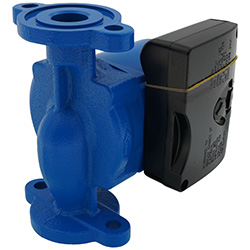


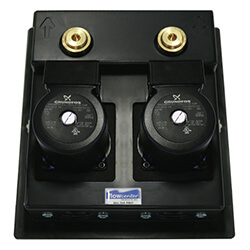
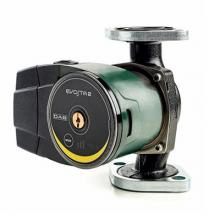

Grundfos Pumps are among the most widely specified circulators in hydronic heating. The lineup includes fixed-speed and variable-speed models in cast iron, bronze, and stainless steel, covering residential and light commercial applications. Grundfos variable-speed pumps, including the Alpha and Magna series, automatically reduce speed as heating load drops, cutting electrical consumption significantly. Grundfos pumps connect with standard flanged or union connections and are available in multiple voltage configurations.
Taco Circulator Pumps are a standard choice for residential and commercial hydronic systems in North America. The Taco lineup covers cast iron and stainless steel across several series, with both fixed-speed and variable-speed models. Taco's 00-series cast iron pumps are among the most commonly installed residential circulators. Taco also offers pumps with built-in priority zoning functions for systems that require domestic hot water priority switching without additional controls.
Bell & Gossett Circulating Pumps cover a range from small residential models to larger in-line pumps for commercial hydronic systems. The B&G lineup includes cast iron and bronze construction across multiple series, with both three-piece and cartridge-style designs. Three-piece B&G pumps allow impeller and seal replacement without removing the pump from the line. The NRF Red Fox series uses a cartridge design that reduces service time on residential systems.
Wilo Pumps offer high-efficiency variable-speed models for hydronic heating and domestic hot water systems. Wilo's Stratos series uses permanent magnet motor technology with electronic control, enabling automatic adaptation to system demand. Wilo pumps are available in wet-rotor and dry-rotor configurations and meet ErP 2015 energy efficiency requirements.
Armstrong Pumps include both residential and commercial hydronic pump lines. The Astro series covers standard cast iron fixed-speed circulators for baseboard and radiant applications. Armstrong also offers the Design Envelope line of variable-speed pumps with demand-controlled pumping that responds to actual system conditions. Armstrong pumps are compatible with standard flanged connections and available in multiple size configurations.
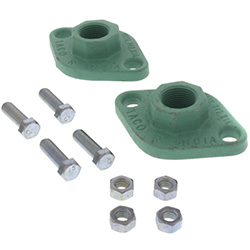
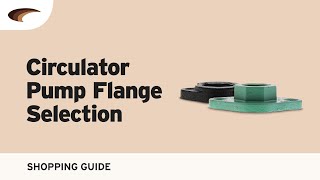
Pump Flanges connect circulator pumps to the supply and return piping of a hydronic system and must be sized to match both the pump's inlet and outlet dimensions and the pipe size in the system. Flanges are available in sweat, threaded, and push-fit connection types. Replacing a circulator without replacing worn flanges and gaskets can introduce leaks at the connection point.
The primary sizing inputs for a boiler circulator pump are the system's required flow rate in GPM and the total head loss in feet of water column. GPM is set by the heat load and the temperature differential across the distribution loop. Head loss is determined by the length and diameter of the piping, the number of fittings, and the resistance of any zone valves or manifolds in the circuit.
Cast iron is appropriate for closed loop hydronic systems where the water is de-oxygenated. Open loop systems and domestic hot water recirculation require bronze or stainless steel construction to prevent corrosion. Mixing construction materials by installing a cast iron pump in a potable water system will cause accelerated deterioration and water contamination.
Variable speed circulators are the current standard for zone valve systems and multi-zone radiant installations. They reduce pump speed as zone valves close, preventing excess pressure buildup that causes noise and premature valve wear. For simple single-zone systems, a fixed-speed pump is adequate and lower in initial cost.
Pumps with an internal flow check (IFC) eliminate the need for a separate check valve in the piping. In multi-pump or multi-zone systems, reverse flow through an idle pump can disrupt active zones. Single-zone systems do not require an IFC pump, though it does not cause problems if installed.
Flange selection must match the pump connection size and the pipe diameter in the system. Common connection sizes for residential circulators are 3/4 inch and 1 inch. Using a reducing flange is acceptable when needed, but sizing the pipe correctly at the pump inlet improves flow efficiency.
What's the difference between a fixed-speed and variable-speed circulator pump?
A fixed-speed circulator runs at constant output regardless of heating load, while a variable-speed circulator adjusts its speed based on actual system demand. Variable-speed pumps consume significantly less electricity when the heating load is reduced. Variable-speed pumps are recommended for zone valve systems because they reduce pressure as zones close, preventing noise and pressure buildup.
Can I use a cast iron pump for domestic hot water recirculation?
Cast iron circulators are not appropriate for domestic hot water recirculation or any open loop system. Open loop systems carry oxygenated potable water, which causes rapid corrosion in cast iron. Domestic hot water recirculation requires a bronze or stainless steel circulator. Installing a cast iron pump in a potable water system will contaminate the water supply and cause accelerated pump failure.
What do GPM and head range mean when selecting a circulator?
GPM (gallons per minute) is the flow rate the pump delivers at a given system resistance. Head range is the pressure the pump can develop, expressed in feet of water column. The system's required GPM is set by the heat load and temperature differential, and the pump's head range must exceed the total friction loss in the piping circuit.
Do I need to replace the flanges when I replace a circulator pump?
Flanges do not need to be replaced every time a circulator is swapped, but inspect the gaskets and flange faces for wear, corrosion, or distortion. Reusing degraded gaskets or flanges with pitted seating surfaces is a common cause of post-replacement leaks. If the replacement pump uses a different connection size, new flanges will be required.
What is an internal flow check (IFC) and when do I need one?
An internal flow check (IFC) is a spring-loaded check valve built into the pump that prevents reverse flow through the circulator when it is not running. In multi-pump or multi-zone systems, an idle circulator can allow reverse flow that disrupts active zones. A pump with an IFC eliminates the need for a separate inline check valve in the branch.
Resources

 --%3E %3C!DOCTYPE svg PUBLIC '-//W3C//DTD SVG 1.1//EN' 'http://www.w3.org/Graphics/SVG/1.1/DTD/svg11.dtd'%3E %3Csvg version='1.1' id='Layer_1' xmlns='http://www.w3.org/2000/svg' xmlns:xlink='http://www.w3.org/1999/xlink' x='0px' y='0px' width='90px' height='90px' viewBox='0 0 90 90' enable-background='new 0 0 90 90' xml:space='preserve'%3E %3Crect x='27' y='23' fill='%23FFFFFF' width='43' height='44'/%3E %3Cg%3E %3Cdefs%3E %3Crect id='SVGID_1_' width='90' height='90'/%3E %3C/defs%3E %3CclipPath id='SVGID_2_'%3E %3Cuse xlink:href='%23SVGID_1_' overflow='visible'/%3E %3C/clipPath%3E %3Cpath clip-path='url(%23SVGID_2_)' fill='%234186AD' d='M45,0C20.1,0,0,20.1,0,45c0,24.9,20.1,45,45,45c24.9,0,45-20.1,45-45 C90,20.1,69.9,0,45,0'/%3E %3C/g%3E %3Cpath fill='%23FFFFFF' d='M60.6,47.4l-22.5,14c-0.5,0.3-1,0.399-1.5,0.399s-0.9-0.1-1.4-0.399c-0.9-0.5-1.4-1.4-1.4-2.5v-28 c0-1,0.6-2,1.4-2.5c0.9-0.5,2-0.5,2.9,0.1l22.5,14.1C61.4,43.1,61.9,44,61.9,45S61.4,46.9,60.6,47.4'/%3E %3C/svg%3E)
Grundfos Pumps are among the most widely specified circulators in hydronic heating. The lineup includes fixed-speed and variable-speed models in cast iron, bronze, and stainless steel, covering residential and light commercial applications. Grundfos variable-speed pumps, including the Alpha and Magna series, automatically reduce speed as heating load drops, cutting electrical consumption significantly. Grundfos pumps connect with standard flanged or union connections and are available in multiple voltage configurations.
Taco Circulator Pumps are a standard choice for residential and commercial hydronic systems in North America. The Taco lineup covers cast iron and stainless steel across several series, with both fixed-speed and variable-speed models. Taco's 00-series cast iron pumps are among the most commonly installed residential circulators. Taco also offers pumps with built-in priority zoning functions for systems that require domestic hot water priority switching without additional controls.
Bell & Gossett Circulating Pumps cover a range from small residential models to larger in-line pumps for commercial hydronic systems. The B&G lineup includes cast iron and bronze construction across multiple series, with both three-piece and cartridge-style designs. Three-piece B&G pumps allow impeller and seal replacement without removing the pump from the line. The NRF Red Fox series uses a cartridge design that reduces service time on residential systems.
Wilo Pumps offer high-efficiency variable-speed models for hydronic heating and domestic hot water systems. Wilo's Stratos series uses permanent magnet motor technology with electronic control, enabling automatic adaptation to system demand. Wilo pumps are available in wet-rotor and dry-rotor configurations and meet ErP 2015 energy efficiency requirements.
Armstrong Pumps include both residential and commercial hydronic pump lines. The Astro series covers standard cast iron fixed-speed circulators for baseboard and radiant applications. Armstrong also offers the Design Envelope line of variable-speed pumps with demand-controlled pumping that responds to actual system conditions. Armstrong pumps are compatible with standard flanged connections and available in multiple size configurations.
Pump Flanges connect circulator pumps to the supply and return piping of a hydronic system and must be sized to match both the pump's inlet and outlet dimensions and the pipe size in the system. Flanges are available in sweat, threaded, and push-fit connection types. Replacing a circulator without replacing worn flanges and gaskets can introduce leaks at the connection point.
The primary sizing inputs for a boiler circulator pump are the system's required flow rate in GPM and the total head loss in feet of water column. GPM is set by the heat load and the temperature differential across the distribution loop. Head loss is determined by the length and diameter of the piping, the number of fittings, and the resistance of any zone valves or manifolds in the circuit.
Cast iron is appropriate for closed loop hydronic systems where the water is de-oxygenated. Open loop systems and domestic hot water recirculation require bronze or stainless steel construction to prevent corrosion. Mixing construction materials by installing a cast iron pump in a potable water system will cause accelerated deterioration and water contamination.
Variable speed circulators are the current standard for zone valve systems and multi-zone radiant installations. They reduce pump speed as zone valves close, preventing excess pressure buildup that causes noise and premature valve wear. For simple single-zone systems, a fixed-speed pump is adequate and lower in initial cost.
Pumps with an internal flow check (IFC) eliminate the need for a separate check valve in the piping. In multi-pump or multi-zone systems, reverse flow through an idle pump can disrupt active zones. Single-zone systems do not require an IFC pump, though it does not cause problems if installed.
Flange selection must match the pump connection size and the pipe diameter in the system. Common connection sizes for residential circulators are 3/4 inch and 1 inch. Using a reducing flange is acceptable when needed, but sizing the pipe correctly at the pump inlet improves flow efficiency.
What's the difference between a fixed-speed and variable-speed circulator pump?
A fixed-speed circulator runs at constant output regardless of heating load, while a variable-speed circulator adjusts its speed based on actual system demand. Variable-speed pumps consume significantly less electricity when the heating load is reduced. Variable-speed pumps are recommended for zone valve systems because they reduce pressure as zones close, preventing noise and pressure buildup.
Can I use a cast iron pump for domestic hot water recirculation?
Cast iron circulators are not appropriate for domestic hot water recirculation or any open loop system. Open loop systems carry oxygenated potable water, which causes rapid corrosion in cast iron. Domestic hot water recirculation requires a bronze or stainless steel circulator. Installing a cast iron pump in a potable water system will contaminate the water supply and cause accelerated pump failure.
What do GPM and head range mean when selecting a circulator?
GPM (gallons per minute) is the flow rate the pump delivers at a given system resistance. Head range is the pressure the pump can develop, expressed in feet of water column. The system's required GPM is set by the heat load and temperature differential, and the pump's head range must exceed the total friction loss in the piping circuit.
Do I need to replace the flanges when I replace a circulator pump?
Flanges do not need to be replaced every time a circulator is swapped, but inspect the gaskets and flange faces for wear, corrosion, or distortion. Reusing degraded gaskets or flanges with pitted seating surfaces is a common cause of post-replacement leaks. If the replacement pump uses a different connection size, new flanges will be required.
What is an internal flow check (IFC) and when do I need one?
An internal flow check (IFC) is a spring-loaded check valve built into the pump that prevents reverse flow through the circulator when it is not running. In multi-pump or multi-zone systems, an idle circulator can allow reverse flow that disrupts active zones. A pump with an IFC eliminates the need for a separate inline check valve in the branch.