




Filters
SORT
Product Availability –
Brand –
Size –
Review Score –
 --%3E %3Csvg version='1.1' id='Fill' xmlns='http://www.w3.org/2000/svg' xmlns:xlink='http://www.w3.org/1999/xlink' x='0px' y='0px' viewBox='0 0 100 100' enable-background='new 0 0 100 100' xml:space='preserve'%3E %3Cpath fill='%23F15C02' d='M79.44,0.95H20.56C9.78,0.95,0.95,9.78,0.95,20.56v58.87c0,10.79,8.82,19.61,19.61,19.61h58.87 c10.79,0,19.61-8.83,19.61-19.61V20.56C99.05,9.78,90.22,0.95,79.44,0.95z M65.38,58.24l9.38,29.58L49.69,69.78L24.5,87.82 l9.34-29.6L8.8,39.6l30.73-0.17c0,0,6.98-19.61,10-28.93c0.54,1.36,9.88,29.1,9.88,29.1H91.2L65.38,58.24z'/%3E %3C/svg%3E)
Price Range –
Test Cocks


 --%3E %3Csvg version='1.1' id='No-RB' xmlns='http://www.w3.org/2000/svg' xmlns:xlink='http://www.w3.org/1999/xlink' x='0px' y='0px' viewBox='0 0 100 100' enable-background='new 0 0 100 100' xml:space='preserve'%3E %3Cpath fill='%23CECECE' d='M79.44,0.95H20.56C9.78,0.95,0.95,9.78,0.95,20.56v58.87c0,10.79,8.82,19.61,19.61,19.61h58.87 c10.79,0,19.61-8.83,19.61-19.61V20.56C99.05,9.78,90.22,0.95,79.44,0.95z M65.38,58.24l9.38,29.58L49.69,69.78L24.5,87.82 l9.34-29.6L8.8,39.6l30.73-0.17c0,0,6.98-19.61,10-28.93c0.54,1.36,9.88,29.1,9.88,29.1H91.2L65.38,58.24z'/%3E %3C/svg%3E)
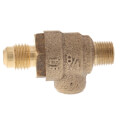

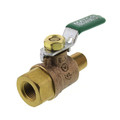
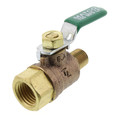
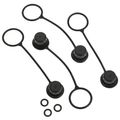

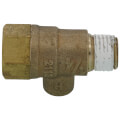
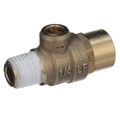
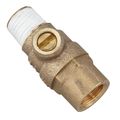

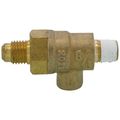
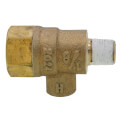
Test cocks are small shutoff valves mounted on backflow preventers and double check valve assemblies that give a technician a dedicated port for connecting a test gauge during an inspection. Each assembly typically has four test cocks positioned at specific points along the check valve module, letting a tester measure pressure differential across each internal check without disassembling the unit. Most test cocks use a resilient seat, a design that seals reliably even after repeated opening and closing during annual testing cycles. Because backflow assemblies require testing on a regular schedule in most jurisdictions, a test cock that operates smoothly and seals fully makes each inspection faster and reduces the chance of a false reading. For anyone servicing cross-connection control equipment, keeping quality replacement test cocks on hand is a routine part of maintaining test-ready backflow assemblies.
Subcategories
- Ball-Style Test Cocks: Ball-style test cocks use a quarter-turn ball valve mechanism, giving a quick, clear indication of open or closed position. Backflow testers favor this style for how fast it opens and closes during a multi-point test sequence. The ball design also tends to resist mineral buildup better than some other valve styles over repeated cycles.
- Resilient-Seated Test Cocks: Resilient-seated test cocks use a soft seating material that maintains a tight seal even after years of repeated testing. Service techs replacing worn original test cocks on an older assembly often choose this style specifically for its long-term sealing performance. This is the seat type most commonly specified on current double check valve and reduced pressure zone assemblies.
- Replacement Test Cock Kits: Kits bundling multiple test cocks together let a tech replace all four ports on an assembly in one visit rather than sourcing them individually. Contractors doing routine backflow maintenance keep these kits on the truck since a single worn test cock often means the others are close behind it in wear. Buying the full set at once also keeps the assembly's testing ports consistent in material and seal type.
Buying Guide
Matching the test cock's thread size and body material to the existing backflow assembly is the first step, since these ports are typically a standard NPT thread size but vary between manufacturers and assembly models. Test cocks see more repeated use than almost any other part on a backflow assembly, since they're opened and closed at every annual inspection, so choosing a resilient-seated version over a lower-cost alternative often pays off in fewer failed tests down the road. For service techs handling multiple assemblies across a route, it's worth stocking both ball-style and standard test cocks, since older equipment in the field may use either style depending on age and manufacturer. When one test cock on an assembly is found worn or leaking during an inspection, it's practical to replace all four at once rather than waiting for the others to fail individually, since they've generally seen the same number of testing cycles and similar wear. Buying a bundled replacement kit instead of individual parts usually simplifies that decision and keeps the whole assembly consistent. Finally, confirm the specific assembly brand and model before ordering, since test cock fitment isn't universal across every backflow preventer on the market, and an incorrect port size can hold up a scheduled inspection.
Frequently Asked Questions
What is a test cock used for on a backflow assembly?
It's a small valve that gives a tester a dedicated connection point for a pressure gauge during a backflow inspection. Most assemblies have four test cocks positioned to measure pressure differential across each internal check valve.
How often do test cocks need to be replaced?
There's no fixed schedule, but they're worth inspecting at every annual backflow test since that's when they see the most use. A tech who notices a test cock not sealing properly during testing should plan on replacing it, and often the others nearby, soon after.
What's the difference between ball-style and resilient-seated test cocks?
Ball-style test cocks use a quarter-turn ball mechanism for quick operation, while resilient-seated versions use a soft seating material designed to hold a tight seal over many testing cycles. Both are common on current backflow assemblies.
Should I replace all four test cocks at once?
It's often the practical choice when one is found worn, since all four have typically seen the same number of testing cycles. Replacing them as a set with a kit also keeps material and seal type consistent across the assembly.
Are test cocks universal across backflow assembly brands?
No, thread size and fitment vary between manufacturers and assembly models even though most use a standard NPT thread. Confirm the exact assembly brand and model before ordering a replacement.
