




Filters
SORT
Product Availability –
Inlet Size –
Outlet Size –
Refrigerant Type –
Ton –
Review Score –
 --%3E %3Csvg version='1.1' id='Fill' xmlns='http://www.w3.org/2000/svg' xmlns:xlink='http://www.w3.org/1999/xlink' x='0px' y='0px' viewBox='0 0 100 100' enable-background='new 0 0 100 100' xml:space='preserve'%3E %3Cpath fill='%23F15C02' d='M79.44,0.95H20.56C9.78,0.95,0.95,9.78,0.95,20.56v58.87c0,10.79,8.82,19.61,19.61,19.61h58.87 c10.79,0,19.61-8.83,19.61-19.61V20.56C99.05,9.78,90.22,0.95,79.44,0.95z M65.38,58.24l9.38,29.58L49.69,69.78L24.5,87.82 l9.34-29.6L8.8,39.6l30.73-0.17c0,0,6.98-19.61,10-28.93c0.54,1.36,9.88,29.1,9.88,29.1H91.2L65.38,58.24z'/%3E %3C/svg%3E)
Price Range –
Danfoss Thermostatic Expansion Valves

 --%3E %3Csvg version='1.1' id='No-RB' xmlns='http://www.w3.org/2000/svg' xmlns:xlink='http://www.w3.org/1999/xlink' x='0px' y='0px' viewBox='0 0 100 100' enable-background='new 0 0 100 100' xml:space='preserve'%3E %3Cpath fill='%23CECECE' d='M79.44,0.95H20.56C9.78,0.95,0.95,9.78,0.95,20.56v58.87c0,10.79,8.82,19.61,19.61,19.61h58.87 c10.79,0,19.61-8.83,19.61-19.61V20.56C99.05,9.78,90.22,0.95,79.44,0.95z M65.38,58.24l9.38,29.58L49.69,69.78L24.5,87.82 l9.34-29.6L8.8,39.6l30.73-0.17c0,0,6.98-19.61,10-28.93c0.54,1.36,9.88,29.1,9.88,29.1H91.2L65.38,58.24z'/%3E %3C/svg%3E)

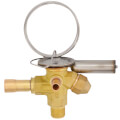
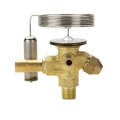
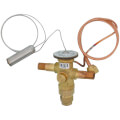
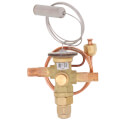
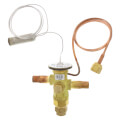
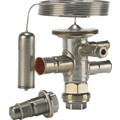
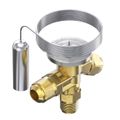
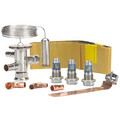
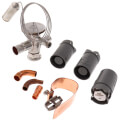
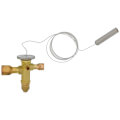
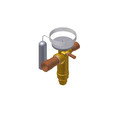
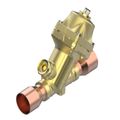
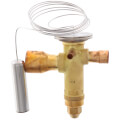
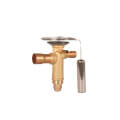
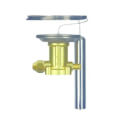
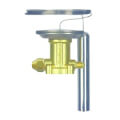
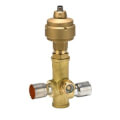
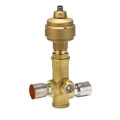


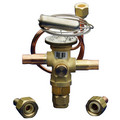
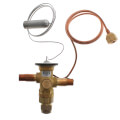
Danfoss thermostatic expansion valves are refrigerant flow control components used in air conditioning and refrigeration systems to meter liquid refrigerant into the evaporator. Each valve senses the refrigerant's superheat at the evaporator outlet and adjusts flow to match the system's cooling load, protecting the compressor from liquid slugging while keeping the evaporator properly fed. Danfoss builds these valves with stainless steel bodies and steel-to-copper bi-metal connections designed for fast, reliable soldering into existing line sets. Depending on the model, the valve uses either a fixed or an exchangeable orifice, and either an internally or externally equalized design, so the right selection depends on the specific refrigerant, capacity, and pressure drop across the evaporator. Getting that selection right keeps superheat in the correct range, which protects compressor life and keeps a system running at its rated efficiency.
Subcategories
- Internally Equalized TUB and TUBE Valves: TUB and TUBE valves route the equalizing pressure signal through an internal passage in the valve body rather than a separate external line. Contractors use this style on smaller systems with a limited pressure drop across the evaporator, where the difference between inlet and outlet pressure stays modest. Valves in this line ship with a fixed orifice and a non-adjustable superheat setting, so the valve arrives calibrated for its rated capacity. Danfoss constructs the body from stainless steel with bi-metal solder connections for straightforward installation into copper line sets.
- Externally Equalized TUAE Valves: TUAE valves carry the equalizing signal through a separate external tube connected near the evaporator outlet, which corrects for pressure drop across the evaporator coil or a distributor. Systems with longer evaporator circuits or distributor networks typically call for this externally equalized design over an internally equalized valve. Many TUAE models offer an exchangeable orifice, letting a technician match the valve to a range of capacities without replacing the entire valve body. Superheat on these valves can be adjustable or non-adjustable depending on the specific model selected.
- Replacement Filters and Internal Elements: Danfoss builds a high dirt-retention filter into many TU-series valves, with exchangeable filter elements available on the TUA(E) models. A clogged filter restricts refrigerant flow and can starve the evaporator even when the rest of the valve is functioning correctly, so replacement elements let a contractor restore flow without swapping the full valve body. Filter elements are sized to match the specific valve model and refrigerant charge. Keeping a stock of the correct elements on hand shortens a service call when a system loses capacity from debris in the line.
- MOP-Charged Valves for Low-Ambient Startup: Certain Danfoss thermostatic expansion valves include a maximum operating pressure, or MOP, charge that limits how far the valve will open during a high-load startup, such as a hot pull-down after a defrost cycle. The MOP charge protects the compressor from overload by capping refrigerant flow until suction pressure drops back into the valve's normal operating range. The MOP option matters most on systems that see frequent defrost cycles or wide temperature swings between startup and steady-state operation. Selecting an MOP-charged valve is a design decision made alongside orifice size and equalization type, not a substitute for either.
Buying Guide
Selecting the right expansion valve starts with confirming the refrigerant the system uses, since Danfoss expansion valve bodies and orifices are matched to specific refrigerants, and an orifice sized for the wrong refrigerant will not maintain correct superheat. Next, match the equalization type to the evaporator design: an internally equalized valve works for compact coils with minimal pressure drop, while an externally equalized valve corrects for longer evaporator circuits or a distributor network downstream of the valve. Danfoss Thermostatic Expansion Valves are available with either fixed or exchangeable orifices, and choosing an exchangeable-orifice model gives a contractor room to adjust capacity later if the system's load changes without replacing the whole valve. Superheat adjustability is another decision point: a non-adjustable valve arrives calibrated for its rated capacity, while an adjustable valve lets a technician fine-tune superheat in the field to account for line length or coil design. On systems with frequent defrost cycles or wide startup swings, an MOP-charged valve adds protection against compressor overload during pull-down. Finally, confirm the connection size and type match the existing line set, since Danfoss uses bi-metal solder connections sized to specific tubing diameters, and a mismatch means additional fittings or a change in orifice capacity calculations.
Frequently Asked Questions
What's the difference between an internally equalized and externally equalized Danfoss expansion valve?
An internally equalized valve senses pressure right at the valve outlet, which works fine on compact evaporators with little pressure drop. An externally equalized valve senses pressure downstream, near the evaporator outlet or after a distributor, which corrects for the added pressure drop on longer coils or multi-circuit systems. Using an internally equalized valve where an externally equalized one is needed usually shows up as erratic superheat and reduced capacity.
Can a Danfoss expansion valve be resized without replacing the whole body?
Models with an exchangeable orifice or internal element allow a technician to swap in a different size to match a new capacity requirement. Valves with a fixed orifice do not offer this option, so a capacity change on those models means installing a new valve. Matching the replacement element to both the refrigerant and the target capacity is essential for correct superheat control.
What does an MOP charge do on a thermostatic expansion valve?
An MOP, or maximum operating pressure, charge limits how far the valve opens during a high-load startup, such as a hot pull-down following a defrost cycle. It protects the compressor from overload by capping refrigerant flow until suction pressure returns to the valve's normal range. The MOP feature is most useful on systems with frequent defrost cycles or large temperature swings at startup.
How does a clogged filter in a Danfoss expansion valve affect performance?
A clogged filter restricts refrigerant flow into the valve, which starves the evaporator even if the valve body itself is working correctly. Symptoms typically include reduced cooling capacity and abnormal superheat readings. On TUA(E) models with an exchangeable filter element, replacing just the element restores flow without removing the full valve.
What refrigerant types work with Danfoss thermostatic expansion valves?
Danfoss builds TU-series valves and orifices matched to specific refrigerants, so the valve and orifice combination has to correspond to the refrigerant actually charged into the system. Common configurations cover several standard HVAC and refrigeration refrigerants. Using the wrong orifice for a given refrigerant will produce incorrect superheat even if every other component is correct.
