




Tool Trackers


 --%3E %3Csvg version='1.1' id='No-RB' xmlns='http://www.w3.org/2000/svg' xmlns:xlink='http://www.w3.org/1999/xlink' x='0px' y='0px' viewBox='0 0 100 100' enable-background='new 0 0 100 100' xml:space='preserve'%3E %3Cpath fill='%23CECECE' d='M79.44,0.95H20.56C9.78,0.95,0.95,9.78,0.95,20.56v58.87c0,10.79,8.82,19.61,19.61,19.61h58.87 c10.79,0,19.61-8.83,19.61-19.61V20.56C99.05,9.78,90.22,0.95,79.44,0.95z M65.38,58.24l9.38,29.58L49.69,69.78L24.5,87.82 l9.34-29.6L8.8,39.6l30.73-0.17c0,0,6.98-19.61,10-28.93c0.54,1.36,9.88,29.1,9.88,29.1H91.2L65.38,58.24z'/%3E %3C/svg%3E)



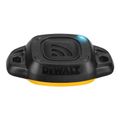
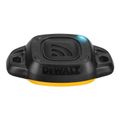
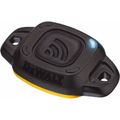

Tool Trackers are Bluetooth-enabled tags and software systems contractors use to locate tools, job boxes, and equipment that go missing on a job site or between locations. Milwaukee's ONE-KEY Bluetooth Tracking Tag runs on a built-in battery rated for three years and updates its location whenever it comes within 300 feet of a phone running the ONE-KEY app, with no subscription fee required. DeWalt's Tool Connect Tag works on a similar principle, holding a Bluetooth connection up to 100 feet and carrying an IP68 rating for dust and water resistance. Beyond individual tags, inventory apps like ONE-KEY let crews track built-in Bluetooth on compatible power tools, log check-outs and returns, and pull usage reports across multiple job sites. Tool theft and lost equipment cost contractors real time and money every season, so a tracking system that works passively in the background, without extra scanning or manual logs, helps crews recover gear faster and keep better records of what's actually on the truck.
Subcategories
- Bluetooth Tracking Tags: Bluetooth tracking tags attach to tools, job boxes, and equipment that don't have built-in tracking hardware, turning any asset into something a crew can locate through a phone app. Milwaukee's ONE-KEY tag runs on a built-in battery rated for three years, updates its location within 300 feet of an app-connected device, and includes a built-in speaker that helps narrow down a search within 50 feet. DeWalt's Tool Connect tag holds an IP68 rating and connects up to 100 feet, with a blue LED that blinks so a technician can visually confirm which tag they've located. Contractors use these tags on high-value items like generators, compressors, and ladders that tend to go missing from a site.
- Built-In Tool Tracking: Built-in tool tracking uses Bluetooth radios already installed inside compatible power tools, so no separate tag needs to be attached. Milwaukee's ONE-KEY system works with more than 120 compatible tool models, letting the ONE-KEY app pull location data directly from the tool itself. Crews running mostly one brand of Bluetooth-enabled tools benefit from this approach since it skips the extra step of buying and installing separate tags. Tool location updates the same way a tag would, based on proximity to any phone running the matching app.
- Inventory Management Software: Inventory management software gives crews a central place to log every tool, job box, and piece of equipment across multiple job sites and crews. The ONE-KEY app lets users create job site locations, check tools in and out, and mark equipment as returned, missing, or damaged after a job wraps. Fleet and project managers use this software to see where equipment sits at any given time and to pull usage reports for planning future jobs. Because the app runs free of a subscription fee, crews of any size can start tracking inventory without adding a recurring cost.
Buying Guide
Matching the tracker to the asset comes first. Small hand tools and accessories usually don't justify a dedicated tag, while generators, compressors, ladders, and job boxes that regularly go missing are strong candidates for a Bluetooth tag. Crews running a fleet of tools from one brand should check whether those tools already carry built-in tracking hardware before buying separate tags, since paying for tags to cover tools that already track natively wastes money.
Tool Trackers need to balance range and durability once the asset list is set. A tag with a shorter Bluetooth range works fine for gear that stays close to a job box or work van, but equipment that gets loaded onto trailers or stored in remote yards benefits from a longer range and a crowdsourced locating network that picks up a signal from any nearby app user, not just the owner's phone. Job site conditions call for a tag rated for dust and water resistance, since a tracker that fails in the rain defeats its own purpose.
Software only pays off if someone actually uses it, so usability deserves as much weight as the hardware. An app that supports check-in and check-out logging, multi-user access, and usage reporting helps a shop keep accurate records instead of relying on a single person's memory. Free apps with no subscription fee remove one more reason not to adopt the system fleet-wide.
Frequently Asked Questions
How long does the battery last on a Bluetooth tool tracking tag?
Milwaukee's ONE-KEY tag and DeWalt's Tool Connect tag both run on built-in batteries rated for roughly three years of use before they need replacement. Neither tag requires a subscription fee to keep tracking active during that time.
What's the difference between a tracking tag and built-in tool tracking?
A tracking tag is a separate accessory attached to a tool or piece of equipment, while built-in tool tracking uses a Bluetooth radio already installed inside a compatible power tool. Crews running mostly one brand of Bluetooth-enabled tools can skip buying tags for those tools and rely on the built-in hardware instead.
How far away can a tool tracker still detect a signal?
Range depends on the tag: Milwaukee's ONE-KEY tag updates location within 300 feet of an app-connected device, while DeWalt's Tool Connect tag holds a connection up to 100 feet. Both systems also rely on a broader network of app users who can anonymously help locate a tagged item outside that direct range.
Do tool trackers require a monthly subscription?
Milwaukee's ONE-KEY app and DeWalt's Tool Connect app are both free to use, with no subscription fee required to track tags or manage inventory. Costs are limited to the tags or Bluetooth-enabled tools themselves.
Can tool trackers survive outdoor job site conditions?
DeWalt's Tool Connect tag carries an IP68 rating for dust and water resistance, and Milwaukee's ONE-KEY tag is built with a weather, dust, and impact-resistant housing. Both are designed to stay attached to equipment through daily jobsite use rather than being removed between jobs.
