




Filters
SORT
Product Availability –
Review Score –
 --%3E %3Csvg version='1.1' id='Fill' xmlns='http://www.w3.org/2000/svg' xmlns:xlink='http://www.w3.org/1999/xlink' x='0px' y='0px' viewBox='0 0 100 100' enable-background='new 0 0 100 100' xml:space='preserve'%3E %3Cpath fill='%23F15C02' d='M79.44,0.95H20.56C9.78,0.95,0.95,9.78,0.95,20.56v58.87c0,10.79,8.82,19.61,19.61,19.61h58.87 c10.79,0,19.61-8.83,19.61-19.61V20.56C99.05,9.78,90.22,0.95,79.44,0.95z M65.38,58.24l9.38,29.58L49.69,69.78L24.5,87.82 l9.34-29.6L8.8,39.6l30.73-0.17c0,0,6.98-19.61,10-28.93c0.54,1.36,9.88,29.1,9.88,29.1H91.2L65.38,58.24z'/%3E %3C/svg%3E)
 --%3E %3Csvg version='1.1' id='With-RB' xmlns='http://www.w3.org/2000/svg' xmlns:xlink='http://www.w3.org/1999/xlink' x='0px' y='0px' viewBox='0 0 100 100' enable-background='new 0 0 100 100' xml:space='preserve'%3E %3Cpath fill='%23FBC8B4' d='M79.44,0.95H20.56C9.78,0.95,0.95,9.78,0.95,20.56v58.87c0,10.79,8.82,19.61,19.61,19.61h58.87 c10.79,0,19.61-8.83,19.61-19.61V20.56C99.05,9.78,90.22,0.95,79.44,0.95z M65.38,58.24l9.38,29.58L49.69,69.78L24.5,87.82 l9.34-29.6L8.8,39.6l30.73-0.17c0,0,6.98-19.61,10-28.93c0.54,1.36,9.88,29.1,9.88,29.1H91.2L65.38,58.24z'/%3E %3C/svg%3E)
Price Range –
Trane Defrost Boards & Controls


 --%3E %3Csvg version='1.1' id='Half' xmlns='http://www.w3.org/2000/svg' xmlns:xlink='http://www.w3.org/1999/xlink' x='0px' y='0px' viewBox='0 0 100 100' enable-background='new 0 0 100 100' xml:space='preserve'%3E %3Cg%3E %3Cpath fill='%23F15C02' d='M30.05,70.23l3.79-12.01L8.8,39.6l30.73-0.17c0,0,6.98-19.61,10-28.93c0.54,1.36,9.88,29.1,9.88,29.1h1.58 L93.71,7.18c-3.58-3.82-8.66-6.23-14.28-6.23H20.56C9.78,0.95,0.95,9.78,0.95,20.56v58.87c0,5.41,2.22,10.32,5.79,13.88 L30.05,70.23z'/%3E %3C/g%3E %3Cpath fill='%23FBC8B4' d='M93.71,7.18L60.98,39.6H91.2L65.38,58.24l9.38,29.58L49.69,69.78L24.5,87.82l5.55-17.59L6.75,93.32 c3.55,3.54,8.44,5.73,13.82,5.73h58.87c10.79,0,19.61-8.83,19.61-19.61V20.56C99.05,15.4,97.01,10.69,93.71,7.18z'/%3E %3C/svg%3E)



 --%3E %3Csvg version='1.1' id='No-RB' xmlns='http://www.w3.org/2000/svg' xmlns:xlink='http://www.w3.org/1999/xlink' x='0px' y='0px' viewBox='0 0 100 100' enable-background='new 0 0 100 100' xml:space='preserve'%3E %3Cpath fill='%23CECECE' d='M79.44,0.95H20.56C9.78,0.95,0.95,9.78,0.95,20.56v58.87c0,10.79,8.82,19.61,19.61,19.61h58.87 c10.79,0,19.61-8.83,19.61-19.61V20.56C99.05,9.78,90.22,0.95,79.44,0.95z M65.38,58.24l9.38,29.58L49.69,69.78L24.5,87.82 l9.34-29.6L8.8,39.6l30.73-0.17c0,0,6.98-19.61,10-28.93c0.54,1.36,9.88,29.1,9.88,29.1H91.2L65.38,58.24z'/%3E %3C/svg%3E)
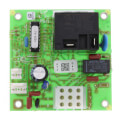

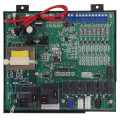
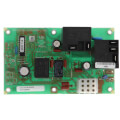
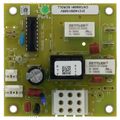

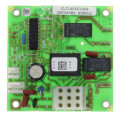
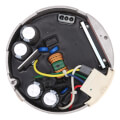

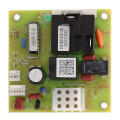
Trane defrost boards and controls are the components that tell a Trane heat pump when to pause heating and run a defrost cycle to clear ice from the outdoor coil. A defrost control board reads outdoor coil temperature and outdoor air temperature, then reverses the refrigerant flow, shuts off the outdoor fan, and lets warm refrigerant melt accumulated frost before returning the system to normal heating. Getting the board matched to the right coil count and control scheme keeps a heat pump from short-cycling into defrost too often, or not defrosting often enough to keep ice from building up. Stocking the correct board for a given Trane outdoor unit means the difference between a same-visit repair and a return trip.
Subcategories
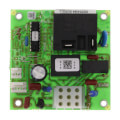
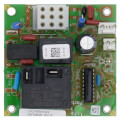
- Electromechanical Defrost Boards: Electromechanical defrost boards use a timer motor and mechanical switch contacts to initiate a defrost cycle at set intervals, checking coil temperature to decide whether ice has actually built up before reversing the system. Older Trane heat pumps commonly used this style of board, and replacements are still stocked for units that haven't been upgraded to solid-state controls. Technicians troubleshoot these boards by checking the timer motor and switch contacts for wear before condemning the whole board.
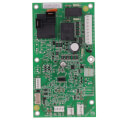
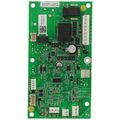
- Solid-State Defrost Boards: Solid-state defrost boards use electronic sensors and a microprocessor rather than a mechanical timer, adjusting defrost frequency based on actual coil and outdoor temperature readings instead of a fixed interval. Trane's residential packaged heat pumps and single-coil outdoor units each use board variants matched to their coil count, so confirming the equipment model before ordering avoids a mismatched control scheme. A solid-state board that fails often shows no defrost activity at all rather than a partial malfunction.
- Defrost Sensors & Thermostats: Defrost sensors and thermostats measure coil and outdoor air temperature and feed that reading to the defrost board, and a sensor that's drifted out of calibration can cause a heat pump to defrost far more or less often than it needs. Replacing a suspect sensor is inexpensive compared to a full board and should be ruled out first when a system defrosts erratically. Sensor leads and connectors are specific to the board family they pair with.
- Time-Temperature Defrost Controls: Combining a fixed timing interval with a temperature check is how time-temperature controls decide whether both conditions are met before starting a defrost cycle. Packaged heat pump units commonly use this control style, with a single board managing both the compressor lockout and the defrost sequence. Confirming board compatibility with the outdoor unit's coil configuration prevents a control mismatch that can leave the system stuck in defrost.
Buying Guide
Replacing a Trane heat pump's defrost board starts with confirming how many outdoor coils the unit has, since Trane specifies different boards for single-coil outdoor units and dual-coil packaged systems. Installing a board built for the wrong coil count is a common cause of a heat pump that won't complete a defrost cycle or that defrosts on a schedule that doesn't match the actual ice buildup on the coil. Trane Defrost Boards & Controls should be cross-referenced by the outdoor unit's model and serial number rather than by board appearance alone, since board revisions can look similar while wiring differently. Before condemning a board, checking the defrost sensor, the reversing valve solenoid, and the outdoor fan motor rules out the more common and less expensive failures that can mimic a bad board. A board that's stuck in defrost, or that never initiates one, points to different failure modes: a shorted sensor circuit tends to keep the system in defrost, while an open circuit or failed timer usually prevents defrost from starting at all. Technicians who keep both electromechanical and solid-state boards on the truck cover a wider range of Trane heat pump ages without a special order. Matching the low-voltage wiring harness and connector style to the original board is as important as matching the board itself, since a harness mismatch can leave the new board unpowered even when it's the correct part number.
Frequently Asked Questions
What's the difference between an electromechanical and a solid-state Trane defrost board?
Electromechanical boards use a timer motor and mechanical switch contacts to trigger defrost at set intervals, while solid-state boards use electronic sensors and a microprocessor to base defrost timing on actual coil and outdoor temperature. Solid-state boards are the standard on newer Trane heat pumps, but electromechanical replacements are still stocked for older units that haven't been upgraded.
Why does a Trane heat pump stay stuck in defrost mode?
A heat pump stuck in defrost usually points to a shorted defrost sensor circuit or a reversing valve that isn't shifting back to heating mode once the board sends the signal. Checking the sensor reading against actual coil temperature, and confirming the reversing valve solenoid is energizing correctly, narrows down whether the board or another component is at fault.
How many outdoor coils does a Trane heat pump defrost board need to match?
Trane specifies board variants by coil count, with certain boards built for single-coil outdoor units and others for dual-coil packaged heat pumps. Installing a board meant for the wrong coil configuration is a common reason a replacement board doesn't behave the way the original one did.
Can a bad defrost sensor be replaced without swapping the whole board?
In most cases yes: the sensor is a separate, lower-cost component that plugs into the board, and a technician can test its resistance against the manufacturer's temperature chart before deciding whether to replace it. Swapping the sensor first is worth doing before condemning an otherwise functional board.
What should be checked before condemning a defrost control board?
Before replacing the board, confirming the defrost sensor reading, the reversing valve solenoid, and the outdoor fan motor operation rules out the more common failures that can look like a bad board from the thermostat's perspective. A board is rarely the first component to fail on a heat pump defrost circuit.
