




Vents
Vents cover the components that seal and finish a vent stack penetration through a roof, currently including roof flashing sized for the point where a vent pipe passes through the roofing material.
Proper roof flashing keeps water from entering the building at the vent penetration, an important detail on any roof with plumbing vent stacks passing through it. Matching flashing size to the vent pipe diameter keeps the seal tight against the surrounding roofing material.




Subcategories
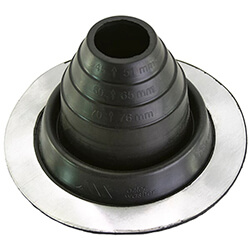
- Roof Flashing: Roof flashing seals the point where a vent stack passes through the roof deck and shingles, keeping water from tracking down the pipe into the building. Lead flashing molds by hand to fit pipe diameters commonly from about 1-1/2 inches up to 4 inches or larger, conforming to shingle, tile, or metal roofing profiles as it gets worked into place. Aluminum flashing suits smaller residential vent runs, typically from about 1/2 inch to 1-1/2 inch pipe, and holds its shape without the hand-forming lead requires. Roofers and plumbers pick the material based on roof type, pipe size, and how much the flashing needs to conform to an irregular surface.
Buying Guide
Vent sizing starts with the fixture unit load it serves and the diameter of the drain it connects to, since an undersized vent restricts airflow and an oversized one wastes material and roof penetrations. Local code tables spell out minimum vent diameter by fixture count, so that's the first stop before ordering pipe.
Material selection generally follows what's already in the building. PVC and ABS dominate new residential construction because they're light and quick to solvent weld, while a cast iron or copper retrofit often calls for matching fittings so the transition doesn't rely on a rubber coupling doing more work than code allows.
Vent routing affects both material cost and roof penetration count. Combining multiple fixture vents into a single stack before it exits the roof cuts down on flashing points, each of which is a potential leak location.
Roof flashing selection depends on roofing material and pipe diameter. Lead flashing conforms to uneven or textured roofing like tile or wood shake, while a rigid flashing works fine on asphalt shingle roofs with a straight pipe penetration.
Sealing and fastening the flashing correctly matters more than the flashing material itself. A flashing set without enough underlayment overlap or fastened with exposed nail heads will eventually leak regardless of whether it's lead, aluminum, or plastic.
Frequently Asked Questions
How far can a fixture be from its vent?
Maximum trap-to-vent distance depends on the fixture drain size and is set by the locally adopted plumbing code, generally ranging from a few feet for a small drain to several feet for larger drains. Checking the adopted code table before rough-in avoids a failed inspection over vent placement.
What's the difference between lead and aluminum roof flashing?
Lead flashing is a soft metal that gets hand-formed around the vent pipe and roofing profile, making it useful on curved tile, wood shake, or slate roofs. Aluminum flashing comes pre-formed and works well on flat asphalt shingle roofs where the pipe penetration is straight and doesn't need custom shaping.
Can two fixtures share one vent?
Two fixtures on the same floor level can often share a common vent, known as a wet vent or common vent, provided the drain and vent sizing meet the code requirements for that configuration. The layout has to be verified against the locally adopted plumbing code since requirements vary by jurisdiction.
Why does a roof vent need flashing instead of just caulk?
Caulk alone breaks down under UV exposure and temperature cycling within a few years, while flashing is a mechanical barrier that sheds water by design and only needs sealant at the edges. A properly installed flashing keeps working even after the sealant around it has worn away.
Does vent pipe material need to match the drain pipe material?
Vent pipe doesn't have to match the drain material chemically, but the fitting connections at the transition point need to be rated for joining those two materials, whether that's a rubber coupling, a mechanical fitting, or a specific transition fitting. Mixing materials without the correct transition fitting is a common source of rough-in inspection failures.
Resources
Subcategories
- Roof Flashing: Roof flashing seals the point where a vent stack passes through the roof deck and shingles, keeping water from tracking down the pipe into the building. Lead flashing molds by hand to fit pipe diameters commonly from about 1-1/2 inches up to 4 inches or larger, conforming to shingle, tile, or metal roofing profiles as it gets worked into place. Aluminum flashing suits smaller residential vent runs, typically from about 1/2 inch to 1-1/2 inch pipe, and holds its shape without the hand-forming lead requires. Roofers and plumbers pick the material based on roof type, pipe size, and how much the flashing needs to conform to an irregular surface.
Buying Guide
Vent sizing starts with the fixture unit load it serves and the diameter of the drain it connects to, since an undersized vent restricts airflow and an oversized one wastes material and roof penetrations. Local code tables spell out minimum vent diameter by fixture count, so that's the first stop before ordering pipe.
Material selection generally follows what's already in the building. PVC and ABS dominate new residential construction because they're light and quick to solvent weld, while a cast iron or copper retrofit often calls for matching fittings so the transition doesn't rely on a rubber coupling doing more work than code allows.
Vent routing affects both material cost and roof penetration count. Combining multiple fixture vents into a single stack before it exits the roof cuts down on flashing points, each of which is a potential leak location.
Roof flashing selection depends on roofing material and pipe diameter. Lead flashing conforms to uneven or textured roofing like tile or wood shake, while a rigid flashing works fine on asphalt shingle roofs with a straight pipe penetration.
Sealing and fastening the flashing correctly matters more than the flashing material itself. A flashing set without enough underlayment overlap or fastened with exposed nail heads will eventually leak regardless of whether it's lead, aluminum, or plastic.
Frequently Asked Questions
How far can a fixture be from its vent?
Maximum trap-to-vent distance depends on the fixture drain size and is set by the locally adopted plumbing code, generally ranging from a few feet for a small drain to several feet for larger drains. Checking the adopted code table before rough-in avoids a failed inspection over vent placement.
What's the difference between lead and aluminum roof flashing?
Lead flashing is a soft metal that gets hand-formed around the vent pipe and roofing profile, making it useful on curved tile, wood shake, or slate roofs. Aluminum flashing comes pre-formed and works well on flat asphalt shingle roofs where the pipe penetration is straight and doesn't need custom shaping.
Can two fixtures share one vent?
Two fixtures on the same floor level can often share a common vent, known as a wet vent or common vent, provided the drain and vent sizing meet the code requirements for that configuration. The layout has to be verified against the locally adopted plumbing code since requirements vary by jurisdiction.
Why does a roof vent need flashing instead of just caulk?
Caulk alone breaks down under UV exposure and temperature cycling within a few years, while flashing is a mechanical barrier that sheds water by design and only needs sealant at the edges. A properly installed flashing keeps working even after the sealant around it has worn away.
Does vent pipe material need to match the drain pipe material?
Vent pipe doesn't have to match the drain material chemically, but the fitting connections at the transition point need to be rated for joining those two materials, whether that's a rubber coupling, a mechanical fitting, or a specific transition fitting. Mixing materials without the correct transition fitting is a common source of rough-in inspection failures.