




Filters
SORT
Product Availability –
Connection Size –
Review Score –
 --%3E %3Csvg version='1.1' id='Fill' xmlns='http://www.w3.org/2000/svg' xmlns:xlink='http://www.w3.org/1999/xlink' x='0px' y='0px' viewBox='0 0 100 100' enable-background='new 0 0 100 100' xml:space='preserve'%3E %3Cpath fill='%23F15C02' d='M79.44,0.95H20.56C9.78,0.95,0.95,9.78,0.95,20.56v58.87c0,10.79,8.82,19.61,19.61,19.61h58.87 c10.79,0,19.61-8.83,19.61-19.61V20.56C99.05,9.78,90.22,0.95,79.44,0.95z M65.38,58.24l9.38,29.58L49.69,69.78L24.5,87.82 l9.34-29.6L8.8,39.6l30.73-0.17c0,0,6.98-19.61,10-28.93c0.54,1.36,9.88,29.1,9.88,29.1H91.2L65.38,58.24z'/%3E %3C/svg%3E)
 --%3E %3Csvg version='1.1' id='With-RB' xmlns='http://www.w3.org/2000/svg' xmlns:xlink='http://www.w3.org/1999/xlink' x='0px' y='0px' viewBox='0 0 100 100' enable-background='new 0 0 100 100' xml:space='preserve'%3E %3Cpath fill='%23FBC8B4' d='M79.44,0.95H20.56C9.78,0.95,0.95,9.78,0.95,20.56v58.87c0,10.79,8.82,19.61,19.61,19.61h58.87 c10.79,0,19.61-8.83,19.61-19.61V20.56C99.05,9.78,90.22,0.95,79.44,0.95z M65.38,58.24l9.38,29.58L49.69,69.78L24.5,87.82 l9.34-29.6L8.8,39.6l30.73-0.17c0,0,6.98-19.61,10-28.93c0.54,1.36,9.88,29.1,9.88,29.1H91.2L65.38,58.24z'/%3E %3C/svg%3E)
Price Range –
Vibration Absorbers


 --%3E %3Csvg version='1.1' id='No-RB' xmlns='http://www.w3.org/2000/svg' xmlns:xlink='http://www.w3.org/1999/xlink' x='0px' y='0px' viewBox='0 0 100 100' enable-background='new 0 0 100 100' xml:space='preserve'%3E %3Cpath fill='%23CECECE' d='M79.44,0.95H20.56C9.78,0.95,0.95,9.78,0.95,20.56v58.87c0,10.79,8.82,19.61,19.61,19.61h58.87 c10.79,0,19.61-8.83,19.61-19.61V20.56C99.05,9.78,90.22,0.95,79.44,0.95z M65.38,58.24l9.38,29.58L49.69,69.78L24.5,87.82 l9.34-29.6L8.8,39.6l30.73-0.17c0,0,6.98-19.61,10-28.93c0.54,1.36,9.88,29.1,9.88,29.1H91.2L65.38,58.24z'/%3E %3C/svg%3E)

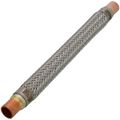

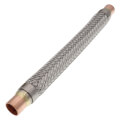
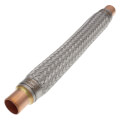


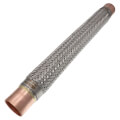

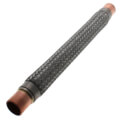
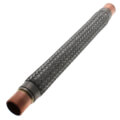

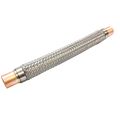
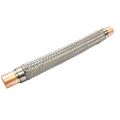
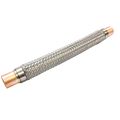
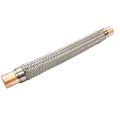
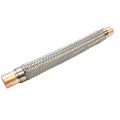
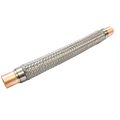
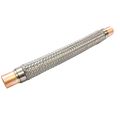
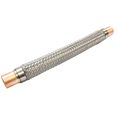
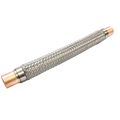
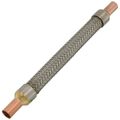
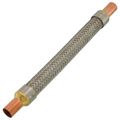

Vibration absorbers are flexible pipe fittings installed in refrigeration and air conditioning lines to isolate compressor vibration from the surrounding piping and structure. Installed close to the compressor, typically in the discharge or suction line, they flex slightly with each vibration cycle rather than transmitting it down the line, where it can loosen fittings, crack brazed joints, or transfer noise into an occupied space above or below the mechanical room. Compressor vibration that goes unaddressed tends to work fittings loose gradually, so a leak traced back to a joint near the compressor is sometimes a vibration issue rather than a workmanship problem. Selecting the right size and connection type for the application matters, since a vibration absorber has to match both the line size and the refrigerant type in use. Commercial refrigeration racks and larger rooftop units are especially prone to vibration-related piping fatigue given how often compressors cycle on and off throughout a day.
Subcategories
- Braided Stainless Steel Absorbers: Braided stainless steel vibration absorbers use a corrugated metal hose core wrapped in a braided sleeve, giving the fitting flexibility while still holding up to refrigerant pressures and temperatures over a long service life. The braided outer layer protects the corrugated core from external damage and adds burst resistance beyond what the bare hose alone would provide. These are a common choice on commercial refrigeration and rooftop equipment where the absorber needs to handle both the vibration and the mechanical stress of a busy service environment. Correct orientation during installation matters, since these fittings are more effective when mounted parallel to the direction of compressor vibration rather than perpendicular to it.
- Bellows-Style Absorbers: Bellows-style vibration absorbers use a folded metal diaphragm design that compresses and expands to absorb vibration, offering more flex per inch of length than a braided hose in the same space. This construction suits installations where space near the compressor is limited and a compact fitting is needed to fit within a tight service envelope. Bellows-style units are more sensitive to being installed under excessive strain or misalignment, so the connecting pipe should be properly supported on both sides rather than relying on the absorber itself to bear structural load. They are frequently specified on tightly packed commercial refrigeration racks.
- Suction Line Absorbers: Suction line absorbers are sized and rated for the lower pressures and larger diameters typical of a compressor's suction side, where refrigerant vapor returns from the evaporator. Suction line vibration issues often show up as noise transmitted through the building structure rather than as a pressure problem, so these absorbers matter as much for occupant comfort as for equipment protection. Correct sizing to the suction line diameter is important, since an undersized absorber can add unwanted pressure drop that reduces system capacity. These are typically installed within a short distance of the compressor for the best vibration isolation.
- Discharge Line Absorbers: Discharge line absorbers handle the higher pressures and temperatures on a compressor's discharge side, so the fitting's pressure and temperature rating needs to match the refrigerant and operating conditions of the system rather than being selected on pipe size alone. Discharge-side vibration is often more pronounced than suction-side vibration because of the higher pressure pulses generated as the compressor cycles, which makes absorber placement close to the compressor especially important on this line. A discharge absorber rated below the system's operating pressure is a common cause of premature failure. These fittings are typically among the first components checked when diagnosing a vibration-related leak near a compressor.
Buying Guide
Choosing a vibration absorber starts with matching the fitting to the line it will be installed on, since suction and discharge lines operate at different pressures and require different pressure ratings even on the same system. Diameter needs to match the connecting pipe exactly, because an undersized absorber restricts flow and adds pressure drop, while an oversized one can be harder to fit within the available space near the compressor. Construction type matters next: braided stainless steel options tend to hold up well in busy commercial refrigeration environments where physical durability is a concern, while bellows-style absorbers offer more flex in a shorter length for tighter installations. Placement close to the compressor generally provides the best vibration isolation, though the connecting piping on either side still needs proper support so the absorber is not left to bear structural weight it was not designed for. Refrigerant compatibility is worth confirming as well, since not every absorber material is rated for every refrigerant type in current use. On commercial refrigeration racks with multiple compressors cycling frequently throughout the day, vibration-related piping fatigue tends to show up faster than on a single residential system, which makes absorber selection and correct installation more important on those applications. Getting the size, pressure rating, and placement right the first time avoids a return trip to chase a slow leak at a joint near the compressor.
Frequently Asked Questions
Where should a vibration absorber be installed in a refrigeration system?
Absorbers work best installed close to the compressor, either on the suction or discharge line, since that is where vibration is strongest before it has a chance to travel down the piping.
What happens if a vibration absorber is undersized for the line it is installed on?
An undersized absorber restricts refrigerant flow and adds unwanted pressure drop, which can reduce system capacity even though the vibration isolation itself still works.
Why do fittings near a compressor sometimes develop leaks even without any workmanship issue?
Compressor vibration that is not properly isolated can gradually work brazed joints and fittings loose over time, so a leak near the compressor sometimes traces back to a missing or undersized vibration absorber rather than a bad joint.
Is a discharge line vibration absorber the same as a suction line absorber?
No, discharge line absorbers need pressure and temperature ratings suited to the higher conditions on that side of the compressor, while suction line absorbers are sized for lower pressure and larger diameter vapor lines.
Do bellows-style and braided stainless steel absorbers perform differently?
Bellows-style absorbers offer more flex in a shorter length, which suits tight installations, while braided stainless steel absorbers tend to hold up better under the physical wear of a busy commercial refrigeration environment.
