




Copper Meter Setters

 --%3E %3Csvg version='1.1' id='No-RB' xmlns='http://www.w3.org/2000/svg' xmlns:xlink='http://www.w3.org/1999/xlink' x='0px' y='0px' viewBox='0 0 100 100' enable-background='new 0 0 100 100' xml:space='preserve'%3E %3Cpath fill='%23CECECE' d='M79.44,0.95H20.56C9.78,0.95,0.95,9.78,0.95,20.56v58.87c0,10.79,8.82,19.61,19.61,19.61h58.87 c10.79,0,19.61-8.83,19.61-19.61V20.56C99.05,9.78,90.22,0.95,79.44,0.95z M65.38,58.24l9.38,29.58L49.69,69.78L24.5,87.82 l9.34-29.6L8.8,39.6l30.73-0.17c0,0,6.98-19.61,10-28.93c0.54,1.36,9.88,29.1,9.88,29.1H91.2L65.38,58.24z'/%3E %3C/svg%3E)


 --%3E %3Csvg version='1.1' id='Fill' xmlns='http://www.w3.org/2000/svg' xmlns:xlink='http://www.w3.org/1999/xlink' x='0px' y='0px' viewBox='0 0 100 100' enable-background='new 0 0 100 100' xml:space='preserve'%3E %3Cpath fill='%23F15C02' d='M79.44,0.95H20.56C9.78,0.95,0.95,9.78,0.95,20.56v58.87c0,10.79,8.82,19.61,19.61,19.61h58.87 c10.79,0,19.61-8.83,19.61-19.61V20.56C99.05,9.78,90.22,0.95,79.44,0.95z M65.38,58.24l9.38,29.58L49.69,69.78L24.5,87.82 l9.34-29.6L8.8,39.6l30.73-0.17c0,0,6.98-19.61,10-28.93c0.54,1.36,9.88,29.1,9.88,29.1H91.2L65.38,58.24z'/%3E %3C/svg%3E)


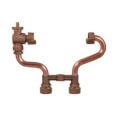
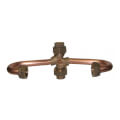
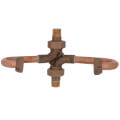
Copper meter setters are factory-assembled fittings that hold a water meter in the correct position and alignment where a service line enters a building or meter pit. A setter connects to the incoming copper service pipe on one side and the outgoing pipe on the other, with the meter mounted between them at a fixed laying length so it seats properly without extra cutting or fitting work in the field. Plumbers and water utility crews use setters to speed up meter installation, simplify meter swaps during routine replacement or testing, and absorb some of the mechanical stress the service line places on the meter itself. Because copper resists corrosion well in underground and pit installations, copper setters are a common choice where the service line material is also copper. Matching the setter to the meter size and the service line diameter keeps the connection watertight and the meter properly supported.
Subcategories
- Straight Meter Setters: Straight setters align the inlet and outlet in a single line, matching a straight run of service pipe through the meter pit or basement wall. They are common where the service line enters and exits along the same axis. Choosing a straight setter over an angled configuration depends on the existing pipe layout at the installation point. Getting the laying length right keeps the meter properly supported without strain on the surrounding pipe joints.
- Angle Meter Setters: Angle setters change direction between the inlet and outlet, which is useful when the service line enters a pit or wall at an angle relative to where the meter needs to sit. This configuration can reduce the number of separate fittings needed to route the pipe into position. Angle setters still need to match the meter's laying length and connection size for a proper fit. They are typically chosen based on the physical layout of the meter pit rather than personal preference.
- Meter Setter Valves and Unions: Many meter setters include integrated shutoff valves on one or both sides of the meter position, allowing water supply to be isolated during a meter swap without shutting down the rest of the building's plumbing. Union-style connections at the meter allow the meter itself to be removed and reinstalled without cutting the surrounding pipe. These components extend the working life of the setter assembly and simplify future meter service.
Buying Guide
Selecting a copper meter setter starts with confirming the meter size it needs to accommodate, since the setter's laying length and connection dimensions are built around a specific meter. Installing a setter sized for the wrong meter can leave gaps at the connection points or put unnecessary strain on the meter body once water pressure is applied.
Pipe configuration at the installation site determines whether a straight or angle setter fits better. Measuring the existing service line layout before ordering avoids adding extra fittings just to make a straight setter work in a space that calls for an angled connection, or the reverse.
Whether the setter includes integrated shutoff valves is another consideration. A setter with built-in valves on both sides of the meter allows water to be isolated for meter replacement or testing without affecting the rest of the plumbing system, which is worth the extra cost on installations where the meter will need periodic service.
Connection type at each end, whether flared copper, soldered, or threaded for iron pipe, needs to match the existing service line material and the local utility's requirements. Confirming these details with the water utility or inspector before purchasing avoids a mismatch that requires additional adapters.
Frequently Asked Questions
What does a meter setter actually do?
A meter setter holds the water meter in proper alignment between the incoming and outgoing service pipe, providing a fixed laying length so the meter seats correctly without extra field fitting. It also absorbs some of the mechanical stress the service line places on the meter.
Why choose copper over other meter setter materials?
Copper resists corrosion well in underground and meter pit environments, which makes it a durable choice where the service line itself is also copper. Matching setter material to the service line simplifies the connection.
Do meter setters come with built-in shutoff valves?
Many do, with valves positioned on one or both sides of the meter so water supply can be isolated during a meter swap or test without shutting down the rest of the building's plumbing.
How is the right setter size determined?
Setter size is based on the water meter it needs to hold, since the laying length and connection dimensions are built around a specific meter size. Confirming meter size before ordering avoids a mismatched fit.
What is the difference between a straight and angle meter setter?
A straight setter keeps the inlet and outlet in line, suited to a straight run of service pipe, while an angle setter changes direction to match a service line that enters the pit or wall at an angle. The choice depends on the existing pipe layout.
