




'/%3E%3C/svg%3E)
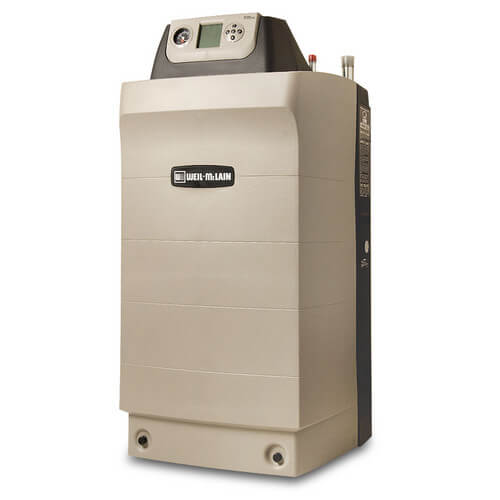
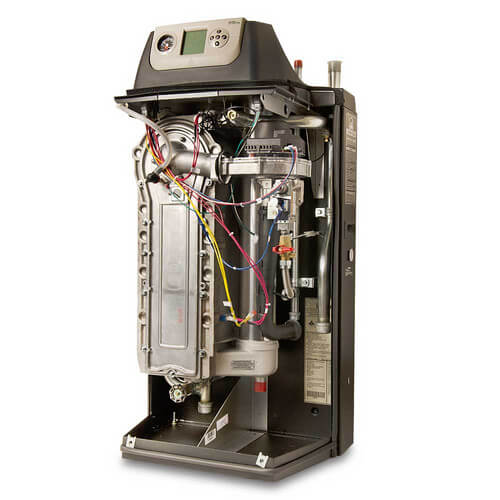
Ultra 105 - 81,000 BTU Output High Efficiency Boiler (Nat Gas or LP)
 --%3E %3Csvg version='1.1' id='Fill' xmlns='http://www.w3.org/2000/svg' xmlns:xlink='http://www.w3.org/1999/xlink' x='0px' y='0px' viewBox='0 0 100 100' enable-background='new 0 0 100 100' xml:space='preserve'%3E %3Cpath fill='%23F15C02' d='M79.44,0.95H20.56C9.78,0.95,0.95,9.78,0.95,20.56v58.87c0,10.79,8.82,19.61,19.61,19.61h58.87 c10.79,0,19.61-8.83,19.61-19.61V20.56C99.05,9.78,90.22,0.95,79.44,0.95z M65.38,58.24l9.38,29.58L49.69,69.78L24.5,87.82 l9.34-29.6L8.8,39.6l30.73-0.17c0,0,6.98-19.61,10-28.93c0.54,1.36,9.88,29.1,9.88,29.1H91.2L65.38,58.24z'/%3E %3C/svg%3E)
 --%3E %3Csvg version='1.1' id='With-RB' xmlns='http://www.w3.org/2000/svg' xmlns:xlink='http://www.w3.org/1999/xlink' x='0px' y='0px' viewBox='0 0 100 100' enable-background='new 0 0 100 100' xml:space='preserve'%3E %3Cpath fill='%23FBC8B4' d='M79.44,0.95H20.56C9.78,0.95,0.95,9.78,0.95,20.56v58.87c0,10.79,8.82,19.61,19.61,19.61h58.87 c10.79,0,19.61-8.83,19.61-19.61V20.56C99.05,9.78,90.22,0.95,79.44,0.95z M65.38,58.24l9.38,29.58L49.69,69.78L24.5,87.82 l9.34-29.6L8.8,39.6l30.73-0.17c0,0,6.98-19.61,10-28.93c0.54,1.36,9.88,29.1,9.88,29.1H91.2L65.38,58.24z'/%3E %3C/svg%3E)
' fill='%23F15C02' d='M49 0C21.938 0 0 21.938 0 49s21.938 49 49 49 49-21.938 49-49S76.062 0 49 0m0 82.709a7.54 7.54 0 1 1 0-15.08 7.54 7.54 0 0 1 0 15.08m7.54-28.412a7.541 7.541 0 0 1-15.08 0V22.831a7.54 7.54 0 0 1 15.08 0v31.466z'/%3E%3C/svg%3E)
MANUALS (8)

Replacement Parts

Product Highlights


Description
**Series 3 Ultra Boiler
Key Features
- Gas fired water boiler with cast aluminum heat exchanger
- Venturi mixing body mixes air and gas providing higher efficiency
- Designed to operate in low temperature condensing applications
- Outdoor reset and domestic hot water priority standard
- Negative regulated gas valve precisely delivers gas to the boiler
- Electronic control module automatically adjusts blower speed and gas flow rate in response to environment
- Modulates with 5 to 1 turndown ratio
- Variable speed motor matches combustion output to heating needs
- High grade stainless steel burner features quiet operation, high efficiency, and cleaner combustion for low NOx applications.
Hydro-Core Near Boiler Installation Options::
- FT-144 1" Ultra Component Kit
Specs
| Width (Inches): | 22-13/16" |
|---|---|
| Fuel Type: | Natural Gas Propane |
| Vent Type: | Direct Vent PVC AL29-4C |
| Boiler Type: | High Efficiency |
| Color: | Slate Gray |
| Efficiency: | 95.3% |
| System Type: | Hydronic (Water) |
| Features: | Direct Vent Condensing EI/Spark Ignition |
| Vent Size: | 3" |
| Water Connection: | 1" |
| Gas Connection: | 1/2" |
| BTU Input: | 105000 |
| BTU Output: | 81000 |
| Warranty: | 15 Year Limited (Heat Exchanger), 1 Year (Parts) |

Questions?

Ultra 105 (S3)
Replacement Parts
SKU: 383-500-702
Brand: Weil-McLain
 --%3E %3Csvg version='1.1' id='No-RB' xmlns='http://www.w3.org/2000/svg' xmlns:xlink='http://www.w3.org/1999/xlink' x='0px' y='0px' viewBox='0 0 100 100' enable-background='new 0 0 100 100' xml:space='preserve'%3E %3Cpath fill='%23CECECE' d='M79.44,0.95H20.56C9.78,0.95,0.95,9.78,0.95,20.56v58.87c0,10.79,8.82,19.61,19.61,19.61h58.87 c10.79,0,19.61-8.83,19.61-19.61V20.56C99.05,9.78,90.22,0.95,79.44,0.95z M65.38,58.24l9.38,29.58L49.69,69.78L24.5,87.82 l9.34-29.6L8.8,39.6l30.73-0.17c0,0,6.98-19.61,10-28.93c0.54,1.36,9.88,29.1,9.88,29.1H91.2L65.38,58.24z'/%3E %3C/svg%3E)

Need help finding a replacement part?
Product Reviews
Most Liked Positive Review
great product
Most Liked Negative Review
WeilMcLane 105 Gas Boiler
Quality Boiler

Expensive, lots of maintance, does not light when cold.
Ultra 105 S3
I would recommend this boiler
Great product, happy customer
Ultra 105 Boiler
I would recommend this boiler
Nice Boiler for the price.
Boiler purchased was a fantastic bargain
This something you won't regreat
Product Q&A
16 QuestionsQ: with the ultra 105 will i need a seprate water heater for the domestic supply?
Asked by 15 years ago
Add your answer
Verified Reply- PexSupply StaffYes, it would need to be connected to an indirect water heater.
Q: does it make a lott of noise?
Asked by joe 15 years ago
Add your answer
Verified Reply- PexSupply StaffNo, this unit is designed to operate quietly.
Q: does this unit come with a vent termination kit
Asked by Al 16 years ago
Add your answer
Verified Reply- PexSupply StaffNo, the kit needs to be purchased separately. It is part number 383-500-350.
Q: What size Ultra do I need to heat 1600 square feet?
Asked by 16 years ago
Add your answer
Verified Reply- PexSupply StaffIn order to determine which boiler would be best for you, please try our boiler sizing calculator ( http://www.pexsupply.com/pex/control/BTUCalculator ).
Q: Can these units be converted for the use of propane (LP) and what will the manifold pressure be exiting to the burner?
Asked by 05silvermark 16 years ago
Add your answer
Verified Reply- PexSupply StaffYes, these units can be converted over to LP. A conversion kit, including an alternate orifice, should have came with your unit. The pressure exiting the manifold depends on which gas you are using. Natural gas supply would give you a pressure between 5 w.c-13 w.c (water column = w.c). Liquid Propane supply would give you a pressure between 4 w.c. - 13 w.c.
Q: If the input BTU is 105,000 and the output is 81,000 BTU I don't get an efficiency of 95 but 77. What am I doing wrong?
Asked by Electrical EE 16 years ago
Add your answer
Verified Reply- PexSupply StaffThe BTU output of 81,000 is if you are installing the boiler in a place that already does not have heat, such as a shed- which would be your worse case scenario. Most people are installing the boiler in a house which changes the output to around 94,000 which increases that efficiency rating as well. All this information can be found in the product manual which can be viewed below: http://s3.pexsupply.com/manuals/1276634743893/31976_PROD_FILE.pdf
The lower rating is called IBR (Institute of Boiler & Radiators ) output. It is basically counting for btu losses in uninsulated supply and return piping as well as the radiator or baseboards themselves. In modern radiant tubing installations with low temperature condensing boilers, the DOE number which is much closer to actual input can be used. On forced air furnaces, it would be equivilent to the amount we have to figure in our heat loss studies for duct leakage and poor insulation on the ducts. The boiler manufacturer is basically covering it's tail and making sure you have a little margine for below design day conditions or any other factors they have no control over. I can assure you that the boiler listed here can easily handle a radiant heating system in a house needing 81,000 btu/h by an accurate heat loss study and still have close to 16% spare capacity.
As a follow up to the answer I gave earlier, the actual efficiency of the boiler is for every 100,000 btu's of gas supplied to boiler, you get 95,000 btu's transfered to the water inside the boiler. It does not take any losses in the rest of the system into account. It is the only thing the boiler manufactuer can control.