




Wire Installation
Wire installation covers the tools electricians use to pull wire and cable through conduit and wall cavities, including fish tape, fish sticks, conduit pistons, and the pull ropes and lubricants that reduce friction during a long pull.
Choosing between fish tape and a conduit piston often depends on the run's length and number of bends, since a piston uses compressed air to shoot a line through in one motion on straighter runs. Wire management hardware finishes the job by organizing and protecting completed wire runs from damage.



Subcategories
- Conduit Pistons: Conduit pistons use compressed air to shoot a pull line through a long or obstructed conduit run, covering distances and bends that a fish tape alone often cannot reach. They see the most use on longer commercial conduit runs where manual fishing would take considerably more time.
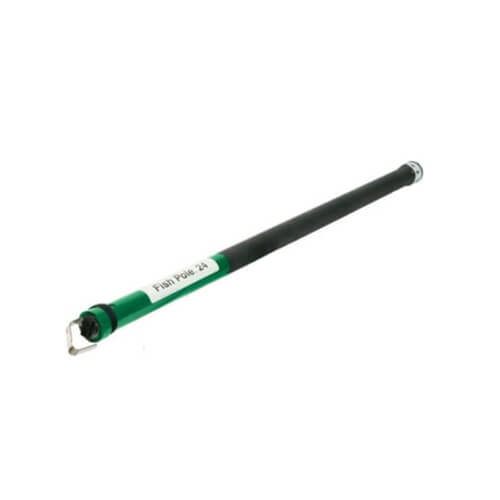
- Fish Sticks: Fish sticks are rigid or semi-rigid rods pushed through a wall cavity or short conduit section to create an initial path for a pull line. Interlocking sections let an electrician extend reach through a stud bay or joist space without an access hole at every point.
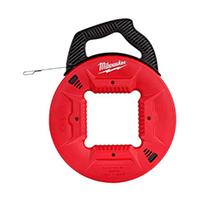
- Fish Tape & Accessories: Fish tape is a flexible steel or fiberglass strip fed through conduit or wall cavities to pull wire behind it, with a hook or loop end for attaching the wire once the tape reaches the far side. Related accessories include tape connectors, leaders, and case reels for storage and reuse.
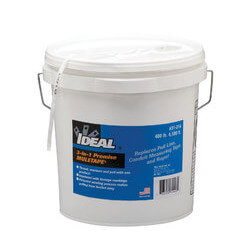
- Pull Ropes: Pull ropes attach to a fish tape or conduit piston line to bring the actual wire or cable through a run once the initial path is established. A low-stretch rope keeps tension consistent across long pulls, reducing the chance of the wire snagging partway through.
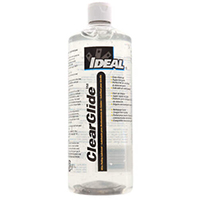
- Pulling Supplies: Pulling supplies cover the lubricant, grips, and related hardware that reduce friction and secure a cable during a pull. Wire pulling lubricant in particular lowers the force needed to draw multiple conductors through a shared conduit, protecting the wire jacket from abrasion along the way.
- Wire Management: Wire management hardware organizes and protects finished wire runs after installation, covering surface raceways, cable ties, clips, and similar hardware. Keeping runs bundled and secured away from foot traffic or moving equipment reduces wear on the wire jacket over the life of the installation.
Buying Guide
Match the pulling method to the run's length and difficulty. A short wall cavity or straightforward conduit run is usually fine with a fish tape or fish stick, while a long or heavily bent commercial conduit run often calls for a conduit piston to move the pull line through efficiently.
Pulling supplies such as lubricant and grips matter more as the number of conductors sharing a single conduit increases. Reducing friction between multiple wires bundled together lowers the pulling force needed and protects the wire jacket from abrasion damage during the pull.
Pull rope material affects how consistently tension holds across a long run. A low-stretch rope keeps the pulling force steady from one end to the other, reducing the chance of a snag going unnoticed until the wire is partway through the conduit.
Wire management hardware is worth planning before the pull, not just after, since knowing how a finished run will be organized and secured can influence how the wire is bundled and routed during installation itself.
A well-stocked truck typically carries fish tape for everyday runs, a conduit piston for occasional long or difficult pulls, and a basic supply of pulling lubricant and wire management hardware to finish the job cleanly.
Frequently Asked Questions
When is a conduit piston needed instead of a standard fish tape?
A conduit piston is typically needed on longer or more heavily bent conduit runs where a fish tape cannot reach the far end or push through multiple direction changes without binding.
What is the purpose of wire pulling lubricant?
Wire pulling lubricant reduces friction between the cable jacket and the inside of the conduit, lowering the force needed to complete a pull and reducing the chance of jacket damage on longer or multi-conductor runs.
Can a fish stick and fish tape be used together on the same pull?
Yes, a fish stick is often used to establish an initial path through a short cavity or conduit section, after which a fish tape or pull rope continues the pull the rest of the way.
Why does pull rope material matter?
A low-stretch pull rope keeps tension consistent across a long pull, which helps an electrician feel a snag immediately rather than continuing to pull against a wire that has caught partway through the run.
What counts as wire management hardware?
Wire management covers items such as surface raceways, cable ties, and mounting clips used to organize and secure a finished wire run, keeping it protected from foot traffic or moving equipment after installation.
Resources

 --%3E %3C!DOCTYPE svg PUBLIC '-//W3C//DTD SVG 1.1//EN' 'http://www.w3.org/Graphics/SVG/1.1/DTD/svg11.dtd'%3E %3Csvg version='1.1' id='Layer_1' xmlns='http://www.w3.org/2000/svg' xmlns:xlink='http://www.w3.org/1999/xlink' x='0px' y='0px' width='90px' height='90px' viewBox='0 0 90 90' enable-background='new 0 0 90 90' xml:space='preserve'%3E %3Crect x='27' y='23' fill='%23FFFFFF' width='43' height='44'/%3E %3Cg%3E %3Cdefs%3E %3Crect id='SVGID_1_' width='90' height='90'/%3E %3C/defs%3E %3CclipPath id='SVGID_2_'%3E %3Cuse xlink:href='%23SVGID_1_' overflow='visible'/%3E %3C/clipPath%3E %3Cpath clip-path='url(%23SVGID_2_)' fill='%234186AD' d='M45,0C20.1,0,0,20.1,0,45c0,24.9,20.1,45,45,45c24.9,0,45-20.1,45-45 C90,20.1,69.9,0,45,0'/%3E %3C/g%3E %3Cpath fill='%23FFFFFF' d='M60.6,47.4l-22.5,14c-0.5,0.3-1,0.399-1.5,0.399s-0.9-0.1-1.4-0.399c-0.9-0.5-1.4-1.4-1.4-2.5v-28 c0-1,0.6-2,1.4-2.5c0.9-0.5,2-0.5,2.9,0.1l22.5,14.1C61.4,43.1,61.9,44,61.9,45S61.4,46.9,60.6,47.4'/%3E %3C/svg%3E)
Subcategories
- Conduit Pistons: Conduit pistons use compressed air to shoot a pull line through a long or obstructed conduit run, covering distances and bends that a fish tape alone often cannot reach. They see the most use on longer commercial conduit runs where manual fishing would take considerably more time.
- Fish Sticks: Fish sticks are rigid or semi-rigid rods pushed through a wall cavity or short conduit section to create an initial path for a pull line. Interlocking sections let an electrician extend reach through a stud bay or joist space without an access hole at every point.
- Fish Tape & Accessories: Fish tape is a flexible steel or fiberglass strip fed through conduit or wall cavities to pull wire behind it, with a hook or loop end for attaching the wire once the tape reaches the far side. Related accessories include tape connectors, leaders, and case reels for storage and reuse.
- Pull Ropes: Pull ropes attach to a fish tape or conduit piston line to bring the actual wire or cable through a run once the initial path is established. A low-stretch rope keeps tension consistent across long pulls, reducing the chance of the wire snagging partway through.
- Pulling Supplies: Pulling supplies cover the lubricant, grips, and related hardware that reduce friction and secure a cable during a pull. Wire pulling lubricant in particular lowers the force needed to draw multiple conductors through a shared conduit, protecting the wire jacket from abrasion along the way.
- Wire Management: Wire management hardware organizes and protects finished wire runs after installation, covering surface raceways, cable ties, clips, and similar hardware. Keeping runs bundled and secured away from foot traffic or moving equipment reduces wear on the wire jacket over the life of the installation.
Buying Guide
Match the pulling method to the run's length and difficulty. A short wall cavity or straightforward conduit run is usually fine with a fish tape or fish stick, while a long or heavily bent commercial conduit run often calls for a conduit piston to move the pull line through efficiently.
Pulling supplies such as lubricant and grips matter more as the number of conductors sharing a single conduit increases. Reducing friction between multiple wires bundled together lowers the pulling force needed and protects the wire jacket from abrasion damage during the pull.
Pull rope material affects how consistently tension holds across a long run. A low-stretch rope keeps the pulling force steady from one end to the other, reducing the chance of a snag going unnoticed until the wire is partway through the conduit.
Wire management hardware is worth planning before the pull, not just after, since knowing how a finished run will be organized and secured can influence how the wire is bundled and routed during installation itself.
A well-stocked truck typically carries fish tape for everyday runs, a conduit piston for occasional long or difficult pulls, and a basic supply of pulling lubricant and wire management hardware to finish the job cleanly.
Frequently Asked Questions
When is a conduit piston needed instead of a standard fish tape?
A conduit piston is typically needed on longer or more heavily bent conduit runs where a fish tape cannot reach the far end or push through multiple direction changes without binding.
What is the purpose of wire pulling lubricant?
Wire pulling lubricant reduces friction between the cable jacket and the inside of the conduit, lowering the force needed to complete a pull and reducing the chance of jacket damage on longer or multi-conductor runs.
Can a fish stick and fish tape be used together on the same pull?
Yes, a fish stick is often used to establish an initial path through a short cavity or conduit section, after which a fish tape or pull rope continues the pull the rest of the way.
Why does pull rope material matter?
A low-stretch pull rope keeps tension consistent across a long pull, which helps an electrician feel a snag immediately rather than continuing to pull against a wire that has caught partway through the run.
What counts as wire management hardware?
Wire management covers items such as surface raceways, cable ties, and mounting clips used to organize and secure a finished wire run, keeping it protected from foot traffic or moving equipment after installation.