




Filters
SORT
Product Availability –
Review Score –
 --%3E %3Csvg version='1.1' id='Fill' xmlns='http://www.w3.org/2000/svg' xmlns:xlink='http://www.w3.org/1999/xlink' x='0px' y='0px' viewBox='0 0 100 100' enable-background='new 0 0 100 100' xml:space='preserve'%3E %3Cpath fill='%23F15C02' d='M79.44,0.95H20.56C9.78,0.95,0.95,9.78,0.95,20.56v58.87c0,10.79,8.82,19.61,19.61,19.61h58.87 c10.79,0,19.61-8.83,19.61-19.61V20.56C99.05,9.78,90.22,0.95,79.44,0.95z M65.38,58.24l9.38,29.58L49.69,69.78L24.5,87.82 l9.34-29.6L8.8,39.6l30.73-0.17c0,0,6.98-19.61,10-28.93c0.54,1.36,9.88,29.1,9.88,29.1H91.2L65.38,58.24z'/%3E %3C/svg%3E)
 --%3E %3Csvg version='1.1' id='With-RB' xmlns='http://www.w3.org/2000/svg' xmlns:xlink='http://www.w3.org/1999/xlink' x='0px' y='0px' viewBox='0 0 100 100' enable-background='new 0 0 100 100' xml:space='preserve'%3E %3Cpath fill='%23FBC8B4' d='M79.44,0.95H20.56C9.78,0.95,0.95,9.78,0.95,20.56v58.87c0,10.79,8.82,19.61,19.61,19.61h58.87 c10.79,0,19.61-8.83,19.61-19.61V20.56C99.05,9.78,90.22,0.95,79.44,0.95z M65.38,58.24l9.38,29.58L49.69,69.78L24.5,87.82 l9.34-29.6L8.8,39.6l30.73-0.17c0,0,6.98-19.61,10-28.93c0.54,1.36,9.88,29.1,9.88,29.1H91.2L65.38,58.24z'/%3E %3C/svg%3E)
Price Range –
York Control Boards


 --%3E %3Csvg version='1.1' id='No-RB' xmlns='http://www.w3.org/2000/svg' xmlns:xlink='http://www.w3.org/1999/xlink' x='0px' y='0px' viewBox='0 0 100 100' enable-background='new 0 0 100 100' xml:space='preserve'%3E %3Cpath fill='%23CECECE' d='M79.44,0.95H20.56C9.78,0.95,0.95,9.78,0.95,20.56v58.87c0,10.79,8.82,19.61,19.61,19.61h58.87 c10.79,0,19.61-8.83,19.61-19.61V20.56C99.05,9.78,90.22,0.95,79.44,0.95z M65.38,58.24l9.38,29.58L49.69,69.78L24.5,87.82 l9.34-29.6L8.8,39.6l30.73-0.17c0,0,6.98-19.61,10-28.93c0.54,1.36,9.88,29.1,9.88,29.1H91.2L65.38,58.24z'/%3E %3C/svg%3E)

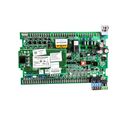
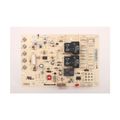
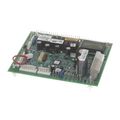
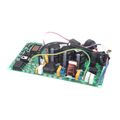
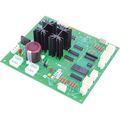

York control boards are the circuit boards that manage ignition timing, blower operation, and safety lockouts inside York furnaces, air handlers, and heat pumps. Boards come in 2-stage and 4-stage configurations to match equipment staging, along with defrost-specific boards built for heat pump split systems that need to manage coil defrost cycles. Communicating and non-communicating versions exist depending on whether a home runs a standard 24-volt thermostat or one of York's connected control platforms. A failed board commonly shows up as a furnace or heat pump that will not start, short-cycles, or flashes a fault code on the equipment's diagnostic LED. Matching board type, stage count, and communication capability to the original equipment keeps a repair straightforward and avoids a second trip for the wrong part. Technicians servicing older York equipment also watch for board revisions, since a replacement board built for a newer control platform will not always drop into an older furnace or air handler without additional wiring changes.
Subcategories
- Furnace Control Boards: Furnace control boards manage ignition sequence, blower timing, and limit switch monitoring inside gas furnaces. York lists both 2-stage and 4-stage furnace boards, so matching stage count to the furnace's burner and blower staging is the first step in a correct replacement. A tech pulling the old board before ordering confirms stage count and wiring layout without guesswork.
- Heat Pump and Defrost Control Boards: Heat pump and defrost boards manage the reversing valve, outdoor fan cycling, and coil defrost timing on York heat pump and split systems. Defrost boards specifically track outdoor coil temperature and run time to decide when a defrost cycle is needed, which keeps a heat pump from icing over in cold, humid weather. Split system installations use a dedicated defrost board separate from the indoor unit's blower control.
- Economizer and Blower Control Boards: Economizer boards manage outdoor air dampers on light commercial rooftop units, while blower control boards handle fan speed and timing on furnaces and air handlers. Facilities running York rooftop equipment rely on economizer boards to bring in outdoor air for free cooling when conditions allow. Blower boards see the most turnover of any control board category since they cycle every time the system runs.
- Communicating Control Boards: Communicating boards pair with York's connected thermostat platforms to share diagnostic data and allow finer control over staging and airflow than a standard 24-volt board. A home upgrading from a conventional thermostat to a communicating system typically needs both a new board and a matching thermostat, since the two communicate directly rather than through simple 24-volt signals. Non-communicating boards remain the more common replacement for older systems still running standard thermostats.
Buying Guide
Replacing a York control board starts with confirming exactly which board is in the equipment already. Model and equipment serial numbers, along with the existing board's part number when it is still legible, narrow the search to the correct stage count and configuration before ordering. A furnace running 2-stage burners needs a 2-stage board, and swapping in a 4-stage board without matching wiring and thermostat capability will not deliver the extra staging.
Communication capability is the next thing to check. Homes running a standard 24-volt thermostat need a non-communicating board, while systems on York's connected platform need a communicating version to keep diagnostics and staging control working as designed. Mixing the two typically means the system falls back to basic operation or fails to start at all.
For heat pumps, confirming whether the original board handled defrost control separately or as part of a combined board matters just as much as stage count. Shopping York Control Boards by equipment model number, rather than by board appearance alone, cuts down on ordering the wrong revision. Once the correct board arrives, a tech should also check for any required jumper settings or dip switch configurations called out in the equipment's install manual, since a board can be correct for the model and still need on-site configuration before it operates correctly.
Frequently Asked Questions
How can a technician tell if a York furnace has a 2-stage or 4-stage control board?
Checking the furnace's model number against York's parts lookup confirms staging, and the burner and gas valve setup usually matches the board's stage count. Pulling the existing board and reading its part number directly is the most reliable way to confirm before ordering a replacement.
What happens if a communicating board is installed with a standard 24-volt thermostat?
The system typically will not establish the communication link the board expects, so it falls back to basic operation or fails to start. Communicating boards need a matching communicating thermostat to function as designed.
Why does a heat pump need a separate defrost control board?
Defrost boards track outdoor coil temperature and compressor run time to decide when the system needs to reverse into defrost mode. Without a dedicated defrost board, a heat pump can ice over during cold, humid weather and lose heating capacity.
Can an older York furnace accept a current-production control board?
Not always. Board revisions change over time, and a newer board built for a different control platform can require additional wiring or a compatible thermostat before it works in an older furnace. Checking equipment age and model number against the board's application list avoids a mismatch.
What causes most furnace control board failures?
Power surges, a failed inducer motor or pressure switch pulling excess current, and simple age all contribute to board failures. A furnace that will not start, short-cycles, or shows a fault code on its diagnostic LED often points to a board issue worth checking first.
