




Filters
SORT
Product Availability –
Review Score –
 --%3E %3Csvg version='1.1' id='Fill' xmlns='http://www.w3.org/2000/svg' xmlns:xlink='http://www.w3.org/1999/xlink' x='0px' y='0px' viewBox='0 0 100 100' enable-background='new 0 0 100 100' xml:space='preserve'%3E %3Cpath fill='%23F15C02' d='M79.44,0.95H20.56C9.78,0.95,0.95,9.78,0.95,20.56v58.87c0,10.79,8.82,19.61,19.61,19.61h58.87 c10.79,0,19.61-8.83,19.61-19.61V20.56C99.05,9.78,90.22,0.95,79.44,0.95z M65.38,58.24l9.38,29.58L49.69,69.78L24.5,87.82 l9.34-29.6L8.8,39.6l30.73-0.17c0,0,6.98-19.61,10-28.93c0.54,1.36,9.88,29.1,9.88,29.1H91.2L65.38,58.24z'/%3E %3C/svg%3E)
Price Range –
York Pressure Controls & Switches


 --%3E %3Csvg version='1.1' id='No-RB' xmlns='http://www.w3.org/2000/svg' xmlns:xlink='http://www.w3.org/1999/xlink' x='0px' y='0px' viewBox='0 0 100 100' enable-background='new 0 0 100 100' xml:space='preserve'%3E %3Cpath fill='%23CECECE' d='M79.44,0.95H20.56C9.78,0.95,0.95,9.78,0.95,20.56v58.87c0,10.79,8.82,19.61,19.61,19.61h58.87 c10.79,0,19.61-8.83,19.61-19.61V20.56C99.05,9.78,90.22,0.95,79.44,0.95z M65.38,58.24l9.38,29.58L49.69,69.78L24.5,87.82 l9.34-29.6L8.8,39.6l30.73-0.17c0,0,6.98-19.61,10-28.93c0.54,1.36,9.88,29.1,9.88,29.1H91.2L65.38,58.24z'/%3E %3C/svg%3E)
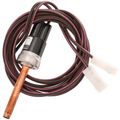

York pressure controls and switches regulate compressor and blower operation by monitoring refrigerant or air pressure inside a system and opening or closing a circuit once that pressure crosses a preset point. Technicians rely on these controls to protect compressors from short-cycling, prevent low-side freeze-ups, and confirm that a furnace's induced-draft blower is pulling adequate airflow before the burner ignites. The lineup covers single-pole and dual-pole configurations, fixed and adjustable trip points, and both high-pressure and low-pressure cutouts for split systems, packaged units, and light commercial refrigeration. Because a failed pressure switch can shut a system down entirely or, worse, let it run outside safe limits, matching the exact trip point and connection style to the original part matters more than swapping in a close approximation. Stocking the common trip-point variants for a service area cuts down on return trips when a replacement doesn't match the equipment it's protecting.
Subcategories
- Refrigerant Pressure Switches: Refrigerant pressure switches monitor high-side or low-side pressure on air conditioning, heat pump, and light commercial refrigeration systems, breaking the circuit to the compressor when pressure moves outside a safe operating range. Contractors use them to prevent compressor damage from operating with a restricted airflow, an overcharge, or a low refrigerant charge. Most models mount directly to a Schrader-style access port near the compressor and use a fixed trip point calibrated to the refrigerant the system was designed to run. Replacing one with a switch calibrated for a different refrigerant blend leaves the system without accurate overpressure protection even if it physically fits.
- Air Pressure (Sail) Switches: Air pressure switches, sometimes called sail switches, prove that a furnace's induced-draft blower has reached adequate airflow before the ignition control allows the burner to fire. A stuck-open or stuck-closed switch is a common cause of a furnace that won't start or that locks out mid-cycle. Sensing typically happens through a small tubing connection measuring pressure differential across the heat exchanger or vent system, rather than pressure measured directly at the blower housing. Matching the pressure range to the specific blower assembly, not just the physical mounting bracket, keeps the switch reading accurately.
- Water Pressure Controls: Water pressure controls protect boilers and hydronic systems by cutting power to a circulator or burner if system water pressure drops below a safe minimum, which usually signals a leak or a failed automatic feed valve. Low-water cutoffs built around this same principle prevent a boiler from firing with insufficient water in the system, a condition that can crack a heat exchanger within minutes. Contractors install these controls in the near-boiler piping, typically at or above the boiler's minimum water line. Testing the control's manual reset function during routine maintenance confirms it will respond during an actual low-water event rather than sitting inactive until a failure exposes the problem.
- Dual-Pressure Controls: Dual-pressure controls combine a high-pressure and low-pressure cutout in a single housing, shutting down a compressor if refrigerant pressure climbs too high or drops too low. Packaged rooftop units and light commercial split systems commonly specify a dual-pressure control rather than two separate switches, since it simplifies wiring and reduces the number of components exposed to vibration and moisture. An adjustable version lets a technician fine-tune both trip points during commissioning without swapping hardware. Field-testing both cutouts after installation confirms the control responds correctly to each failure mode it's meant to catch.
Buying Guide
Selecting the right York pressure control starts with the equipment it's protecting rather than the switch itself. A residential split system, a packaged rooftop unit, and a light commercial refrigeration rack each use different trip points and connection styles, so pulling the original part number from the unit's nameplate or wiring diagram is the fastest way to narrow the search. Single-pole switches handle a straightforward on/off function, such as cutting power to a compressor on low refrigerant pressure, while dual-pole and adjustable models give a technician room to fine-tune cutout points during commissioning or after a refrigerant change.
Connection type matters as much as electrical rating. Some York pressure controls thread directly into a Schrader port, others require a separate fitting, and mixing up the two stalls a service call over a fitting that doesn't seat. For furnace and boiler applications, air pressure switches proving induced-draft airflow need to match the static pressure range of the specific blower assembly, not just the physical mounting pattern.
Buying a full set of York Pressure Controls & Switches for a common equipment lineup, rather than sourcing one at a time as failures come in, keeps a service vehicle stocked for the models seen most often in a given territory. Cross-referencing OEM part numbers before ordering avoids a return trip caused by a switch that looks identical but trips at a different pressure.
Frequently Asked Questions
What's the difference between a single-pole and dual-pole pressure switch?
A single-pole switch opens or closes one circuit at a single trip point, typically used for a straightforward compressor cutout. A dual-pole switch controls two circuits, or combines a high-pressure and low-pressure function in one housing, which is common on packaged units where both faults need to shut down the same compressor.
Can an adjustable pressure switch replace a fixed one?
An adjustable switch can often substitute for a fixed switch as long as the pressure range covers the original trip point and the connection style matches. Field technicians still need to set the adjustable switch to the exact original trip point rather than leaving it at a default setting, since an incorrect setting can leave a compressor unprotected.
Why does a furnace air pressure switch fail to close during startup?
A pressure switch that won't close usually points to inadequate draft, a blocked vent, a disconnected or pinched tubing line, or a blower wheel that's lost speed. Replacing the switch without checking venting and tubing first often results in a repeat failure once the new switch reaches the same insufficient pressure.
How does a technician confirm the correct replacement part number?
The equipment nameplate, the original switch's stamped part number, or the unit's wiring diagram all identify the correct replacement faster than matching by physical appearance alone. Cross-referencing that number against the current York catalog confirms the switch is still the current equivalent, since some part numbers get superseded over time.
Do refrigerant-side pressure switches need to match the refrigerant type?
Yes, because trip points are calibrated to the pressure-temperature relationship of a specific refrigerant. A switch calibrated for one refrigerant blend will trip at the wrong point if installed on a system using a different refrigerant, even if the connection size and electrical rating match.
