




2.5 Ton AC Condensers

 --%3E %3Csvg version='1.1' id='No-RB' xmlns='http://www.w3.org/2000/svg' xmlns:xlink='http://www.w3.org/1999/xlink' x='0px' y='0px' viewBox='0 0 100 100' enable-background='new 0 0 100 100' xml:space='preserve'%3E %3Cpath fill='%23CECECE' d='M79.44,0.95H20.56C9.78,0.95,0.95,9.78,0.95,20.56v58.87c0,10.79,8.82,19.61,19.61,19.61h58.87 c10.79,0,19.61-8.83,19.61-19.61V20.56C99.05,9.78,90.22,0.95,79.44,0.95z M65.38,58.24l9.38,29.58L49.69,69.78L24.5,87.82 l9.34-29.6L8.8,39.6l30.73-0.17c0,0,6.98-19.61,10-28.93c0.54,1.36,9.88,29.1,9.88,29.1H91.2L65.38,58.24z'/%3E %3C/svg%3E)
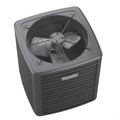


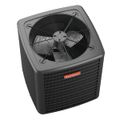
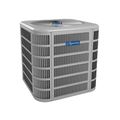


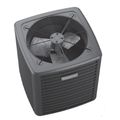
2.5 Ton AC Condensers are outdoor split-system units sized to cool roughly 1,200 to 1,500 square feet of conditioned space, depending on climate, insulation, and duct design. A condenser in this size class is rated at 30,000 BTU per hour of nominal cooling capacity, since one ton of air conditioning equals 12,000 BTU per hour. Contractors pair a 2.5 ton condenser with a matched indoor coil and air handler or furnace to complete a residential split system, and manufacturers publish AHRI-matched combinations so the outdoor and indoor components perform to their rated efficiency together.
Getting the tonnage right matters more than most other equipment decisions on a residential job, since an oversized or undersized condenser leads to short cycling, poor humidity control, or a system that never keeps up with the load. A proper Manual J load calculation is the starting point before ordering equipment in this size range.
Subcategories
- Single-Stage Condensers: Single-stage 2.5 ton condensers run at one fixed capacity whenever the compressor is energized. Contractors specify them for straightforward replacement jobs where the existing ductwork and controls are already sized for a single-stage system. They are typically the lowest-cost option in this tonnage.
- Two-Stage Condensers: Two-stage 2.5 ton condensers run at a reduced capacity for most of the cooling season and step up to full output only during peak load. Homeowners get steadier temperatures and better humidity removal because the system runs longer at lower capacity instead of cycling on and off. These units require a compatible two-stage thermostat and control board.
- Variable-Speed Condensers: Variable-speed 2.5 ton condensers modulate compressor speed continuously rather than stepping between fixed stages. Contractors use them on jobs where a homeowner wants the quietest operation and the most precise temperature control the tonnage allows. Variable-speed systems need a communicating thermostat and a matched indoor unit to deliver their full benefit.
- Condenser Replacement Parts: Replacement compressors, fan motors, capacitors, and contactors keep an existing 2.5 ton condenser running between full unit replacements. Service technicians stock these parts for common brands to handle no-cool calls without waiting on a full unit. Matching the part to the exact model number avoids compatibility issues with refrigerant charge and electrical ratings.
Buying Guide
The first step in choosing a 2.5 ton condenser is confirming the tonnage is actually correct for the space. A Manual J load calculation accounts for square footage, insulation levels, window area, and local climate, and it is the only reliable way to know whether 2.5 tons matches the building rather than just matching the equipment being replaced. Installing an oversized condenser because it is a simple swap can lock in poor humidity control for the life of the system.
Once tonnage is confirmed, match the condenser to an AHRI-certified indoor coil and air handler or furnace combination. Manufacturers test and publish these combinations to hit a specific SEER2 and EER2 rating, and mixing an outdoor unit with an incompatible indoor coil can void the warranty and reduce real-world efficiency below the rated number.
Refrigerant type is worth checking before ordering, since current production condensers use R-410A or newer low-GWP refrigerants rather than the R-22 found in older systems. A contractor replacing only the outdoor unit on an older system needs to confirm the indoor coil and line set are compatible with the new refrigerant, or plan to replace those components at the same time.
Finally, consider stage type based on the homeowner's priorities and budget. Single-stage units cost less upfront and suit straightforward replacements, while two-stage and variable-speed condensers cost more but deliver steadier temperatures, better humidity control, and quieter operation, which matters more in bedrooms and open floor plans than in a garage or workshop application.
Frequently Asked Questions
How much space does a 2.5 ton condenser cool?
A 2.5 ton condenser generally cools 1,200 to 1,500 square feet, but the right size for a specific home depends on insulation, window area, and local climate, which is why a Manual J load calculation should confirm tonnage before ordering.
What does a 2.5 ton rating mean in BTU?
One ton of air conditioning capacity equals 12,000 BTU per hour, so a 2.5 ton condenser is rated at 30,000 BTU per hour of nominal cooling capacity.
Do I need to replace the indoor coil when I replace the condenser?
In most cases yes, since manufacturers rate efficiency based on AHRI-matched outdoor and indoor combinations, and pairing a new condenser with an incompatible existing coil can reduce efficiency and void the warranty.
What is the difference between single-stage and two-stage condensers?
A single-stage condenser runs at one fixed capacity whenever it turns on, while a two-stage condenser runs at reduced capacity most of the time and only reaches full output during peak demand, which improves humidity control and comfort.
Can a 2.5 ton condenser be installed on an older R-22 system?
Current production condensers use R-410A or newer refrigerants, so replacing only the outdoor unit on an older R-22 system usually requires replacing the indoor coil and line set as well to maintain compatibility.
