




Filters
SORT
Product Availability –
Brand –
Shutoff Head (ft.) –
Flow At 20 FT Head –
Voltage –
Review Score –
 --%3E %3Csvg version='1.1' id='Fill' xmlns='http://www.w3.org/2000/svg' xmlns:xlink='http://www.w3.org/1999/xlink' x='0px' y='0px' viewBox='0 0 100 100' enable-background='new 0 0 100 100' xml:space='preserve'%3E %3Cpath fill='%23F15C02' d='M79.44,0.95H20.56C9.78,0.95,0.95,9.78,0.95,20.56v58.87c0,10.79,8.82,19.61,19.61,19.61h58.87 c10.79,0,19.61-8.83,19.61-19.61V20.56C99.05,9.78,90.22,0.95,79.44,0.95z M65.38,58.24l9.38,29.58L49.69,69.78L24.5,87.82 l9.34-29.6L8.8,39.6l30.73-0.17c0,0,6.98-19.61,10-28.93c0.54,1.36,9.88,29.1,9.88,29.1H91.2L65.38,58.24z'/%3E %3C/svg%3E)
Price Range –
2 HP Irrigation Pumps

 --%3E %3Csvg version='1.1' id='No-RB' xmlns='http://www.w3.org/2000/svg' xmlns:xlink='http://www.w3.org/1999/xlink' x='0px' y='0px' viewBox='0 0 100 100' enable-background='new 0 0 100 100' xml:space='preserve'%3E %3Cpath fill='%23CECECE' d='M79.44,0.95H20.56C9.78,0.95,0.95,9.78,0.95,20.56v58.87c0,10.79,8.82,19.61,19.61,19.61h58.87 c10.79,0,19.61-8.83,19.61-19.61V20.56C99.05,9.78,90.22,0.95,79.44,0.95z M65.38,58.24l9.38,29.58L49.69,69.78L24.5,87.82 l9.34-29.6L8.8,39.6l30.73-0.17c0,0,6.98-19.61,10-28.93c0.54,1.36,9.88,29.1,9.88,29.1H91.2L65.38,58.24z'/%3E %3C/svg%3E)

 --%3E %3Csvg version='1.1' id='Half' xmlns='http://www.w3.org/2000/svg' xmlns:xlink='http://www.w3.org/1999/xlink' x='0px' y='0px' viewBox='0 0 100 100' enable-background='new 0 0 100 100' xml:space='preserve'%3E %3Cg%3E %3Cpath fill='%23F15C02' d='M30.05,70.23l3.79-12.01L8.8,39.6l30.73-0.17c0,0,6.98-19.61,10-28.93c0.54,1.36,9.88,29.1,9.88,29.1h1.58 L93.71,7.18c-3.58-3.82-8.66-6.23-14.28-6.23H20.56C9.78,0.95,0.95,9.78,0.95,20.56v58.87c0,5.41,2.22,10.32,5.79,13.88 L30.05,70.23z'/%3E %3C/g%3E %3Cpath fill='%23FBC8B4' d='M93.71,7.18L60.98,39.6H91.2L65.38,58.24l9.38,29.58L49.69,69.78L24.5,87.82l5.55-17.59L6.75,93.32 c3.55,3.54,8.44,5.73,13.82,5.73h58.87c10.79,0,19.61-8.83,19.61-19.61V20.56C99.05,15.4,97.01,10.69,93.71,7.18z'/%3E %3C/svg%3E)
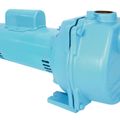



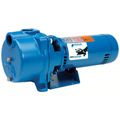
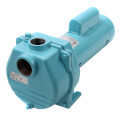
2 HP irrigation pumps deliver the water pressure and flow needed to run mid-sized sprinkler or drip irrigation systems, sitting between smaller residential pumps and the larger pumps used for bigger commercial or agricultural sites. Landscapers and irrigation contractors typically specify this horsepower range for properties with a moderate number of sprinkler zones or a larger residential lot that a smaller pump cannot adequately pressurize.
These pumps draw from a well, pond, or other water source and are commonly paired with a pressure tank to maintain consistent system pressure between pump cycles. Matching pump horsepower to the specific irrigation system's flow and pressure requirements, rather than defaulting to a common size, is the key step in avoiding a system that runs sprinkler heads poorly or cycles the pump too frequently.
Subcategories
- Centrifugal Irrigation Pumps: Centrifugal irrigation pumps are the most common style for above-ground installation, pulling water through an impeller housing and delivering it at a steady flow rate suited to typical sprinkler zones. They are generally easier to service than submersible models since the motor and housing sit above ground and stay readily accessible. They work best when the water source is relatively close to the pump.
- Submersible Irrigation Pumps: Submersible irrigation pumps install directly in a well or water source, pushing water up and out to the irrigation system rather than pulling it from above ground. They handle deeper water sources better than centrifugal pumps and run quietly since the motor is underwater, but servicing them requires pulling the pump out of the well or source. They suit properties where the water source sits well below ground level.
- Self-Priming Irrigation Pumps: Self-priming irrigation pumps can clear air from the pump housing and suction line on their own after sitting idle, which matters for irrigation systems that only run on a schedule rather than continuously. This reduces the need to manually prime the pump before each watering cycle. They are a common choice for residential and light commercial irrigation systems that cycle on and off throughout the week.
Buying Guide
Selecting a 2 HP irrigation pump starts with matching horsepower to the system's actual flow and pressure needs rather than assuming a mid-range pump will work for any setup. A larger property with more sprinkler zones running at once, or zones spread across a longer pipe run, generally needs more flow and pressure than a compact residential system, and undersizing the pump leads to weak sprinkler performance or zones that do not reach full coverage.
Next, decide between a centrifugal and a submersible pump based on the water source. A pond, shallow well, or other water source close to ground level generally works well with a centrifugal pump, which is easier to access for maintenance. A deeper well typically calls for a submersible pump instead, since centrifugal pumps have practical limits on how far they can pull water vertically.
Self-priming capability is worth considering for any system that cycles on and off rather than running continuously, since it removes the need to manually prime the pump before each use.
Finally, pairing the pump with a properly sized pressure tank matters, since a pump without adequate tank capacity cycles on and off more frequently than necessary, shortening the pump's service life over time. Checking the irrigation system's total zone count and pipe layout before finalizing pump selection helps avoid a mismatch that shows up only once the system is running.
Frequently Asked Questions
How is the right pump size determined for an irrigation system?
Sizing depends on the system's total flow and pressure needs, which are driven by the number of sprinkler zones and the length of the pipe run; a mid-sized residential or light commercial system is the typical fit for 2 HP.
What's the difference between a centrifugal and a submersible irrigation pump?
A centrifugal pump sits above ground and pulls water from a nearby source, while a submersible pump installs directly in a well or water source and pushes water up to the system.
Is a pressure tank needed with an irrigation pump?
Pairing the pump with a properly sized pressure tank helps maintain consistent pressure and reduces how often the pump cycles on and off, which extends its service life.
What does self-priming mean for an irrigation pump?
A self-priming pump clears air from its housing and suction line on its own after sitting idle, removing the need to manually prime it before each watering cycle.
Can a centrifugal pump be used with a deep well?
Centrifugal pumps have practical limits on how far they can pull water vertically, so a deeper well typically calls for a submersible pump instead.
