




Filters
SORT
Product Availability –
Review Score –
 --%3E %3Csvg version='1.1' id='Fill' xmlns='http://www.w3.org/2000/svg' xmlns:xlink='http://www.w3.org/1999/xlink' x='0px' y='0px' viewBox='0 0 100 100' enable-background='new 0 0 100 100' xml:space='preserve'%3E %3Cpath fill='%23F15C02' d='M79.44,0.95H20.56C9.78,0.95,0.95,9.78,0.95,20.56v58.87c0,10.79,8.82,19.61,19.61,19.61h58.87 c10.79,0,19.61-8.83,19.61-19.61V20.56C99.05,9.78,90.22,0.95,79.44,0.95z M65.38,58.24l9.38,29.58L49.69,69.78L24.5,87.82 l9.34-29.6L8.8,39.6l30.73-0.17c0,0,6.98-19.61,10-28.93c0.54,1.36,9.88,29.1,9.88,29.1H91.2L65.38,58.24z'/%3E %3C/svg%3E)
230 Series 1/3 HP

 --%3E %3Csvg version='1.1' id='No-RB' xmlns='http://www.w3.org/2000/svg' xmlns:xlink='http://www.w3.org/1999/xlink' x='0px' y='0px' viewBox='0 0 100 100' enable-background='new 0 0 100 100' xml:space='preserve'%3E %3Cpath fill='%23CECECE' d='M79.44,0.95H20.56C9.78,0.95,0.95,9.78,0.95,20.56v58.87c0,10.79,8.82,19.61,19.61,19.61h58.87 c10.79,0,19.61-8.83,19.61-19.61V20.56C99.05,9.78,90.22,0.95,79.44,0.95z M65.38,58.24l9.38,29.58L49.69,69.78L24.5,87.82 l9.34-29.6L8.8,39.6l30.73-0.17c0,0,6.98-19.61,10-28.93c0.54,1.36,9.88,29.1,9.88,29.1H91.2L65.38,58.24z'/%3E %3C/svg%3E)
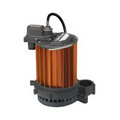
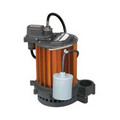
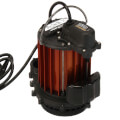

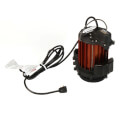
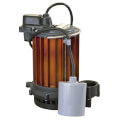


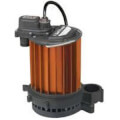
230 Series 1/3 HP pumps are submersible sump pumps engineered by Liberty Pumps for basement and crawlspace dewatering in residential and light commercial settings. Each unit runs on a 1/3 horsepower motor housed in deep finned, powder coated aluminum for durable heat dissipation, and pairs with a polypropylene base and vortex style impeller that lets solids up to 3/8 inch pass through without clogging. The line includes model 230 for manual operation, models 231 and 233 for automatic switching, and model 237, which adds a quick connect power cord along with Liberty's vertical magnetic float switch for piggyback installation on an existing outlet. Every model discharges through a 1-1/2 inch connection sized for standard sump basin plumbing. Contractors specify this pump family when a basin needs dependable primary drainage that resists jamming from grit, hair, and debris common in residential sump pits.
Subcategories
- Manual Sump Pumps (Model 230): Model 230 runs continuously once wired to a switched circuit or paired with a separate float switch, making it suited for pump stations where control logic lives outside the pump itself. Installers choose this configuration when integrating the pump into an existing alarm panel or duplex system. The unit shares the 1-1/2 inch discharge and 3/8 inch solids handling found across the 230 Series line. Its aluminum motor housing and vortex impeller keep the design consistent whether the pump runs on demand or as a backup leg in a paired system.
- Automatic Float Switch Pumps (Models 231 and 233): Models 231 and 233 add an integral float switch so the pump starts and stops on its own as basin water rises and falls. Homeowners and property managers rely on this configuration for primary sump duty where no separate control panel is present. Both models retain the polypropylene base and vortex style impeller that define the 230 Series for solids handling. The 1-1/2 inch discharge matches standard basin plumbing, simplifying replacement of an existing pump.
- Piggyback Switch Pumps (Model 237): Model 237 uses Liberty's vertical magnetic float switch on a piggyback quick connect cord, letting the pump plug into a standard outlet while the switch controls power independently. Contractors favor this configuration when a job calls for a self-contained automatic pump without wiring a separate switch into the panel. The model keeps the same aluminum motor housing, vortex impeller, and 1-1/2 inch discharge as the rest of the 230 Series. Its quick connect design speeds up service calls since the switch can be swapped without disturbing the pump body.
Buying Guide
Selecting the right 230 Series 1/3 HP pump starts with how the basin will be controlled. A job with an existing control panel, alarm system, or duplex controller calls for the manual model 230, since the switching logic already lives elsewhere in the system. A straightforward single pump replacement or new installation without external controls points toward models 231 or 233, which include a built in float switch for fully automatic operation. A pump that needs to plug into a standard receptacle while still switching on its own calls for model 237, with its piggyback vertical magnetic float switch, particularly on service calls where rewiring an outlet isn't part of the scope.
Basin size and pit diameter also factor into the decision, since float style switches need clearance to travel freely without hanging up on the pit wall or a discharge pipe. Every model in the 230 Series 1/3 HP family shares the same motor horsepower, aluminum housing, and vortex impeller, so solids handling and discharge sizing stay constant across the line at 3/8 inch and 1-1/2 inches respectively. Standardizing on this pump family across a service territory lets a contractor simply choose the switch configuration that matches each job's control setup, rather than requalifying pump performance for every install.
Frequently Asked Questions
What's the difference between the 230 and 237 models in this series?
The 230 model is a manual pump that requires an external switch or control panel, while the 237 model includes Liberty's vertical magnetic float switch on a piggyback cord for fully automatic operation from a standard outlet. Both share the same 1/3 horsepower motor, aluminum housing, and 1-1/2 inch discharge. Choosing between them comes down to whether switching logic already exists elsewhere in the system.
How much solids handling capacity does a 230 Series 1/3 HP pump have?
Every pump in the 230 Series 1/3 HP line handles solids up to 3/8 inch thanks to its vortex style impeller. The impeller design passes grit, hair, and small debris common in residential sump pits without clogging. Solids handling stays the same across the manual, automatic, and piggyback switch models.
What discharge size do these pumps use?
All models in the 230 Series 1/3 HP family use a 1-1/2 inch discharge connection. Standard sump basin plumbing is typically sized for this connection, so replacing an existing pump in the same family doesn't usually require reworking the discharge piping. The consistent discharge size holds across manual, automatic, and piggyback switch versions.
What is the motor housing made of?
The 230 Series 1/3 HP pumps use a deep finned, powder coated aluminum motor housing paired with a polypropylene base. Aluminum construction helps dissipate motor heat during long or frequent run cycles. The housing design is shared across every model in the line regardless of switch type.
Which model should be used for a basin without an existing control panel?
A basin without an existing control panel calls for model 231, 233, or 237, since each includes a built in or piggyback float switch for automatic operation. Model 230 is built for setups where switching logic is handled by separate equipment. Matching the switch type to the panel setup on site is the main factor in choosing between them.
