




Filters
SORT
Product Availability –
Application –
Enclosure Type –
Lead Wire Length –
Voltage –
Review Score –
 --%3E %3Csvg version='1.1' id='Fill' xmlns='http://www.w3.org/2000/svg' xmlns:xlink='http://www.w3.org/1999/xlink' x='0px' y='0px' viewBox='0 0 100 100' enable-background='new 0 0 100 100' xml:space='preserve'%3E %3Cpath fill='%23F15C02' d='M79.44,0.95H20.56C9.78,0.95,0.95,9.78,0.95,20.56v58.87c0,10.79,8.82,19.61,19.61,19.61h58.87 c10.79,0,19.61-8.83,19.61-19.61V20.56C99.05,9.78,90.22,0.95,79.44,0.95z M65.38,58.24l9.38,29.58L49.69,69.78L24.5,87.82 l9.34-29.6L8.8,39.6l30.73-0.17c0,0,6.98-19.61,10-28.93c0.54,1.36,9.88,29.1,9.88,29.1H91.2L65.38,58.24z'/%3E %3C/svg%3E)
 --%3E %3Csvg version='1.1' id='With-RB' xmlns='http://www.w3.org/2000/svg' xmlns:xlink='http://www.w3.org/1999/xlink' x='0px' y='0px' viewBox='0 0 100 100' enable-background='new 0 0 100 100' xml:space='preserve'%3E %3Cpath fill='%23FBC8B4' d='M79.44,0.95H20.56C9.78,0.95,0.95,9.78,0.95,20.56v58.87c0,10.79,8.82,19.61,19.61,19.61h58.87 c10.79,0,19.61-8.83,19.61-19.61V20.56C99.05,9.78,90.22,0.95,79.44,0.95z M65.38,58.24l9.38,29.58L49.69,69.78L24.5,87.82 l9.34-29.6L8.8,39.6l30.73-0.17c0,0,6.98-19.61,10-28.93c0.54,1.36,9.88,29.1,9.88,29.1H91.2L65.38,58.24z'/%3E %3C/svg%3E)
Price Range –
A419 Series Temperature Controls

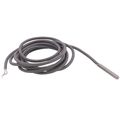

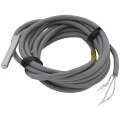
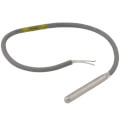
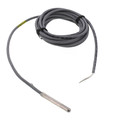
 --%3E %3Csvg version='1.1' id='No-RB' xmlns='http://www.w3.org/2000/svg' xmlns:xlink='http://www.w3.org/1999/xlink' x='0px' y='0px' viewBox='0 0 100 100' enable-background='new 0 0 100 100' xml:space='preserve'%3E %3Cpath fill='%23CECECE' d='M79.44,0.95H20.56C9.78,0.95,0.95,9.78,0.95,20.56v58.87c0,10.79,8.82,19.61,19.61,19.61h58.87 c10.79,0,19.61-8.83,19.61-19.61V20.56C99.05,9.78,90.22,0.95,79.44,0.95z M65.38,58.24l9.38,29.58L49.69,69.78L24.5,87.82 l9.34-29.6L8.8,39.6l30.73-0.17c0,0,6.98-19.61,10-28.93c0.54,1.36,9.88,29.1,9.88,29.1H91.2L65.38,58.24z'/%3E %3C/svg%3E)
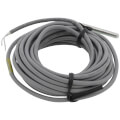
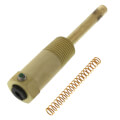
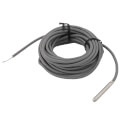
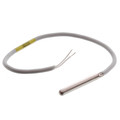
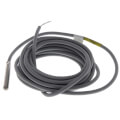
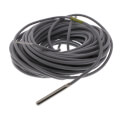



A419 Series Temperature Controls are single stage electromechanical controls that switch equipment on and off based on a set temperature reading from a remote sensing bulb. Technicians install them on walk-in coolers, freezers, ice machines, and other refrigeration equipment where a straightforward mechanical thermostat handles the cooling cycle without a digital display or programmable logic. The control's capillary tube and bulb sense temperature at the evaporator or in the conditioned space, then open or close an internal switch to cycle the compressor or condensing unit.
Because the design relies on a mechanical bellows and switch rather than electronic components, these controls hold up well in commercial kitchens and mechanical rooms where heat, moisture, and vibration can shorten the life of more sensitive electronics. Many food service operators specify this style for its simple field calibration and low replacement cost when a control eventually wears out.
Subcategories
- Standard Bulb Controls: Standard bulb controls use a capillary tube with a sensing bulb mounted directly at the evaporator coil or in the refrigerated space, cycling the equipment based on that single reading. Technicians favor this configuration for straightforward single zone refrigeration jobs where one sensing point covers the whole space.
- Remote Bulb Controls: Remote bulb controls extend the capillary tube further from the switch housing, letting a technician mount the control body somewhere convenient while placing the sensing bulb exactly where temperature matters most. The setup helps in walk-ins and reach-in cases where the control panel sits outside the refrigerated space.
- Weatherproof and Enclosed Models: Weatherproof and enclosed models add a gasketed housing that protects the internal switch from washdown water, grease, and dust common in commercial kitchens. Restaurants and food processing facilities that hose down equipment regularly rely on this style to keep the control functioning despite frequent moisture exposure.
- Replacement Bulbs and Capillary Kits: Replacement bulbs and capillary kits let a technician restore a control after the sensing bulb or tube has been damaged, without swapping out the entire switch housing. Keeping a few common kits on a service truck covers most field repairs on older refrigeration equipment still running an electromechanical control.
Buying Guide
Choosing the right A419 Series Temperature Controls starts with matching the temperature range and differential to the equipment being controlled. Walk in coolers, freezers, and ice machines each cycle within different ranges, and a control set outside that range either short cycles the compressor or lets the space drift too far from target temperature.
Bulb placement matters as much as the control's range. A bulb mounted too close to a door or evaporator fan can read a temperature that does not represent the rest of the space, causing the equipment to cycle incorrectly. Technicians who service walk-ins regularly develop a feel for bulb placement that keeps the whole space within range rather than just the spot right around the sensor.
Capillary tube length also affects installation options. A short tube limits how far the control body can sit from the sensing point, while a longer tube gives more flexibility in tight mechanical rooms or when the control panel needs to sit outside the refrigerated space entirely. Technicians working in commercial kitchens with frequent washdowns should also weigh whether a weatherproof housing makes sense for the installation location.
Replacement parts availability plays into the decision as well. Older refrigeration equipment often keeps running for decades on the same electromechanical control, so choosing a model with widely stocked bulbs and capillary kits keeps future repairs simple rather than requiring a full control swap when a bulb eventually fails.
Frequently Asked Questions
What does the differential setting on an A419 control do?
The differential setting determines how far the temperature has to swing above the setpoint before the control switches the equipment back on, which prevents the compressor from short cycling. A tighter differential holds a narrower temperature band but cycles equipment more often.
Can an A419 control be used on both coolers and freezers?
Many A419 series models cover a wide enough temperature range to handle both cooler and freezer applications, but the specific range and differential still need to match the equipment being controlled. Checking the control's rated range against the target temperature avoids a mismatch.
How is the sensing bulb positioned for accurate readings?
The sensing bulb typically mounts near the evaporator coil or in the open air of the refrigerated space, away from door openings, fans, and direct airflow that could give a false reading. Correct placement keeps the whole space within range instead of just the area immediately around the bulb.
What is the difference between a standard and remote bulb control?
A standard bulb control keeps the sensing bulb close to the switch housing, while a remote bulb control uses a longer capillary tube so the bulb can sit somewhere the control body cannot easily reach. Remote bulb versions suit installations where the control panel sits outside the refrigerated space.
Are weatherproof A419 controls necessary in every kitchen installation?
Weatherproof or enclosed models make sense anywhere washdown water, grease, or dust could reach the control housing, which is common in commercial kitchens and food processing areas. A standard enclosure often works fine in a drier mechanical room away from regular cleaning spray.
