




ACR Copper Couplings w/ Roll Stop


 --%3E %3Csvg version='1.1' id='Fill' xmlns='http://www.w3.org/2000/svg' xmlns:xlink='http://www.w3.org/1999/xlink' x='0px' y='0px' viewBox='0 0 100 100' enable-background='new 0 0 100 100' xml:space='preserve'%3E %3Cpath fill='%23F15C02' d='M79.44,0.95H20.56C9.78,0.95,0.95,9.78,0.95,20.56v58.87c0,10.79,8.82,19.61,19.61,19.61h58.87 c10.79,0,19.61-8.83,19.61-19.61V20.56C99.05,9.78,90.22,0.95,79.44,0.95z M65.38,58.24l9.38,29.58L49.69,69.78L24.5,87.82 l9.34-29.6L8.8,39.6l30.73-0.17c0,0,6.98-19.61,10-28.93c0.54,1.36,9.88,29.1,9.88,29.1H91.2L65.38,58.24z'/%3E %3C/svg%3E)

 --%3E %3Csvg version='1.1' id='No-RB' xmlns='http://www.w3.org/2000/svg' xmlns:xlink='http://www.w3.org/1999/xlink' x='0px' y='0px' viewBox='0 0 100 100' enable-background='new 0 0 100 100' xml:space='preserve'%3E %3Cpath fill='%23CECECE' d='M79.44,0.95H20.56C9.78,0.95,0.95,9.78,0.95,20.56v58.87c0,10.79,8.82,19.61,19.61,19.61h58.87 c10.79,0,19.61-8.83,19.61-19.61V20.56C99.05,9.78,90.22,0.95,79.44,0.95z M65.38,58.24l9.38,29.58L49.69,69.78L24.5,87.82 l9.34-29.6L8.8,39.6l30.73-0.17c0,0,6.98-19.61,10-28.93c0.54,1.36,9.88,29.1,9.88,29.1H91.2L65.38,58.24z'/%3E %3C/svg%3E)


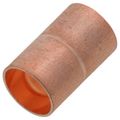

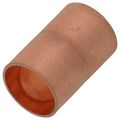

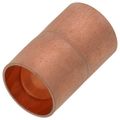

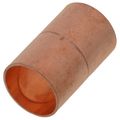

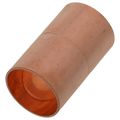


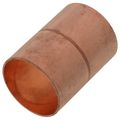


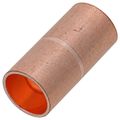
ACR copper couplings with roll stop connect sections of air conditioning and refrigeration copper tubing while an internal stop ensures each tube end seats at a consistent, correct depth before brazing. HVAC and refrigeration technicians use roll stop couplings to speed up installation, since the built-in stop removes the need to measure or mark insertion depth on every joint. Consistent seating depth helps produce a stronger, more reliable brazed joint across a job, which matters on refrigerant lines where a leak can lead to a costly system failure. ACR copper fittings are cleaned, capped, and typically nitrogen-purged internally for refrigeration and air conditioning applications, distinguishing them from standard plumbing copper fittings. Selecting the correct coupling size for the tubing outer diameter is essential, since ACR tubing is sized by actual outside diameter rather than nominal plumbing sizing. Roll stop couplings are a common choice on refrigerant line sets, condensate piping, and other closed refrigeration circuits where joint reliability is critical.
Subcategories
- Standard Roll Stop Couplings: Standard roll stop couplings join two straight sections of ACR copper tubing of the same diameter, with the internal stop centered so both tube ends seat evenly. Technicians favor them on refrigerant line set installations where consistent joint depth affects brazing quality. Sizing to the tubing's actual outside diameter, rather than nominal size, is critical for a proper fit. Correct fit reduces the chance of a cold joint that could leak refrigerant later.
- Reducing Roll Stop Couplings: Reducing roll stop couplings join two different tubing diameters within a single fitting, useful when transitioning between line sizes on a refrigeration or air conditioning circuit. The roll stop on each side is set to the correct depth for its respective tubing size. Technicians rely on reducing couplings to avoid needing a separate reducer and coupling combination. Correct orientation during installation keeps both roll stops properly seated.
- Long and Extended Couplings: Long and extended roll stop couplings provide additional overlap length for situations calling for extra brazing surface area or added joint strength. Installers sometimes choose an extended coupling on vibration-prone equipment connections, such as near a compressor. Additional length can also help when repairing a damaged section of tubing that requires more overlap. Correct alignment of both tube ends before brazing is still required despite the added length.
- Cleaned and Capped ACR Fittings: Cleaned and capped ACR fittings arrive sealed to keep moisture and debris out of the fitting until installation, an important detail on refrigeration circuits sensitive to contamination. Technicians should avoid removing the caps until immediately before brazing to maintain the fitting's cleanliness. Contamination inside a refrigeration line can affect compressor life and system performance over time. Proper handling and storage keep the fittings ready for use on the next job.
Buying Guide
Ordering the right ACR copper couplings with roll stop starts with measuring the tubing's actual outside diameter, since ACR sizing differs from the nominal sizing used in standard plumbing copper. Technicians should confirm whether a job needs a standard coupling joining equal tubing sizes or a reducing coupling for a transition between two diameters, since ordering the wrong type can delay a brazing job mid-installation. On vibration-prone connections, such as near a compressor or in equipment rooms with significant mechanical vibration, extended or long couplings provide additional brazing surface area that can improve joint durability over standard-length fittings. Keeping ACR copper couplings with roll stop sealed and capped until just before brazing helps prevent moisture and debris from entering the refrigeration circuit, which can affect system performance down the line. Technicians working on refrigerant line sets should stock a range of standard sizes matching the equipment they service most often, since running out of a common size mid-job can delay a system startup. Checking local and manufacturer requirements for brazing procedures and nitrogen purging is also worthwhile, since proper technique affects joint integrity as much as the fitting itself. Buying ACR-rated fittings rather than standard plumbing copper fittings for refrigeration work helps avoid contamination issues that can shorten compressor life.
Frequently Asked Questions
What does the roll stop do on an ACR copper coupling?
The roll stop is an internal ridge that stops the tubing at a consistent, correct insertion depth, removing the need to measure or mark the tube before brazing. Consistent depth helps produce a stronger, more reliable brazed joint. Technicians commonly prefer roll stop couplings for the time savings on jobs with many joints to complete.
How is ACR copper tubing sized differently from plumbing copper?
ACR tubing is sized by its actual outside diameter, while standard plumbing copper is sized nominally, which is typically smaller than the tubing's actual measured diameter. Ordering ACR couplings by outside diameter, rather than assuming plumbing sizing conventions apply, prevents a fitting that doesn't seat correctly. Measuring the tubing directly is the safest way to confirm the correct coupling size.
When should a reducing coupling be used instead of a standard coupling?
Reducing couplings are needed whenever a job transitions between two different tubing diameters within the same line, such as connecting a smaller branch line to a larger main line. Using a standard coupling with two different tubing sizes won't seat properly on both ends. Reducing couplings combine both size transitions into a single brazed fitting.
Why keep ACR fittings capped until installation?
Caps keep moisture, dust, and other debris out of the fitting, which matters on refrigeration circuits where contamination can affect compressor performance and system longevity. Removing caps too early increases the risk of introducing contaminants before the joint is even brazed. Fittings should stay capped until the technician is ready to make the connection.
Can roll stop couplings be used on both refrigerant lines and condensate piping?
Roll stop couplings are commonly used on refrigerant line sets, and ACR copper fittings can also be used on condensate piping where copper is the chosen material. Confirming local code requirements for condensate piping material is still worthwhile before installation. Using ACR-rated fittings throughout keeps the copper components consistent across the installation.
