




ACR Copper Tees


 --%3E %3Csvg version='1.1' id='Fill' xmlns='http://www.w3.org/2000/svg' xmlns:xlink='http://www.w3.org/1999/xlink' x='0px' y='0px' viewBox='0 0 100 100' enable-background='new 0 0 100 100' xml:space='preserve'%3E %3Cpath fill='%23F15C02' d='M79.44,0.95H20.56C9.78,0.95,0.95,9.78,0.95,20.56v58.87c0,10.79,8.82,19.61,19.61,19.61h58.87 c10.79,0,19.61-8.83,19.61-19.61V20.56C99.05,9.78,90.22,0.95,79.44,0.95z M65.38,58.24l9.38,29.58L49.69,69.78L24.5,87.82 l9.34-29.6L8.8,39.6l30.73-0.17c0,0,6.98-19.61,10-28.93c0.54,1.36,9.88,29.1,9.88,29.1H91.2L65.38,58.24z'/%3E %3C/svg%3E)


 --%3E %3Csvg version='1.1' id='No-RB' xmlns='http://www.w3.org/2000/svg' xmlns:xlink='http://www.w3.org/1999/xlink' x='0px' y='0px' viewBox='0 0 100 100' enable-background='new 0 0 100 100' xml:space='preserve'%3E %3Cpath fill='%23CECECE' d='M79.44,0.95H20.56C9.78,0.95,0.95,9.78,0.95,20.56v58.87c0,10.79,8.82,19.61,19.61,19.61h58.87 c10.79,0,19.61-8.83,19.61-19.61V20.56C99.05,9.78,90.22,0.95,79.44,0.95z M65.38,58.24l9.38,29.58L49.69,69.78L24.5,87.82 l9.34-29.6L8.8,39.6l30.73-0.17c0,0,6.98-19.61,10-28.93c0.54,1.36,9.88,29.1,9.88,29.1H91.2L65.38,58.24z'/%3E %3C/svg%3E)

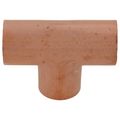


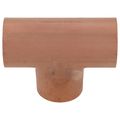




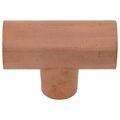
ACR Copper Tees are refrigeration-grade copper fittings used to join branch lines in air conditioning and refrigeration piping systems. Unlike copper fittings sized for plumbing, ACR tees are dimensioned to match actual copper tube outside diameter rather than nominal pipe size, so a tee marked for a specific tube size fits that tube directly without adapters. These tees are manufactured and packaged to refrigeration-industry cleanliness standards, arriving capped and sealed to keep moisture and debris out before installation.
HVAC and refrigeration technicians use ACR tees anywhere a refrigerant line splits into a branch, such as multi-evaporator systems, manifold assemblies, or service tie-ins on existing lineset runs. Because refrigerant systems are sensitive to contamination and leaks, using a fitting built and cleaned specifically for refrigeration service, rather than a general-purpose plumbing tee, helps technicians maintain the sealed, moisture-free environment refrigerant piping requires.
Subcategories
- Equal Tees: Equal tees have three openings of the same tube size, used when a branch line matches the diameter of the main run. They're the most common tee style for splitting a refrigerant line into two equal-sized branches. Technicians select equal tees when the branch and main lines are carrying similar loads or connecting to matched equipment.
- Reducing Tees: Reducing tees have a branch opening sized smaller than the two openings on the main run, allowing a technician to tap a smaller line off a larger one without adding a separate reducer fitting. They're common on multi-evaporator systems where individual branch lines carry less refrigerant than the main trunk. Reducing tees simplify installation by combining a tee and a reducer into a single fitting.
- Wrot Copper Tees: Wrot copper tees are formed from drawn copper rather than cast, giving them thinner, more uniform walls that solder cleanly and match the appearance of the surrounding tube. Most ACR tees used in refrigeration work are wrot fittings rather than cast, since the thinner wall solders faster and with less heat input. Technicians favor wrot fittings when working near sensitive electronic components, since less heat is needed to make the connection.
Buying Guide
Selecting the right ACR copper tee starts with confirming actual tube outside diameter rather than nominal pipe size, since ACR fittings are dimensioned differently than standard plumbing copper. Measuring or confirming the existing line's outside diameter before ordering prevents a fitting that doesn't slip over the tube cleanly.
Equal tees work when the branch line matches the main run's diameter, while reducing tees are the better choice when tapping a smaller branch off a larger trunk line, since a reducing tee eliminates the need for a separate reducer fitting at the joint. Checking whether the application calls for an equal or reducing tee before ordering avoids having to add a second fitting on the jobsite.
Because refrigerant systems require a clean, moisture-free interior, ACR tees are shipped capped and sealed, and that seal should stay intact until just before soldering. Technicians should also plan for adequate airflow or nitrogen purging during brazing, since refrigeration-grade joints are typically brazed rather than soldered with standard plumbing solder, and the higher heat requires care around any nearby components.
Wall thickness and wrot versus cast construction also affect how the fitting solders and how much heat is required to make a clean joint. Choosing a wrot fitting sized correctly for the application, with the right equal or reducing configuration, keeps refrigerant branch connections tight, clean, and leak-free.
Frequently Asked Questions
How is ACR tube sized differently from standard plumbing copper?
ACR tube is sized by actual outside diameter, while standard plumbing copper is sized by nominal pipe size, which doesn't match the tube's actual measurement. Confirming actual outside diameter before ordering ACR fittings prevents a mismatch between the fitting and the existing tube.
When should I use a reducing tee instead of an equal tee?
A reducing tee is the right choice when tapping a smaller branch line off a larger main run, since it combines the tee and reducer into a single fitting. An equal tee works when the branch and main lines share the same diameter.
Why do ACR fittings come capped and sealed?
Refrigeration systems require a clean, moisture-free interior, so ACR fittings are capped and sealed at the factory to keep debris and moisture out before installation. Technicians should leave the seal in place until just before soldering or brazing the joint.
Should ACR tees be soldered or brazed?
Most refrigeration-grade joints are brazed rather than soldered with standard plumbing solder, since brazing produces a stronger, more leak-resistant connection suited to refrigerant pressures. Technicians should plan for the higher heat brazing requires, especially near sensitive components.
What's the difference between wrot and cast copper tees?
Wrot tees are formed from drawn copper with thinner, more uniform walls, while cast tees are heavier and require more heat to solder or braze. Most ACR fittings used in refrigeration work are wrot fittings because the thinner wall solders faster with less heat input.
