




Aluminum Conduit Bodies


 --%3E %3Csvg version='1.1' id='No-RB' xmlns='http://www.w3.org/2000/svg' xmlns:xlink='http://www.w3.org/1999/xlink' x='0px' y='0px' viewBox='0 0 100 100' enable-background='new 0 0 100 100' xml:space='preserve'%3E %3Cpath fill='%23CECECE' d='M79.44,0.95H20.56C9.78,0.95,0.95,9.78,0.95,20.56v58.87c0,10.79,8.82,19.61,19.61,19.61h58.87 c10.79,0,19.61-8.83,19.61-19.61V20.56C99.05,9.78,90.22,0.95,79.44,0.95z M65.38,58.24l9.38,29.58L49.69,69.78L24.5,87.82 l9.34-29.6L8.8,39.6l30.73-0.17c0,0,6.98-19.61,10-28.93c0.54,1.36,9.88,29.1,9.88,29.1H91.2L65.38,58.24z'/%3E %3C/svg%3E)


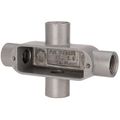


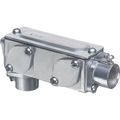

Aluminum Conduit Bodies are access fittings that let electricians pull, splice, and turn conductors within a conduit run. Southwire and Topaz list LB type bodies in sizes such as 1/2, 3/4, 1, 1-1/4, and 1-1/2 inch, and the Southwire C2SS adds a C type body in 3/4 inch EMT and rigid sizing. Many models are combination bodies that accept both EMT and rigid conduit, while others are rigid threaded bodies supplied with a cover and gasket. The LB type turns a conduit run while giving easy access for splicing, and the C type is a straight through body for pulling and splicing. Matching type, size, and conduit style before ordering keeps the install moving, since a wrong hub size or body style stops the pull.
Subcategories
- LB Type Conduit Bodies: LB type bodies turn a conduit run and give access for splicing. Southwire lists the LB1SS in 1/2 inch, the LB2SS in 3/4 inch, and the LB4SS in 1-1/4 inch, each as an EMT and rigid combination body in aluminum. Electricians use them where conduit meets a wall, panel, or piece of equipment and needs a turn.
- C Type Conduit Bodies: C type bodies are straight through bodies for pulling and splicing. The Southwire C2SS is a 3/4 inch EMT and rigid C type combination conduit body in aluminum. Contractors place them in a run where wire access is needed without turning the conduit.
- Combination Bodies for EMT and Rigid: Combination bodies are listed for both EMT and rigid conduit, so one body style covers either conduit type. The Topaz LB2SS and the Southwire LB2SS are both 3/4 inch EMT and rigid LB type combination bodies in aluminum. The Southwire LB5SS covers 1-1/2 inch conduit. Crews that mix conduit types on a job can carry fewer body styles.
- Threaded Bodies with Cover and Gasket: Rigid threaded bodies with a cover and gasket are listed for rigid conduit runs. The Southwire LB3CG is a 1 inch rigid threaded LB conduit body with cover and gasket in aluminum, and the Topaz LB1CG is the 1/2 inch version. The Southwire LB4CG covers 1-1/4 inch conduit. The cover and gasket close the access opening once the wiring work is done.
Buying Guide
Start with the conduit type and trade size. Combination bodies like the Southwire LB2SS fit 3/4 inch EMT and rigid, while rigid threaded bodies like the LB3CG are sized for 1 inch rigid conduit. The size in the part name is the conduit size, so match it to the run before looking at anything else.
Next, pick the body type for the job. Choose an LB type where the run has to turn and the splice needs access, and a C type, such as the Southwire C2SS, where the run continues straight and the crew needs a point to pull or splice.
When comparing Aluminum Conduit Bodies, check for a cover and gasket. Models with CG in the part number, such as the Southwire LB2SSCG in 3/4 inch, are listed with a cover and gasket.
Brand is the last filter. Southwire and Topaz both list the 3/4 inch LB2SS, so the choice often comes down to what the crew already uses and what the job spec calls for. Confirm any listing or wet location requirement on the product page before ordering, since requirements differ by project. A short parts list built from the drawings, with each body's type, size, and conduit style, keeps the order accurate and the crew working.
Frequently Asked Questions
What is an LB conduit body used for?
An LB conduit body, like the Southwire LB2SS in aluminum, turns a conduit run and gives access for splicing. Aluminum Conduit Bodies in the LB style are common where conduit meets a wall or equipment and needs a turn. The 3/4 inch LB2SS is listed for EMT and rigid conduit.
What is the difference between an LB and a C conduit body?
An LB body turns the conduit run, while a C body is a straight through body for pulling and splicing. The Southwire C2SS is a 3/4 inch aluminum C type, and the Southwire LB2SS is the 3/4 inch LB counterpart. Both are listed as EMT and rigid combination bodies.
Can one conduit body work with both EMT and rigid conduit?
Combination Aluminum Conduit Bodies can. The Southwire LB2SS and the Topaz LB2SS are listed as 3/4 inch EMT and rigid combination bodies. Rigid threaded models like the Southwire LB3CG are listed as rigid threaded bodies, so confirm EMT compatibility on the product page.
Do aluminum conduit bodies come with a cover and gasket?
Some do. The Southwire LB3CG, the Topaz LB1CG, and the Southwire LB2SSCG are listed with a cover and gasket. Check each listing, since the part number and title show whether the cover and gasket are included with the aluminum conduit body.
What sizes do aluminum LB conduit bodies come in?
Listings for Aluminum Conduit Bodies include the Southwire LB1SS in 1/2 inch, the LB2SS in 3/4 inch, the LB3CG in 1 inch, the LB4SS in 1-1/4 inch, and the LB5SS in 1-1/2 inch. Match the size to the conduit trade size on the run.
