




Backflow Enclosures

 --%3E %3Csvg version='1.1' id='Fill' xmlns='http://www.w3.org/2000/svg' xmlns:xlink='http://www.w3.org/1999/xlink' x='0px' y='0px' viewBox='0 0 100 100' enable-background='new 0 0 100 100' xml:space='preserve'%3E %3Cpath fill='%23F15C02' d='M79.44,0.95H20.56C9.78,0.95,0.95,9.78,0.95,20.56v58.87c0,10.79,8.82,19.61,19.61,19.61h58.87 c10.79,0,19.61-8.83,19.61-19.61V20.56C99.05,9.78,90.22,0.95,79.44,0.95z M65.38,58.24l9.38,29.58L49.69,69.78L24.5,87.82 l9.34-29.6L8.8,39.6l30.73-0.17c0,0,6.98-19.61,10-28.93c0.54,1.36,9.88,29.1,9.88,29.1H91.2L65.38,58.24z'/%3E %3C/svg%3E)
 --%3E %3Csvg version='1.1' id='No-RB' xmlns='http://www.w3.org/2000/svg' xmlns:xlink='http://www.w3.org/1999/xlink' x='0px' y='0px' viewBox='0 0 100 100' enable-background='new 0 0 100 100' xml:space='preserve'%3E %3Cpath fill='%23CECECE' d='M79.44,0.95H20.56C9.78,0.95,0.95,9.78,0.95,20.56v58.87c0,10.79,8.82,19.61,19.61,19.61h58.87 c10.79,0,19.61-8.83,19.61-19.61V20.56C99.05,9.78,90.22,0.95,79.44,0.95z M65.38,58.24l9.38,29.58L49.69,69.78L24.5,87.82 l9.34-29.6L8.8,39.6l30.73-0.17c0,0,6.98-19.61,10-28.93c0.54,1.36,9.88,29.1,9.88,29.1H91.2L65.38,58.24z'/%3E %3C/svg%3E)
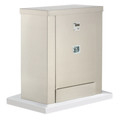


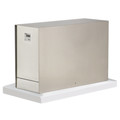
Backflow enclosures are insulated, lockable housings built around backflow prevention assemblies, such as reduced pressure zone and double check valve assemblies, to protect them from freezing temperatures and unauthorized tampering when they sit outdoors or in an unheated space. The enclosure surrounds the assembly on all sides while leaving room for the required air gap and drain path, so a relief valve can still discharge properly during normal operation. Many municipalities and water authorities require an approved enclosure whenever a backflow assembly is installed above grade outside a building, since an exposed assembly is vulnerable to a hard freeze that can crack the valve body. Contractors also use enclosures to keep the assembly out of sight and out of reach on commercial properties where tampering or vandalism is a concern. Choosing the right size and insulation level up front avoids a callback when an inspector flags an assembly left unprotected through winter.
Subcategories
- Insulated Enclosures: Insulated enclosures rely on foam-lined walls to slow heat loss around the assembly, which is often enough protection in milder climates or where the assembly only sees occasional exposure to freezing air. They're typically lighter and lower in cost than heated versions since there's no electrical component to install or maintain. A properly fitted insulated enclosure still needs to seal tightly around its base and lid to keep wind from stripping away the trapped warm air. These enclosures work best paired with a heat-traced pipe if the surrounding climate sees extended cold snaps.
- Heated Enclosures: Heated enclosures add a thermostatically controlled heater inside the housing to keep the assembly above freezing regardless of outside temperature, making them the more reliable option in colder climates or on assemblies that can't be shut down and drained for winter. The heater typically runs on a low-voltage or standard electrical connection that has to be run to the enclosure's location during installation. Because they draw power continuously through the cold season, heated enclosures suit commercial and fire-line applications where the assembly must stay in service year-round. A backup insulation layer is still built into most heated designs in case of a power interruption.
- Enclosure Locks and Accessories: This group covers hasps, padlocks, and other hardware used to secure an enclosure's access panel against tampering or unauthorized shutoff. Many water authorities specifically require a locked enclosure on assemblies serving fire protection or commercial domestic water systems. Accessories also include mounting hardware and anchor kits for setting the enclosure securely on a pad or slab. Keeping spare hardware on the truck avoids a delay when a lock or hinge fails during a routine inspection visit.
- Enclosure Covers and Lids: Replacement covers and lids let a contractor restore a damaged or missing enclosure top without swapping out the entire housing. A cracked or warped lid breaks the seal that keeps cold air and moisture out, so replacing it promptly matters as much as the enclosure body itself. Lids are typically sized to match a specific enclosure model, so confirming the base unit before ordering avoids a mismatched fit. Some lids include a lockable latch built in for enclosures that didn't ship with separate locking hardware.
Buying Guide
Start with the local water authority's requirements, since many jurisdictions specify enclosure type, insulation level, and locking hardware for backflow assemblies installed outdoors. Checking these requirements before ordering avoids installing an enclosure that fails inspection.
Size the enclosure to the assembly itself, leaving enough interior clearance for the required air gap, relief valve discharge, and room to service test cocks without removing the housing. An undersized enclosure makes routine testing far more time-consuming than it needs to be.
Decide between insulated and heated based on climate and how critical continuous service is. A heated enclosure protects an assembly through hard freezes and extended cold snaps, while an insulated-only enclosure may be adequate in milder regions or where the line can be shut down and drained seasonally.
For fire-line and commercial domestic assemblies that can't go out of service, heated enclosures with a backup insulation layer reduce the risk of a freeze during a power outage. Confirm the enclosure's power requirements match what's available at the installation site before committing to a heated model.
Finally, plan for locking hardware from the start on any assembly serving a fire line, since inspectors commonly check for a secured enclosure as part of routine testing, and retrofitting a lock after installation is more work than specifying it up front.
Frequently Asked Questions
Why does a backflow assembly need an enclosure?
An enclosure protects an outdoor backflow assembly from freezing temperatures that can crack the valve body, while also restricting access so the assembly isn't tampered with or shut off without authorization.
Is a heated enclosure always required?
Not always. Heated enclosures are typically required in colder climates or for assemblies that must stay in service year-round, such as fire lines, while insulated-only enclosures can be adequate in milder regions or on lines that get shut down for winter.
Can an enclosure be added to an existing backflow assembly?
Yes, enclosures are commonly retrofitted onto an assembly that was previously left exposed, as long as there's enough clearance around the assembly to fit the enclosure and maintain the required air gap.
What size enclosure is needed for a given assembly?
Enclosure sizing depends on the assembly's overall dimensions plus the clearance needed for test cocks, the relief valve discharge, and routine servicing. Checking the assembly's footprint against the enclosure's interior dimensions before ordering avoids a tight fit.
Do local codes require a locked enclosure?
Many water authorities require locking hardware on enclosures protecting fire-line or commercial domestic assemblies specifically to prevent unauthorized access. Checking local requirements before installation confirms whether a lock is mandatory for a given assembly.
