



Baseboard Radiator Heater Covers
Baseboard heater covers replace the worn or damaged enclosure around an existing hydronic baseboard heating element without requiring a full unit replacement. The category is organized by series, covering Slant/Fin Revital, Base/Line, Fine/Line, and Multi/Pak enclosures along with premium decorative options.
Matching the cover to the exact series keeps the mounting brackets, end caps, and damper controls aligned correctly with the existing element. Replacing a dented or rusted cover is often the fastest way to refresh the look of an older hydronic heating system without touching the piping.
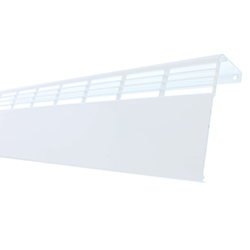

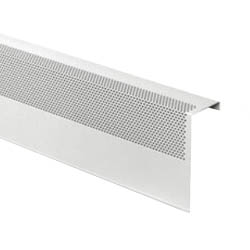

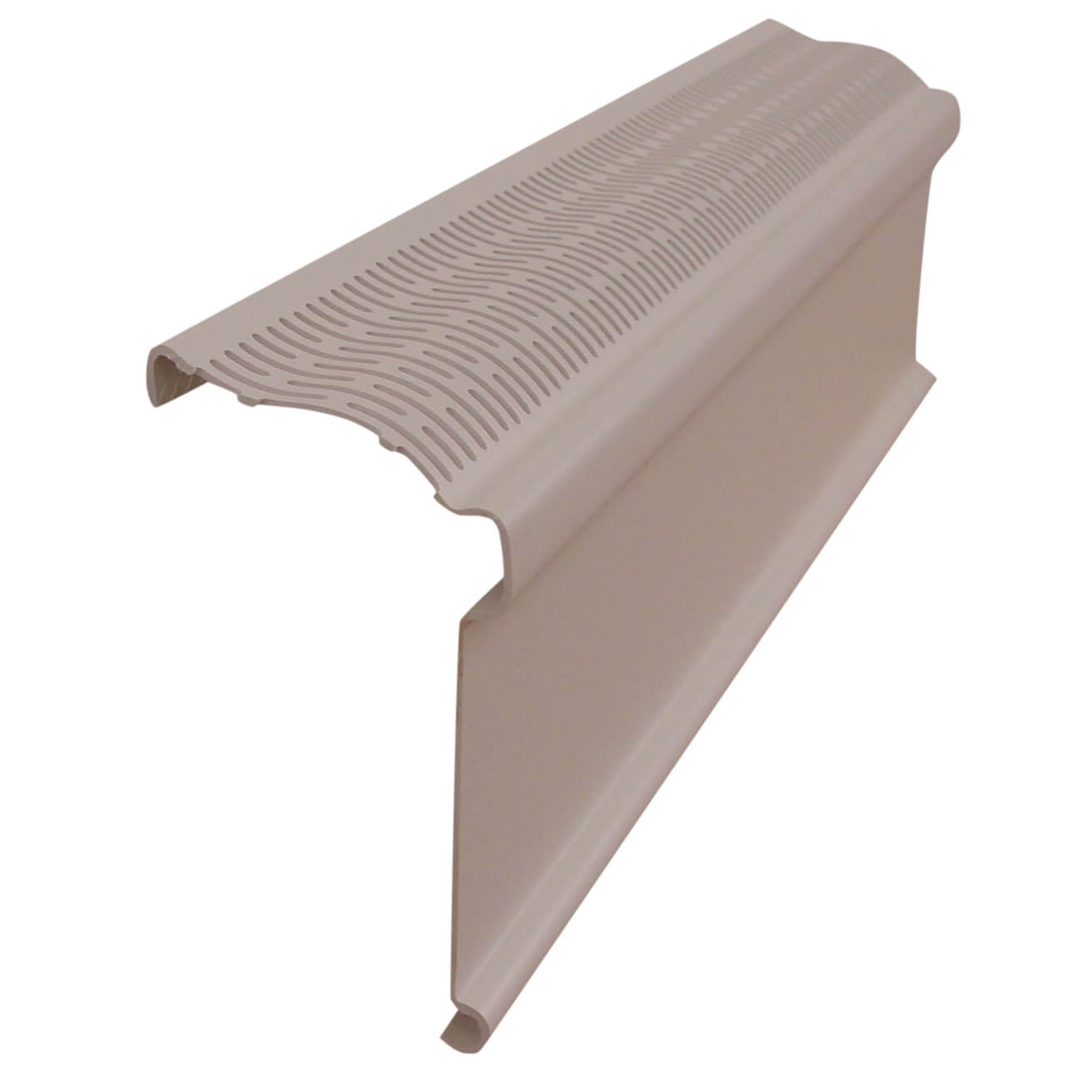


Slant/Fin Revital Baseboard Covers are designed to replace worn or damaged Slant/Fin baseboard enclosures with a factory-matched profile. The Revital system fits Slant/Fin Series 30 and 2000 element configurations and includes all front panels, end caps, and hardware needed to complete the replacement. Slant/Fin Revital covers are available in standard lengths that can be cut to fit shorter runs.
Premium Baseboard Heater Covers from Baseboarders are steel replacement covers engineered to install over existing enclosures and elements without removing the baseboard from the wall. The Baseboarders system eliminates the need to drain or disturb the hydronic system during installation. Premium covers include a snap-on front panel, end caps, and mounting hardware in a finished steel enclosure.
Cover Luxe Baseboard Covers are a premium decorative option designed to upgrade the appearance of existing baseboard heating installations. Cover Luxe enclosures use a contemporary profile and are available in white and metallic finish options. Like other slip-over cover systems, Cover Luxe installs without removing the existing element or piping.
Base/Line 2000 Baseboard Covers are replacement enclosure components compatible with Slant/Fin Series 2000 baseboard elements. The Base/Line 2000 profile matches the height and depth of the original Series 2000 enclosure and is available in front panels, end caps, and back panels sold separately to allow replacement of individual damaged components. This series is one of the most widely installed baseboard profiles in residential hydronic systems in the northeastern United States.
Fine/Line 30D Baseboard Covers are replacement enclosure components for Slant/Fin Fine/Line 30 baseboard elements. The Fine/Line 30D profile is narrower in height than the Series 2000 profile and is common in older residential baseboard installations. Components including front panels, end caps, and wall brackets are available separately to replace individual damaged pieces.
Multi/Pak 80 Baseboard Covers are replacement enclosure components for Slant/Fin Multi/Pak 80 baseboard elements used in residential and light commercial hydronic systems. Front panels, end caps, and other enclosure components are available to address spot replacements without replacing the full baseboard run.
Profile identification is the critical first step in selecting a replacement baseboard cover. The height and depth of the existing enclosure determine which replacement series is compatible. Common Slant/Fin profiles include Series 2000 at approximately 9.25 inches tall, Fine/Line 30 at approximately 7.5 inches tall, and Multi/Pak 80 at approximately 8.5 inches tall. Measure the existing cover's height and depth before ordering.
Length is the second key dimension. Baseboard covers are typically sold in standard lengths of 2, 3, 4, 5, 6, 7, and 8 feet. Steel enclosures can be cut to shorter lengths with a metal snip or hacksaw. Measure the total length of the run and account for corners, inside bends, or end caps that add to the material count.
Slip-over cover systems like Baseboarders and Cover Luxe install directly over the existing front panel and end caps without disturbing the mounting brackets, heating element, or piping. They are not appropriate where the back panel needs to be replaced. Standard replacement components allow individual damaged pieces to be replaced without covering the full original enclosure.
Finish and color should match the existing trim in the room. Most residential baseboard covers are available in white as the standard option. If replacing covers in part of a room, confirm that the replacement section's finish matches the existing covers that remain in place.
How do I know which baseboard cover profile fits my existing heating element?
Identify the profile by measuring the height and depth of the existing front panel. Common Slant/Fin profiles include the Series 2000 at approximately 9.25 inches tall, Fine/Line 30 at approximately 7.5 inches tall, and Multi/Pak 80 at approximately 8.5 inches tall. If the existing enclosure is stamped with a model number or brand name, that is the most direct identifier.
Can I replace baseboard heater covers without draining the system?
Yes, for most baseboard cover replacement jobs, the heating element and piping do not need to be drained or disturbed. Standard replacement covers remove the front panel and end caps while leaving the back panel, mounting brackets, and heating element in place. Slip-over cover systems install directly over the existing enclosure without removing any components. Draining is only necessary if the back panel or mounting brackets need to be replaced.
What is the difference between a slip-over cover system and a standard replacement cover?
A standard replacement cover replaces the individual components of the existing enclosure while leaving the back panel and mounting brackets in place. A slip-over system installs directly over the entire existing enclosure without removing anything. Slip-over systems are faster and do not require the existing enclosure to be intact at the back or sides. Standard replacement components allow individual damaged pieces to be replaced without covering the full original enclosure.
Can baseboard covers be painted?
Steel baseboard covers can be painted with a heat-resistant paint rated for at least 200 degrees Fahrenheit. Standard spray paints and latex paints are not appropriate because they will discolor or blister at operating temperatures. Remove the covers from the wall before painting and allow them to cure fully before reinstalling.
What should I do if the baseboard cover length I need is not a standard size?
Baseboard covers in steel construction can be cut to a shorter length using metal snips or a fine-tooth hacksaw. After cutting, use a metal file to smooth any sharp edges on the cut end. Standard end caps are installed at both ends of the trimmed panel to finish the appearance. For runs longer than standard stock lengths, covers can be joined end-to-end or butted together with matching end cap profiles.
Resources
 --%3E %3C!DOCTYPE svg PUBLIC '-//W3C//DTD SVG 1.1//EN' 'http://www.w3.org/Graphics/SVG/1.1/DTD/svg11.dtd'%3E %3Csvg version='1.1' id='Layer_1' xmlns='http://www.w3.org/2000/svg' xmlns:xlink='http://www.w3.org/1999/xlink' x='0px' y='0px' width='90px' height='90px' viewBox='0 0 90 90' enable-background='new 0 0 90 90' xml:space='preserve'%3E %3Crect x='27' y='23' fill='%23FFFFFF' width='43' height='44'/%3E %3Cg%3E %3Cdefs%3E %3Crect id='SVGID_1_' width='90' height='90'/%3E %3C/defs%3E %3CclipPath id='SVGID_2_'%3E %3Cuse xlink:href='%23SVGID_1_' overflow='visible'/%3E %3C/clipPath%3E %3Cpath clip-path='url(%23SVGID_2_)' fill='%234186AD' d='M45,0C20.1,0,0,20.1,0,45c0,24.9,20.1,45,45,45c24.9,0,45-20.1,45-45 C90,20.1,69.9,0,45,0'/%3E %3C/g%3E %3Cpath fill='%23FFFFFF' d='M60.6,47.4l-22.5,14c-0.5,0.3-1,0.399-1.5,0.399s-0.9-0.1-1.4-0.399c-0.9-0.5-1.4-1.4-1.4-2.5v-28 c0-1,0.6-2,1.4-2.5c0.9-0.5,2-0.5,2.9,0.1l22.5,14.1C61.4,43.1,61.9,44,61.9,45S61.4,46.9,60.6,47.4'/%3E %3C/svg%3E)


Other Resources
Slant/Fin Revital Baseboard Covers are designed to replace worn or damaged Slant/Fin baseboard enclosures with a factory-matched profile. The Revital system fits Slant/Fin Series 30 and 2000 element configurations and includes all front panels, end caps, and hardware needed to complete the replacement. Slant/Fin Revital covers are available in standard lengths that can be cut to fit shorter runs.
Premium Baseboard Heater Covers from Baseboarders are steel replacement covers engineered to install over existing enclosures and elements without removing the baseboard from the wall. The Baseboarders system eliminates the need to drain or disturb the hydronic system during installation. Premium covers include a snap-on front panel, end caps, and mounting hardware in a finished steel enclosure.
Cover Luxe Baseboard Covers are a premium decorative option designed to upgrade the appearance of existing baseboard heating installations. Cover Luxe enclosures use a contemporary profile and are available in white and metallic finish options. Like other slip-over cover systems, Cover Luxe installs without removing the existing element or piping.
Base/Line 2000 Baseboard Covers are replacement enclosure components compatible with Slant/Fin Series 2000 baseboard elements. The Base/Line 2000 profile matches the height and depth of the original Series 2000 enclosure and is available in front panels, end caps, and back panels sold separately to allow replacement of individual damaged components. This series is one of the most widely installed baseboard profiles in residential hydronic systems in the northeastern United States.
Fine/Line 30D Baseboard Covers are replacement enclosure components for Slant/Fin Fine/Line 30 baseboard elements. The Fine/Line 30D profile is narrower in height than the Series 2000 profile and is common in older residential baseboard installations. Components including front panels, end caps, and wall brackets are available separately to replace individual damaged pieces.
Multi/Pak 80 Baseboard Covers are replacement enclosure components for Slant/Fin Multi/Pak 80 baseboard elements used in residential and light commercial hydronic systems. Front panels, end caps, and other enclosure components are available to address spot replacements without replacing the full baseboard run.
Profile identification is the critical first step in selecting a replacement baseboard cover. The height and depth of the existing enclosure determine which replacement series is compatible. Common Slant/Fin profiles include Series 2000 at approximately 9.25 inches tall, Fine/Line 30 at approximately 7.5 inches tall, and Multi/Pak 80 at approximately 8.5 inches tall. Measure the existing cover's height and depth before ordering.
Length is the second key dimension. Baseboard covers are typically sold in standard lengths of 2, 3, 4, 5, 6, 7, and 8 feet. Steel enclosures can be cut to shorter lengths with a metal snip or hacksaw. Measure the total length of the run and account for corners, inside bends, or end caps that add to the material count.
Slip-over cover systems like Baseboarders and Cover Luxe install directly over the existing front panel and end caps without disturbing the mounting brackets, heating element, or piping. They are not appropriate where the back panel needs to be replaced. Standard replacement components allow individual damaged pieces to be replaced without covering the full original enclosure.
Finish and color should match the existing trim in the room. Most residential baseboard covers are available in white as the standard option. If replacing covers in part of a room, confirm that the replacement section's finish matches the existing covers that remain in place.
How do I know which baseboard cover profile fits my existing heating element?
Identify the profile by measuring the height and depth of the existing front panel. Common Slant/Fin profiles include the Series 2000 at approximately 9.25 inches tall, Fine/Line 30 at approximately 7.5 inches tall, and Multi/Pak 80 at approximately 8.5 inches tall. If the existing enclosure is stamped with a model number or brand name, that is the most direct identifier.
Can I replace baseboard heater covers without draining the system?
Yes, for most baseboard cover replacement jobs, the heating element and piping do not need to be drained or disturbed. Standard replacement covers remove the front panel and end caps while leaving the back panel, mounting brackets, and heating element in place. Slip-over cover systems install directly over the existing enclosure without removing any components. Draining is only necessary if the back panel or mounting brackets need to be replaced.
What is the difference between a slip-over cover system and a standard replacement cover?
A standard replacement cover replaces the individual components of the existing enclosure while leaving the back panel and mounting brackets in place. A slip-over system installs directly over the entire existing enclosure without removing anything. Slip-over systems are faster and do not require the existing enclosure to be intact at the back or sides. Standard replacement components allow individual damaged pieces to be replaced without covering the full original enclosure.
Can baseboard covers be painted?
Steel baseboard covers can be painted with a heat-resistant paint rated for at least 200 degrees Fahrenheit. Standard spray paints and latex paints are not appropriate because they will discolor or blister at operating temperatures. Remove the covers from the wall before painting and allow them to cure fully before reinstalling.
What should I do if the baseboard cover length I need is not a standard size?
Baseboard covers in steel construction can be cut to a shorter length using metal snips or a fine-tooth hacksaw. After cutting, use a metal file to smooth any sharp edges on the cut end. Standard end caps are installed at both ends of the trimmed panel to finish the appearance. For runs longer than standard stock lengths, covers can be joined end-to-end or butted together with matching end cap profiles.