




Filters
SORT
Product Availability –
Used With –
Review Score –
 --%3E %3Csvg version='1.1' id='Fill' xmlns='http://www.w3.org/2000/svg' xmlns:xlink='http://www.w3.org/1999/xlink' x='0px' y='0px' viewBox='0 0 100 100' enable-background='new 0 0 100 100' xml:space='preserve'%3E %3Cpath fill='%23F15C02' d='M79.44,0.95H20.56C9.78,0.95,0.95,9.78,0.95,20.56v58.87c0,10.79,8.82,19.61,19.61,19.61h58.87 c10.79,0,19.61-8.83,19.61-19.61V20.56C99.05,9.78,90.22,0.95,79.44,0.95z M65.38,58.24l9.38,29.58L49.69,69.78L24.5,87.82 l9.34-29.6L8.8,39.6l30.73-0.17c0,0,6.98-19.61,10-28.93c0.54,1.36,9.88,29.1,9.88,29.1H91.2L65.38,58.24z'/%3E %3C/svg%3E)
 --%3E %3Csvg version='1.1' id='With-RB' xmlns='http://www.w3.org/2000/svg' xmlns:xlink='http://www.w3.org/1999/xlink' x='0px' y='0px' viewBox='0 0 100 100' enable-background='new 0 0 100 100' xml:space='preserve'%3E %3Cpath fill='%23FBC8B4' d='M79.44,0.95H20.56C9.78,0.95,0.95,9.78,0.95,20.56v58.87c0,10.79,8.82,19.61,19.61,19.61h58.87 c10.79,0,19.61-8.83,19.61-19.61V20.56C99.05,9.78,90.22,0.95,79.44,0.95z M65.38,58.24l9.38,29.58L49.69,69.78L24.5,87.82 l9.34-29.6L8.8,39.6l30.73-0.17c0,0,6.98-19.61,10-28.93c0.54,1.36,9.88,29.1,9.88,29.1H91.2L65.38,58.24z'/%3E %3C/svg%3E)
Price Range –
Bell & Gossett Couplers


 --%3E %3Csvg version='1.1' id='Half' xmlns='http://www.w3.org/2000/svg' xmlns:xlink='http://www.w3.org/1999/xlink' x='0px' y='0px' viewBox='0 0 100 100' enable-background='new 0 0 100 100' xml:space='preserve'%3E %3Cg%3E %3Cpath fill='%23F15C02' d='M30.05,70.23l3.79-12.01L8.8,39.6l30.73-0.17c0,0,6.98-19.61,10-28.93c0.54,1.36,9.88,29.1,9.88,29.1h1.58 L93.71,7.18c-3.58-3.82-8.66-6.23-14.28-6.23H20.56C9.78,0.95,0.95,9.78,0.95,20.56v58.87c0,5.41,2.22,10.32,5.79,13.88 L30.05,70.23z'/%3E %3C/g%3E %3Cpath fill='%23FBC8B4' d='M93.71,7.18L60.98,39.6H91.2L65.38,58.24l9.38,29.58L49.69,69.78L24.5,87.82l5.55-17.59L6.75,93.32 c3.55,3.54,8.44,5.73,13.82,5.73h58.87c10.79,0,19.61-8.83,19.61-19.61V20.56C99.05,15.4,97.01,10.69,93.71,7.18z'/%3E %3C/svg%3E)
 --%3E %3Csvg version='1.1' id='No-RB' xmlns='http://www.w3.org/2000/svg' xmlns:xlink='http://www.w3.org/1999/xlink' x='0px' y='0px' viewBox='0 0 100 100' enable-background='new 0 0 100 100' xml:space='preserve'%3E %3Cpath fill='%23CECECE' d='M79.44,0.95H20.56C9.78,0.95,0.95,9.78,0.95,20.56v58.87c0,10.79,8.82,19.61,19.61,19.61h58.87 c10.79,0,19.61-8.83,19.61-19.61V20.56C99.05,9.78,90.22,0.95,79.44,0.95z M65.38,58.24l9.38,29.58L49.69,69.78L24.5,87.82 l9.34-29.6L8.8,39.6l30.73-0.17c0,0,6.98-19.61,10-28.93c0.54,1.36,9.88,29.1,9.88,29.1H91.2L65.38,58.24z'/%3E %3C/svg%3E)
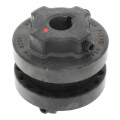
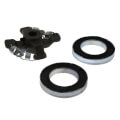
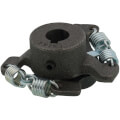
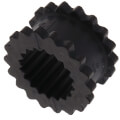
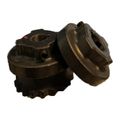
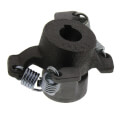
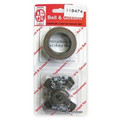
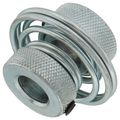
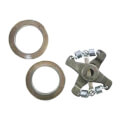
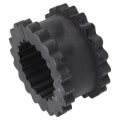
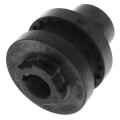
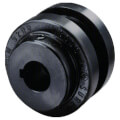
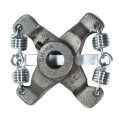
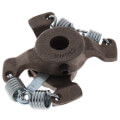
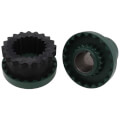

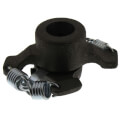
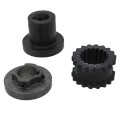

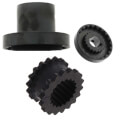
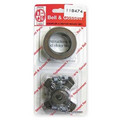
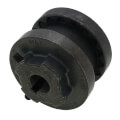

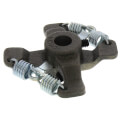
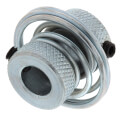
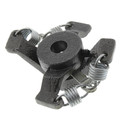
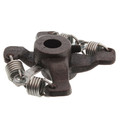
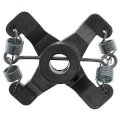
Bell & Gossett couplers connect a circulator pump's motor to its wet end, transferring rotational torque from the motor shaft to the impeller shaft while absorbing the slight misalignment that develops during installation and normal operation. Contractors servicing hydronic heating and cooling systems replace couplers far more often than motors or pump bodies, since the coupler's flexible insert or spring element is designed to wear before more expensive components take damage. Bell & Gossett's Series 100 line, the most widely installed circulator platform in North American hydronic systems, uses a two-piece spring coupler that also acts as a sacrificial link if the pump seizes. Booster pump lines such as the PD-35 and PD-37 use a similarly sized coupler matched to their specific shaft diameters. Choosing the correct coupler by pump model and shaft size keeps vibration and noise down and protects the motor bearing from the added strain of a misaligned drive.
Subcategories
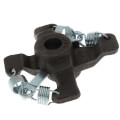
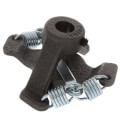
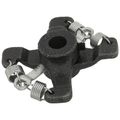
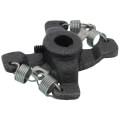
- Spring Couplers: Spring couplers are the standard replacement part for Bell & Gossett Series 100 and similar small circulator lines. A two-piece steel spring sits between the motor shaft and pump shaft, transmitting torque while flexing enough to absorb minor shaft misalignment. Residential and light commercial technicians stock these couplers because circulator failures caused by a worn spring element are common warm-weather service calls. Replacing a spring coupler typically takes only a few minutes once the pump volute is opened.
- Rubber Insert Couplers: Rubber insert couplers use a molded elastomer piece sandwiched between two metal jaws to dampen vibration more effectively than an all-metal spring design. Larger commercial circulators and close-coupled pumps often specify this style because the rubber insert reduces the mechanical noise transmitted through the piping system. Technicians should match the insert's durometer rating to the pump manufacturer's specification, since a harder insert transmits more vibration and a softer one wears out faster.
- Booster Pump Couplers: Booster pump couplers are sized for higher-torque applications like the PD-35 and PD-37 series, where the pump moves more volume against greater resistance than a standard circulator. These couplers use a heavier spring or insert to handle the added load without slipping. Plumbers replacing a booster pump coupler should confirm the shaft diameter on both the motor and pump end, since booster pumps sometimes pair a standard motor with a larger pump body.
- Coupler Guards and Mounting Hardware: Coupler guards shield the rotating coupler assembly from accidental contact during service and are required on many close-coupled pump installations for safety compliance. Mounting hardware, including alignment shims and jaw-set screws, keeps the coupler centered between the motor and pump shafts. Skipping the guard or alignment step is a common cause of premature coupler wear, since even slight misalignment accelerates spring or insert fatigue.
Buying Guide
Matching a replacement coupler to the pump it serves starts with the pump model number, since Bell & Gossett Couplers are not interchangeable across product lines. A Series 100 circulator, a close-coupled commercial pump, and a booster pump each use different shaft diameters and torque ratings, so a coupler pulled from the wrong category can slip, generate excess noise, or fail within weeks. Technicians should record the motor shaft diameter, the pump shaft diameter, and the overall coupler length before ordering, since a coupler that is even slightly too long or short will bind against the pump volute or leave a gap that allows vibration to travel through the piping.
Rubber insert couplers suit installations where noise transmission is a concern, such as finished basements or occupied spaces near mechanical rooms, while spring couplers remain the simpler and more common choice for standard residential circulators. Booster pump applications need a coupler rated for the higher torque these pumps generate, so a lighter-duty circulator coupler will wear out quickly if substituted.
Buying a spare coupler alongside a circulator or booster pump replacement is common practice, since the coupler is the part most likely to need attention again during the pump's service life, and having one on hand avoids a return trip for a component that is inexpensive to stock.
Frequently Asked Questions
What is the difference between a spring coupler and a rubber insert coupler on a Bell & Gossett pump?
A spring coupler uses a metal spring element to transmit torque and is standard on most Series 100 circulators, while a rubber insert coupler uses a molded elastomer piece that dampens vibration and noise more effectively. Rubber insert couplers are common on larger commercial pumps where quiet operation matters.
How often does a Bell & Gossett coupler need replacement?
A coupler typically wears out well before the pump motor or body does, since it is designed to be the sacrificial link in the drive assembly. Symptoms like grinding noise, vibration, or a pump that spins without moving water usually point to a worn coupler rather than motor failure.
Can any coupler fit any Bell & Gossett pump?
No, couplers are matched to specific shaft diameters and torque ratings for each pump line. A coupler sized for a standard circulator will not hold up under the load of a booster pump, and a mismatched shaft diameter will prevent proper installation.
What causes a coupler to fail early?
Misalignment between the motor shaft and pump shaft is the most common cause, since it puts uneven stress on the spring or insert with every rotation. A pump that has seized briefly, even if it recovers, often damages the coupler as the sacrificial component.
Does replacing a coupler require draining the system?
Replacing a coupler generally does not require draining the hydronic system, since the coupler sits outside the wet end between the motor and pump body. Technicians typically remove the coupler guard, slide the motor back slightly, and swap the coupler without opening the pump volute.
