



Bell & Gossett Pump Parts
Bell & Gossett pump parts cover the individual wear components inside Bell & Gossett circulator pumps, from bearing assemblies and impellers to the couplers that connect motor and pump shafts. Gaskets and seals round out the parts most commonly replaced during a pump rebuild.
Rebuilding a circulator with genuine Bell & Gossett parts is often more economical than replacing the entire pump body, especially on larger commercial units. Keeping bearing assemblies and gaskets on hand shortens downtime on hydronic systems where a failed circulator can affect heating for an entire building.




Subcategories
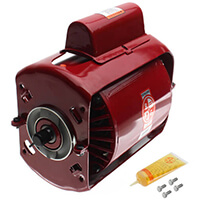
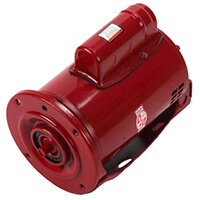
- Bell & Gossett Ball Bearing Motors: Ball bearing motors are built for continuous duty applications where a pump runs for extended periods without shutting off, which describes most commercial hydronic systems. Mechanical contractors replace these motors when the original motor's bearings wear out rather than rebuilding a sleeve bearing motor that wasn't designed for that kind of run time.
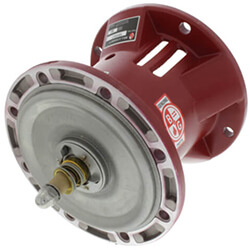
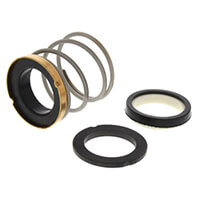
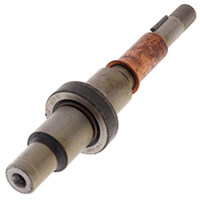
- Bell & Gossett Bearing Assemblies: Bearing assemblies package the bearings, shaft, and seal into one field-replaceable unit, which is how Bell & Gossett designed the Series 100 line for fast, straightforward service. Cast iron and all-bronze Series 100 pumps use different bearing assemblies, so techs working on B&G circulators keep both versions on the truck rather than assuming one fits every pump in the building.
- Bell & Gossett Bearings: Bearings are the individual wear components inside a bearing assembly, and some contractors prefer replacing them separately on older pumps rather than swapping the entire assembly. Replacing bearings alone takes more time on the bench but can save money on a pump where the shaft and seal are still in good shape.
- Bell & Gossett Couplers: Couplers join the motor shaft to the pump shaft and are designed to fail before more expensive components do, absorbing misalignment and vibration that would otherwise stress the motor or pump bearings. A worn or cracked coupler is a common source of pump noise and vibration complaints in mechanical rooms.
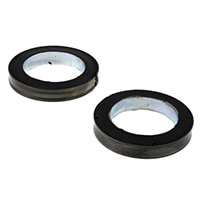
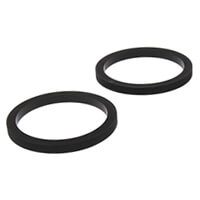
- Bell & Gossett Gaskets: Gaskets seal the pump housing and volute against leaks, and they're one of the first parts to check when a B&G pump starts weeping around the casing. Building engineers typically replace the gasket any time the pump housing is opened for other service, rather than reusing the old one.
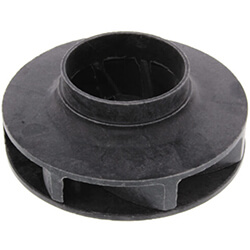
- Bell & Gossett Impellers: Impellers move water through the pump and wear down over time from cavitation, debris, or mineral buildup in the system, which shows up as reduced flow or a pump that runs louder than it used to. Replacing a worn impeller restores flow without the cost of a full pump replacement.
Buying Guide
Start by confirming the exact pump model and series before ordering parts, since Bell & Gossett covers a wide range of circulator and centrifugal pump lines and the parts aren't interchangeable across them. A model tag on the pump housing usually has everything needed to match parts correctly.
Cast iron and bronze versions of the same pump series typically use different bearing assemblies and other wear parts, so double check pump material before placing an order. Ordering the wrong material assembly is one of the more common return reasons on pump parts.
Decide whether the job calls for a full bearing assembly or individual components like bearings and seals. A full assembly costs more upfront but gets a pump back online faster, while sourcing individual parts can save money on a pump that's still mechanically sound aside from one worn component.
For motors, match the duty cycle to the application. Continuous duty ball bearing motors are the right call for commercial systems that run around the clock, while lighter duty applications may not need that level of motor.
Keep common wear items like gaskets, couplers, and seal kits on hand for routine maintenance calls rather than ordering them one at a time after a failure. Stocking these parts costs little relative to a callback, and a worn gasket or coupler is often the actual cause of a leak or noise complaint that gets misdiagnosed as a bigger pump problem.
Frequently Asked Questions
How do I know which Bell & Gossett bearing assembly fits my pump?
Check the pump model number and material, since cast iron and all-bronze pumps in the same series use different bearing assemblies. The model tag on the pump housing has the information needed to match the correct assembly.
Can I replace individual bearings instead of the whole bearing assembly?
On some pumps, yes. If the shaft and seal are still in good condition, replacing just the bearings can save money, though a full assembly replacement is often faster and comes with a fresh seal and gasket already included.
What causes a Bell & Gossett pump to leak at the housing?
A worn or damaged gasket is the most common cause of leaks around the pump housing, though a failing mechanical seal in the bearing assembly can also be the source. Checking both during service prevents a repeat callback.
When should I replace the coupler instead of the motor or pump?
Couplers are designed to absorb misalignment and vibration, so they often wear out before the motor or pump does. Unusual noise or vibration at the pump is worth checking against the coupler first, since it's a less expensive fix than a motor or pump replacement.
Why does my circulator pump seem to lose flow over time?
A worn impeller is a common cause of reduced flow, especially in systems with mineral buildup or debris. Replacing the impeller restores flow without the cost of replacing the entire pump.
Resources
 --%3E %3C!DOCTYPE svg PUBLIC '-//W3C//DTD SVG 1.1//EN' 'http://www.w3.org/Graphics/SVG/1.1/DTD/svg11.dtd'%3E %3Csvg version='1.1' id='Layer_1' xmlns='http://www.w3.org/2000/svg' xmlns:xlink='http://www.w3.org/1999/xlink' x='0px' y='0px' width='90px' height='90px' viewBox='0 0 90 90' enable-background='new 0 0 90 90' xml:space='preserve'%3E %3Crect x='27' y='23' fill='%23FFFFFF' width='43' height='44'/%3E %3Cg%3E %3Cdefs%3E %3Crect id='SVGID_1_' width='90' height='90'/%3E %3C/defs%3E %3CclipPath id='SVGID_2_'%3E %3Cuse xlink:href='%23SVGID_1_' overflow='visible'/%3E %3C/clipPath%3E %3Cpath clip-path='url(%23SVGID_2_)' fill='%234186AD' d='M45,0C20.1,0,0,20.1,0,45c0,24.9,20.1,45,45,45c24.9,0,45-20.1,45-45 C90,20.1,69.9,0,45,0'/%3E %3C/g%3E %3Cpath fill='%23FFFFFF' d='M60.6,47.4l-22.5,14c-0.5,0.3-1,0.399-1.5,0.399s-0.9-0.1-1.4-0.399c-0.9-0.5-1.4-1.4-1.4-2.5v-28 c0-1,0.6-2,1.4-2.5c0.9-0.5,2-0.5,2.9,0.1l22.5,14.1C61.4,43.1,61.9,44,61.9,45S61.4,46.9,60.6,47.4'/%3E %3C/svg%3E)
Subcategories
- Bell & Gossett Ball Bearing Motors: Ball bearing motors are built for continuous duty applications where a pump runs for extended periods without shutting off, which describes most commercial hydronic systems. Mechanical contractors replace these motors when the original motor's bearings wear out rather than rebuilding a sleeve bearing motor that wasn't designed for that kind of run time.
- Bell & Gossett Bearing Assemblies: Bearing assemblies package the bearings, shaft, and seal into one field-replaceable unit, which is how Bell & Gossett designed the Series 100 line for fast, straightforward service. Cast iron and all-bronze Series 100 pumps use different bearing assemblies, so techs working on B&G circulators keep both versions on the truck rather than assuming one fits every pump in the building.
- Bell & Gossett Bearings: Bearings are the individual wear components inside a bearing assembly, and some contractors prefer replacing them separately on older pumps rather than swapping the entire assembly. Replacing bearings alone takes more time on the bench but can save money on a pump where the shaft and seal are still in good shape.
- Bell & Gossett Couplers: Couplers join the motor shaft to the pump shaft and are designed to fail before more expensive components do, absorbing misalignment and vibration that would otherwise stress the motor or pump bearings. A worn or cracked coupler is a common source of pump noise and vibration complaints in mechanical rooms.
- Bell & Gossett Gaskets: Gaskets seal the pump housing and volute against leaks, and they're one of the first parts to check when a B&G pump starts weeping around the casing. Building engineers typically replace the gasket any time the pump housing is opened for other service, rather than reusing the old one.
- Bell & Gossett Impellers: Impellers move water through the pump and wear down over time from cavitation, debris, or mineral buildup in the system, which shows up as reduced flow or a pump that runs louder than it used to. Replacing a worn impeller restores flow without the cost of a full pump replacement.
Buying Guide
Start by confirming the exact pump model and series before ordering parts, since Bell & Gossett covers a wide range of circulator and centrifugal pump lines and the parts aren't interchangeable across them. A model tag on the pump housing usually has everything needed to match parts correctly.
Cast iron and bronze versions of the same pump series typically use different bearing assemblies and other wear parts, so double check pump material before placing an order. Ordering the wrong material assembly is one of the more common return reasons on pump parts.
Decide whether the job calls for a full bearing assembly or individual components like bearings and seals. A full assembly costs more upfront but gets a pump back online faster, while sourcing individual parts can save money on a pump that's still mechanically sound aside from one worn component.
For motors, match the duty cycle to the application. Continuous duty ball bearing motors are the right call for commercial systems that run around the clock, while lighter duty applications may not need that level of motor.
Keep common wear items like gaskets, couplers, and seal kits on hand for routine maintenance calls rather than ordering them one at a time after a failure. Stocking these parts costs little relative to a callback, and a worn gasket or coupler is often the actual cause of a leak or noise complaint that gets misdiagnosed as a bigger pump problem.
Frequently Asked Questions
How do I know which Bell & Gossett bearing assembly fits my pump?
Check the pump model number and material, since cast iron and all-bronze pumps in the same series use different bearing assemblies. The model tag on the pump housing has the information needed to match the correct assembly.
Can I replace individual bearings instead of the whole bearing assembly?
On some pumps, yes. If the shaft and seal are still in good condition, replacing just the bearings can save money, though a full assembly replacement is often faster and comes with a fresh seal and gasket already included.
What causes a Bell & Gossett pump to leak at the housing?
A worn or damaged gasket is the most common cause of leaks around the pump housing, though a failing mechanical seal in the bearing assembly can also be the source. Checking both during service prevents a repeat callback.
When should I replace the coupler instead of the motor or pump?
Couplers are designed to absorb misalignment and vibration, so they often wear out before the motor or pump does. Unusual noise or vibration at the pump is worth checking against the coupler first, since it's a less expensive fix than a motor or pump replacement.
Why does my circulator pump seem to lose flow over time?
A worn impeller is a common cause of reduced flow, especially in systems with mineral buildup or debris. Replacing the impeller restores flow without the cost of replacing the entire pump.