




Filters
SORT
Product Availability –
Adjustable Speed –
Adjustable Thermostat –
Connection Type –
Review Score –
 --%3E %3Csvg version='1.1' id='Fill' xmlns='http://www.w3.org/2000/svg' xmlns:xlink='http://www.w3.org/1999/xlink' x='0px' y='0px' viewBox='0 0 100 100' enable-background='new 0 0 100 100' xml:space='preserve'%3E %3Cpath fill='%23F15C02' d='M79.44,0.95H20.56C9.78,0.95,0.95,9.78,0.95,20.56v58.87c0,10.79,8.82,19.61,19.61,19.61h58.87 c10.79,0,19.61-8.83,19.61-19.61V20.56C99.05,9.78,90.22,0.95,79.44,0.95z M65.38,58.24l9.38,29.58L49.69,69.78L24.5,87.82 l9.34-29.6L8.8,39.6l30.73-0.17c0,0,6.98-19.61,10-28.93c0.54,1.36,9.88,29.1,9.88,29.1H91.2L65.38,58.24z'/%3E %3C/svg%3E)
Price Range –
Bell & Gossett Ecocirc e3 Domestic Hot Water Pumps



 --%3E %3Csvg version='1.1' id='No-RB' xmlns='http://www.w3.org/2000/svg' xmlns:xlink='http://www.w3.org/1999/xlink' x='0px' y='0px' viewBox='0 0 100 100' enable-background='new 0 0 100 100' xml:space='preserve'%3E %3Cpath fill='%23CECECE' d='M79.44,0.95H20.56C9.78,0.95,0.95,9.78,0.95,20.56v58.87c0,10.79,8.82,19.61,19.61,19.61h58.87 c10.79,0,19.61-8.83,19.61-19.61V20.56C99.05,9.78,90.22,0.95,79.44,0.95z M65.38,58.24l9.38,29.58L49.69,69.78L24.5,87.82 l9.34-29.6L8.8,39.6l30.73-0.17c0,0,6.98-19.61,10-28.93c0.54,1.36,9.88,29.1,9.88,29.1H91.2L65.38,58.24z'/%3E %3C/svg%3E)
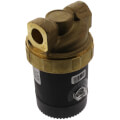
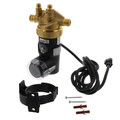
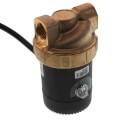

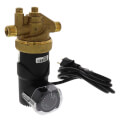
Bell & Gossett Ecocirc e3 domestic hot water pumps are small circulators that move hot water through a recirculation loop so a fixture delivers hot water almost as soon as the handle turns, instead of after a long wait at the tap. Each e3 circulator uses a permanent-magnet ECM motor with a ceramic ball bearing lubricated by the system fluid itself, which cuts down on the wear points found in older belt-driven or standard AC-motor circulators. The motor is non-overloading at any point on its pump curve and includes built-in overload protection, so it keeps running safely even if system conditions change. Many e3 models also include a field-adjustable thermostat that can be set from 68°F to 158°F, letting an installer match circulation to the specific hot water loop instead of running the pump on a fixed schedule. For a plumber replacing an aging circulator on a domestic hot water recirculation line, the e3's efficiency and simple setup make it a straightforward upgrade.
Subcategories
- Standard Ecocirc e3 Circulators: The base e3 circulator runs on its ECM motor and ceramic bearing design without additional accessories. Residential plumbers use this version on typical single-family recirculation loops where a simple, efficient replacement for an aging AC circulator is the goal. Its non-overloading motor design keeps performance steady across the pump curve rather than only at one fixed operating point.
- Circulators with Adjustable Thermostat: This version adds the field-adjustable thermostat, settable from 68°F to 158°F, directly on the motor housing. Installers working on loops with specific temperature requirements, such as buildings with mixed fixture types, use the onboard thermostat to fine-tune circulation without adding a separate control. It's a common choice when the recirculation loop needs more precision than an always-on circulator can offer.
- Ecocirc e3 with Timer Accessory: An optional e3 Timer accessory installs by removing the motor end cap and plugging the timer module in, with no additional wiring required. Contractors add the timer on domestic hot water recirculation systems where running the pump around the clock wastes energy, letting the pump cycle on a schedule instead. This setup fits buildings with predictable hot water demand patterns, such as offices or occupied residences with regular routines.
Buying Guide
Start by confirming the recirculation loop's pipe size and expected flow needs, since an oversized circulator wastes energy while an undersized one won't deliver hot water quickly enough at the far fixture. Bell & Gossett Ecocirc e3 Domestic Hot Water Pumps are built around a permanent-magnet ECM motor, which draws less power than older AC-motor circulators doing the same job, so factor that efficiency gain into any replacement decision on an aging system. Next, decide whether the loop needs temperature control beyond a simple on/off cycle. If fixture temperatures vary or the building has mixed uses, the version with the field-adjustable thermostat lets an installer dial in a setpoint between 68°F and 158°F rather than relying on a fixed default. For buildings where hot water demand follows a predictable daily pattern, such as an office with set hours, adding the e3 Timer accessory can cut runtime significantly compared to a pump that circulates continuously. The timer installs without extra wiring, so it's a low-effort add during initial installation or a later retrofit. Because the ceramic ball bearing is lubricated by the system fluid itself, there's no separate oiling port to maintain, which simplifies long-term upkeep compared to older wet-rotor designs that needed periodic servicing. Matching motor features to the building's actual usage pattern, rather than defaulting to the base model, is what gets the most value out of an e3 installation.
Frequently Asked Questions
What does a domestic hot water recirculation pump do?
It continuously or periodically moves hot water through a loop back to the water heater, so fixtures get hot water quickly instead of after the line runs cold water out first. Without it, water sitting in the pipe cools between uses.
How is the Ecocirc e3 different from an older circulator?
It uses a permanent-magnet ECM motor and a ceramic ball bearing lubricated by the system fluid, cutting down on wear points and power draw compared to older AC-motor or belt-driven designs. That construction also lets the motor run efficiently across its full pump curve.
Can the thermostat setting be changed after installation?
On models with the field-adjustable thermostat, yes. The range runs from 68°F to 158°F, so an installer or building owner can adjust it if fixture temperatures or usage patterns change.
Is the e3 Timer accessory required?
No, it's optional. It's most useful on buildings with predictable hot water demand where running the pump continuously would waste energy, and it installs without additional wiring.
Does the Ecocirc e3 need regular maintenance?
Its ceramic ball bearing is lubricated by the system fluid, so there's no separate oiling port to service on a routine basis. That's a simpler maintenance profile than older wet-rotor circulators required.
