



Filters
SORT
Product Availability –
Category –
Brand –
Type –
Connection Type –
Review Score –
 --%3E %3Csvg version='1.1' id='Fill' xmlns='http://www.w3.org/2000/svg' xmlns:xlink='http://www.w3.org/1999/xlink' x='0px' y='0px' viewBox='0 0 100 100' enable-background='new 0 0 100 100' xml:space='preserve'%3E %3Cpath fill='%23F15C02' d='M79.44,0.95H20.56C9.78,0.95,0.95,9.78,0.95,20.56v58.87c0,10.79,8.82,19.61,19.61,19.61h58.87 c10.79,0,19.61-8.83,19.61-19.61V20.56C99.05,9.78,90.22,0.95,79.44,0.95z M65.38,58.24l9.38,29.58L49.69,69.78L24.5,87.82 l9.34-29.6L8.8,39.6l30.73-0.17c0,0,6.98-19.61,10-28.93c0.54,1.36,9.88,29.1,9.88,29.1H91.2L65.38,58.24z'/%3E %3C/svg%3E)
 --%3E %3Csvg version='1.1' id='With-RB' xmlns='http://www.w3.org/2000/svg' xmlns:xlink='http://www.w3.org/1999/xlink' x='0px' y='0px' viewBox='0 0 100 100' enable-background='new 0 0 100 100' xml:space='preserve'%3E %3Cpath fill='%23FBC8B4' d='M79.44,0.95H20.56C9.78,0.95,0.95,9.78,0.95,20.56v58.87c0,10.79,8.82,19.61,19.61,19.61h58.87 c10.79,0,19.61-8.83,19.61-19.61V20.56C99.05,9.78,90.22,0.95,79.44,0.95z M65.38,58.24l9.38,29.58L49.69,69.78L24.5,87.82 l9.34-29.6L8.8,39.6l30.73-0.17c0,0,6.98-19.61,10-28.93c0.54,1.36,9.88,29.1,9.88,29.1H91.2L65.38,58.24z'/%3E %3C/svg%3E)
Price Range –
Recirculating Pumps

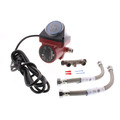

 --%3E %3Csvg version='1.1' id='Half' xmlns='http://www.w3.org/2000/svg' xmlns:xlink='http://www.w3.org/1999/xlink' x='0px' y='0px' viewBox='0 0 100 100' enable-background='new 0 0 100 100' xml:space='preserve'%3E %3Cg%3E %3Cpath fill='%23F15C02' d='M30.05,70.23l3.79-12.01L8.8,39.6l30.73-0.17c0,0,6.98-19.61,10-28.93c0.54,1.36,9.88,29.1,9.88,29.1h1.58 L93.71,7.18c-3.58-3.82-8.66-6.23-14.28-6.23H20.56C9.78,0.95,0.95,9.78,0.95,20.56v58.87c0,5.41,2.22,10.32,5.79,13.88 L30.05,70.23z'/%3E %3C/g%3E %3Cpath fill='%23FBC8B4' d='M93.71,7.18L60.98,39.6H91.2L65.38,58.24l9.38,29.58L49.69,69.78L24.5,87.82l5.55-17.59L6.75,93.32 c3.55,3.54,8.44,5.73,13.82,5.73h58.87c10.79,0,19.61-8.83,19.61-19.61V20.56C99.05,15.4,97.01,10.69,93.71,7.18z'/%3E %3C/svg%3E)
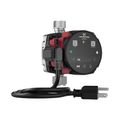


 --%3E %3Csvg version='1.1' id='No-RB' xmlns='http://www.w3.org/2000/svg' xmlns:xlink='http://www.w3.org/1999/xlink' x='0px' y='0px' viewBox='0 0 100 100' enable-background='new 0 0 100 100' xml:space='preserve'%3E %3Cpath fill='%23CECECE' d='M79.44,0.95H20.56C9.78,0.95,0.95,9.78,0.95,20.56v58.87c0,10.79,8.82,19.61,19.61,19.61h58.87 c10.79,0,19.61-8.83,19.61-19.61V20.56C99.05,9.78,90.22,0.95,79.44,0.95z M65.38,58.24l9.38,29.58L49.69,69.78L24.5,87.82 l9.34-29.6L8.8,39.6l30.73-0.17c0,0,6.98-19.61,10-28.93c0.54,1.36,9.88,29.1,9.88,29.1H91.2L65.38,58.24z'/%3E %3C/svg%3E)
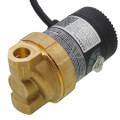
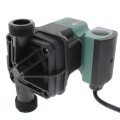

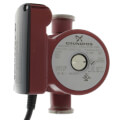
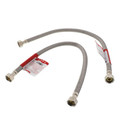
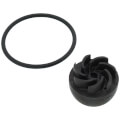


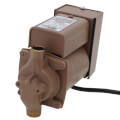
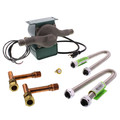
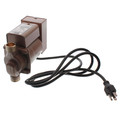

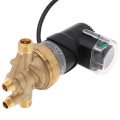
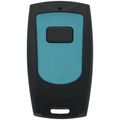

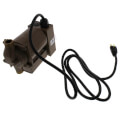
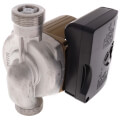
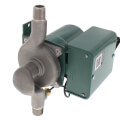


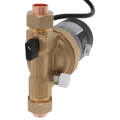
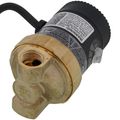
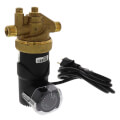
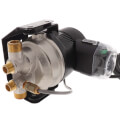
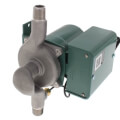
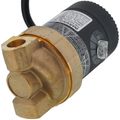
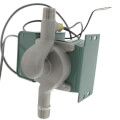

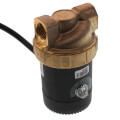
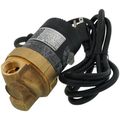

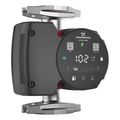
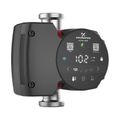
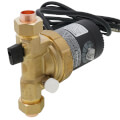
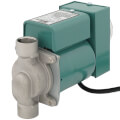
Recirculating Pumps keep hot water moving continuously through a building's plumbing loop so fixtures deliver hot water quickly instead of making occupants wait for cold water to clear the line. These small circulator pumps mount near the water heater or at a fixture under a sink and push water through a dedicated return line, a shared cold line, or a bridge valve, depending on how the system is plumbed. Plumbers spec recirculating pumps most often on larger homes, multi-story buildings, or any layout where the distance between the water heater and the farthest fixture creates a long wait for hot water. Many models run on a timer, aquastat, or on-demand button so the pump only cycles when hot water is actually needed, which limits energy use and reduces wear on the motor over the pump's service life.
Subcategories
- Timer-Controlled Recirculating Pumps: Timer-controlled pumps run on a programmable schedule that matches typical hot water demand throughout the day, such as running during morning and evening hours and shutting off overnight. This setup suits households with predictable routines where continuous circulation isn't needed around the clock. Installers typically wire these pumps to a plug-in or hardwired timer module mounted near the pump itself.
- Aquastat-Controlled Recirculating Pumps: Aquastat-controlled pumps use a temperature sensor on the return line to cycle the pump only when water in the loop has cooled below a set point, rather than running on a fixed schedule. This approach tends to use less energy than pure timer control since the pump only runs when it needs to reheat the loop. These pumps are common in installations where hot water demand doesn't follow a predictable daily pattern.
- On-Demand (Push-Button) Recirculating Pumps: On-demand pumps sit dormant until a wall-mounted or fixture-mounted button is pressed, at which point the pump runs briefly to pull hot water to the nearest fixture before shutting off automatically. This design uses the least energy of the common control types since the pump never runs on a timer or schedule. Homeowners often add these to a single problem fixture, such as a distant bathroom, rather than plumbing a full dedicated loop.
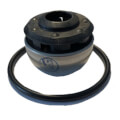
- Recirculating Pump Replacement Parts: Replacement parts for recirculating pumps include impellers, seal kits, check valves, and control modules that wear out well before the pump body itself needs full replacement. A pump that runs but doesn't move water is frequently a worn impeller or a stuck check valve rather than a failed motor. Keeping common wear parts on hand for the most-installed pump models shortens service calls considerably.
Buying Guide
Selecting a Recirculating Pump starts with understanding how the building's hot water loop is plumbed. A dedicated return line back to the water heater supports continuous or scheduled circulation with the least compromise, while a system using the cold water line as a return path needs a compatible bridge valve at the farthest fixture to avoid mixing hot water into the cold supply.
Control type is the next major decision. Timer control suits predictable households, aquastat control adapts to variable demand while limiting energy use, and on-demand control fits situations where only one or two problem fixtures need faster hot water rather than the whole building. Retrofits without an existing dedicated loop are usually better suited to an on-demand pump paired with a bridge valve, since running new pipe throughout an occupied building adds significant cost.
Pump sizing depends on the length of the hot water loop and the number of fixtures it serves, since a pump undersized for the loop will struggle to maintain temperature at the farthest point. Most residential recirculating pump lines are sized in fractional horsepower ratings intended for typical single-family or small multi-family plumbing runs, and larger commercial installations may call for a higher-capacity circulator instead.
Noise and mounting location matter for pumps installed near living spaces, since a pump mounted under a bathroom vanity runs closer to occupants than one tucked in a mechanical room or basement. Reviewing a pump's sound rating alongside its flow and head specifications helps avoid a callback over noise complaints after installation.
Frequently Asked Questions
Do I need a dedicated return line to install a recirculating pump?
Not necessarily. Systems with a dedicated return line back to the water heater give the most consistent performance, but many recirculating pumps are designed to use the existing cold water line as a return path when paired with a compatible bridge valve at the farthest fixture. This makes recirculation practical in homes without a plumbed-in loop.
What's the difference between timer, aquastat, and on-demand control?
Timer control runs the pump on a fixed daily schedule, aquastat control cycles the pump based on measured water temperature in the loop, and on-demand control activates the pump only when a button is pressed at the fixture. Each trades off energy use against convenience differently, and the best fit depends on how predictable hot water demand is in the building.
Why does a recirculating pump run but hot water still takes a while to arrive?
This is often a sign of a worn impeller, a stuck or failed check valve, or an undersized pump for the length of the loop it's serving. Testing flow at the pump and checking the condition of the check valve are standard first steps before assuming the pump needs full replacement.
Can a recirculating pump be added to an existing home without major renovation?
Yes, in most cases. An on-demand pump paired with a bridge valve installed at the farthest fixture typically requires only local plumbing work rather than running a new return line through the house, making it a common retrofit option for existing construction.
How often do recirculating pumps need maintenance?
Most residential units run for years with minimal attention beyond periodic checks of the check valve and control settings. Pumps that run continuously or in hard water conditions tend to wear faster and may need impeller or seal service sooner than pumps that only cycle occasionally.
