




Filters
SORT
Product Availability –
Review Score –
 --%3E %3Csvg version='1.1' id='Fill' xmlns='http://www.w3.org/2000/svg' xmlns:xlink='http://www.w3.org/1999/xlink' x='0px' y='0px' viewBox='0 0 100 100' enable-background='new 0 0 100 100' xml:space='preserve'%3E %3Cpath fill='%23F15C02' d='M79.44,0.95H20.56C9.78,0.95,0.95,9.78,0.95,20.56v58.87c0,10.79,8.82,19.61,19.61,19.61h58.87 c10.79,0,19.61-8.83,19.61-19.61V20.56C99.05,9.78,90.22,0.95,79.44,0.95z M65.38,58.24l9.38,29.58L49.69,69.78L24.5,87.82 l9.34-29.6L8.8,39.6l30.73-0.17c0,0,6.98-19.61,10-28.93c0.54,1.36,9.88,29.1,9.88,29.1H91.2L65.38,58.24z'/%3E %3C/svg%3E)
 --%3E %3Csvg version='1.1' id='With-RB' xmlns='http://www.w3.org/2000/svg' xmlns:xlink='http://www.w3.org/1999/xlink' x='0px' y='0px' viewBox='0 0 100 100' enable-background='new 0 0 100 100' xml:space='preserve'%3E %3Cpath fill='%23FBC8B4' d='M79.44,0.95H20.56C9.78,0.95,0.95,9.78,0.95,20.56v58.87c0,10.79,8.82,19.61,19.61,19.61h58.87 c10.79,0,19.61-8.83,19.61-19.61V20.56C99.05,9.78,90.22,0.95,79.44,0.95z M65.38,58.24l9.38,29.58L49.69,69.78L24.5,87.82 l9.34-29.6L8.8,39.6l30.73-0.17c0,0,6.98-19.61,10-28.93c0.54,1.36,9.88,29.1,9.88,29.1H91.2L65.38,58.24z'/%3E %3C/svg%3E)
Bell & Gossett Dual Unit Valve


 --%3E %3Csvg version='1.1' id='No-RB' xmlns='http://www.w3.org/2000/svg' xmlns:xlink='http://www.w3.org/1999/xlink' x='0px' y='0px' viewBox='0 0 100 100' enable-background='new 0 0 100 100' xml:space='preserve'%3E %3Cpath fill='%23CECECE' d='M79.44,0.95H20.56C9.78,0.95,0.95,9.78,0.95,20.56v58.87c0,10.79,8.82,19.61,19.61,19.61h58.87 c10.79,0,19.61-8.83,19.61-19.61V20.56C99.05,9.78,90.22,0.95,79.44,0.95z M65.38,58.24l9.38,29.58L49.69,69.78L24.5,87.82 l9.34-29.6L8.8,39.6l30.73-0.17c0,0,6.98-19.61,10-28.93c0.54,1.36,9.88,29.1,9.88,29.1H91.2L65.38,58.24z'/%3E %3C/svg%3E)
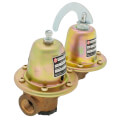

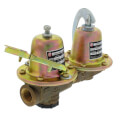
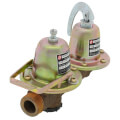
Bell & Gossett Dual Unit Valve is a combination fill and relief valve built for hydronic heating systems, pairing a pressure reducing valve with a relief valve in a single body to cut down on fittings at the boiler feed line. The reducing side ships set to 12 PSI standard with an adjustable range of 10 to 25 PSI, while the relief side ships set to 30 PSI standard, giving installers one component that both fills the system and protects it from overpressure. A built-in strainer and low inlet pressure check valve keep debris out of the reducing mechanism and stop backflow when supply pressure drops. Lead-free brass construction and corrosion-resistant wetted parts hold up to boiler water chemistry over years of service, and the strainer basket can be pulled for cleaning without removing the valve body from the line. Rated for a maximum working pressure of 125 PSIG and operating temperatures up to 225°F, the valve handles the fill demands of residential and light commercial boiler installs where space near the near-boiler piping runs tight.
Subcategories
- Standard Reducing/Relief Valve: The base Dual Unit Valve combines a pressure reducing valve set to 12 PSI standard with a relief valve set to 30 PSI standard, both adjustable on the reducing side across a 10 to 25 PSI range. Installers use this configuration on typical residential and light commercial hydronic boilers where one component needs to handle both fill and overpressure protection. Lead-free brass construction and a cleanable strainer come standard across the line.
- F-3 Fast Fill Model: The F-3 Dual Unit Valve adds a Fast Fill bypass lever for quicker initial system charging, built in lead-free brass. Contractors reach for this version on larger systems or jobs where standing at the boiler during a slow standard fill costs too much time on site. It retains the same built-in strainer and check valve as the standard model.
- Pressure Reducing (Fill) Function: The reducing side of the valve ships set to 12 PSI standard, with an adjustable range of 10 to 25 PSI to match a system's static height. A built-in strainer and low inlet pressure check valve protect the reducing mechanism from debris and backflow. Taller systems typically need a setting closer to the top of the adjustable range.
- Relief Valve Function: The relief side ships set to 30 PSI standard, using a corrosion-resistant seat and a large diaphragm for consistent, positive action. It protects the system from overpressure alongside the fill function in the same body. Rated for 125 PSIG maximum working pressure, the relief function covers standard residential and light commercial boiler applications.
Buying Guide
Confirm the application first: the standard Bell & Gossett Dual Unit Valve pairs a pressure reducing valve set to 12 PSI with a relief valve set to 30 PSI, covering both fill and overpressure protection for a typical residential or light commercial hydronic boiler. Systems that need a faster initial fill, especially larger systems or ones filled under time pressure during startup, call for an F-3 Fast Fill model instead of the standard reducing valve, since the added bypass lever cuts down on the time spent standing at the boiler waiting for the system to charge. Check the adjustable range, 10 to 25 PSI on the reducing side, against the system's static height; taller buildings need a higher fill pressure to reach the top of the system, so confirm the valve's adjustable range covers the required setting before installing it. Lead-free brass construction matters on any potable-adjacent connection point, and corrosion-resistant wetted parts extend service life in systems with older iron radiation or frequent makeup water demand. The built-in strainer needs periodic cleaning, so installers favor a location with enough clearance to pull the strainer basket without disconnecting the whole assembly from the near-boiler piping. Rated for 125 PSIG working pressure and 225°F operating temperature, the valve covers the vast majority of residential and light commercial hydronic systems without needing a separate reducing valve and relief valve installed individually.
Frequently Asked Questions
What does a Dual Unit Valve do on a boiler?
A Bell & Gossett Dual Unit Valve combines a pressure reducing (fill) valve and a relief valve in one body, handling both system fill and overpressure protection at the boiler feed line. The reducing side ships set to 12 PSI standard, while the relief side ships set to 30 PSI standard. Combining both functions in one valve cuts down on the fittings needed near the boiler.
What's the adjustable pressure range on the reducing valve?
The reducing side of the Dual Unit Valve adjusts across a 10 to 25 PSI range, letting installers match the fill pressure to a system's static height. Taller systems generally need a setting closer to the top of that range. Checking building height against the adjustable range confirms the valve fits the application before installation.
What's the difference between the standard valve and the Fast Fill version?
The F-3 Fast Fill model adds a bypass lever that speeds up the initial system charge compared to the standard reducing valve. Both versions share the same lead-free brass construction and built-in strainer. Fast Fill models suit larger systems or jobs where a faster startup fill saves time on site.
How is the strainer on a Dual Unit Valve cleaned?
The built-in strainer basket pulls out of the valve body for cleaning without disconnecting the full assembly from the near-boiler piping. Regular cleaning keeps debris from interfering with the reducing valve mechanism. Installers typically leave clearance around the valve during rough-in specifically to allow strainer access later.
What temperature and pressure is a Dual Unit Valve rated for?
A Bell & Gossett Dual Unit Valve carries a maximum working pressure of 125 PSIG and a maximum operating temperature of 225°F. Those ratings cover the typical range of residential and light commercial hydronic heating systems. Confirming system design conditions fall within those limits is part of a standard valve selection check.
