




Filters
SORT
Product Availability –
Horse Power –
Material –
Voltage –
Phase –
Review Score –
 --%3E %3Csvg version='1.1' id='Fill' xmlns='http://www.w3.org/2000/svg' xmlns:xlink='http://www.w3.org/1999/xlink' x='0px' y='0px' viewBox='0 0 100 100' enable-background='new 0 0 100 100' xml:space='preserve'%3E %3Cpath fill='%23F15C02' d='M79.44,0.95H20.56C9.78,0.95,0.95,9.78,0.95,20.56v58.87c0,10.79,8.82,19.61,19.61,19.61h58.87 c10.79,0,19.61-8.83,19.61-19.61V20.56C99.05,9.78,90.22,0.95,79.44,0.95z M65.38,58.24l9.38,29.58L49.69,69.78L24.5,87.82 l9.34-29.6L8.8,39.6l30.73-0.17c0,0,6.98-19.61,10-28.93c0.54,1.36,9.88,29.1,9.88,29.1H91.2L65.38,58.24z'/%3E %3C/svg%3E)
 --%3E %3Csvg version='1.1' id='With-RB' xmlns='http://www.w3.org/2000/svg' xmlns:xlink='http://www.w3.org/1999/xlink' x='0px' y='0px' viewBox='0 0 100 100' enable-background='new 0 0 100 100' xml:space='preserve'%3E %3Cpath fill='%23FBC8B4' d='M79.44,0.95H20.56C9.78,0.95,0.95,9.78,0.95,20.56v58.87c0,10.79,8.82,19.61,19.61,19.61h58.87 c10.79,0,19.61-8.83,19.61-19.61V20.56C99.05,9.78,90.22,0.95,79.44,0.95z M65.38,58.24l9.38,29.58L49.69,69.78L24.5,87.82 l9.34-29.6L8.8,39.6l30.73-0.17c0,0,6.98-19.61,10-28.93c0.54,1.36,9.88,29.1,9.88,29.1H91.2L65.38,58.24z'/%3E %3C/svg%3E)
Price Range –
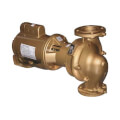
Bell & Gossett Series 60 In-line Pumps

 --%3E %3Csvg version='1.1' id='No-RB' xmlns='http://www.w3.org/2000/svg' xmlns:xlink='http://www.w3.org/1999/xlink' x='0px' y='0px' viewBox='0 0 100 100' enable-background='new 0 0 100 100' xml:space='preserve'%3E %3Cpath fill='%23CECECE' d='M79.44,0.95H20.56C9.78,0.95,0.95,9.78,0.95,20.56v58.87c0,10.79,8.82,19.61,19.61,19.61h58.87 c10.79,0,19.61-8.83,19.61-19.61V20.56C99.05,9.78,90.22,0.95,79.44,0.95z M65.38,58.24l9.38,29.58L49.69,69.78L24.5,87.82 l9.34-29.6L8.8,39.6l30.73-0.17c0,0,6.98-19.61,10-28.93c0.54,1.36,9.88,29.1,9.88,29.1H91.2L65.38,58.24z'/%3E %3C/svg%3E)
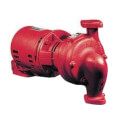
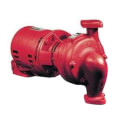
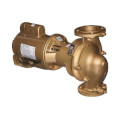
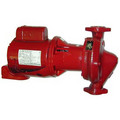
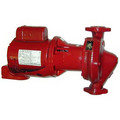
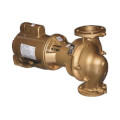
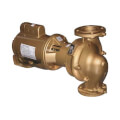
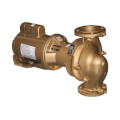
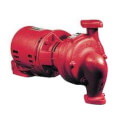
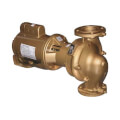
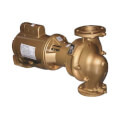
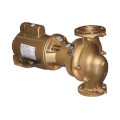
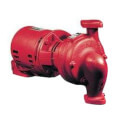
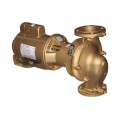
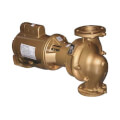
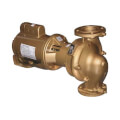
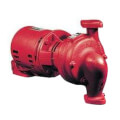
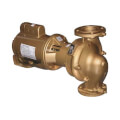
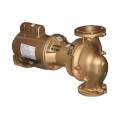
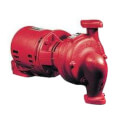
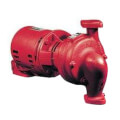
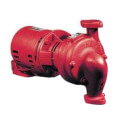
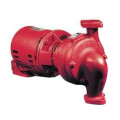


Bell & Gossett Series 60 In-line Pumps circulate water through hydronic heating and cooling systems in commercial and light industrial buildings, mounting directly in the pipe run instead of sitting on a floor-mounted base plate. Xylem offers the line across a range of pipe sizes and motor horsepower ratings, letting a contractor match pump output to everything from a small commercial loop to a larger multi-zone building system. Mechanical contractors specify bronze-body versions anywhere the pump circulates potable domestic water, since plumbing code generally requires it, while cast iron bodies serve closed hydronic heating and cooling loops that never contact fresh water. In-line mounting saves floor space in a crowded mechanical room compared to a base-mounted pump of similar capacity. Matching pump size to the system's actual flow and head requirements, rather than an old pump's nameplate rating, keeps a building's heating or cooling loop running efficiently without oversizing the motor.
Subcategories
- Bronze Body Series 60 Pumps: Bronze construction resists the corrosion that comes with circulating potable domestic water, which is why plumbing code generally requires it on any pump touching a building's drinking water supply. Contractors specify these on domestic hot water recirculation loops in commercial buildings. Body material is the main difference from the cast iron version; mounting and piping connections stay the same.
- Cast Iron Body Series 60 Pumps: Cast iron bodies handle closed hydronic heating and cooling loops where the circulated water never mixes with a building's potable supply. Cost is typically lower than an equivalent bronze model, and cast iron holds up well in a properly treated sealed system. Mechanical contractors reach for cast iron on the majority of boiler and chiller loop applications.
- Single-Phase Series 60 Pumps: Single-phase motor options suit smaller commercial buildings and light industrial applications where three-phase power is not readily available at the mechanical room. Lower horsepower models in the line commonly use single-phase power. Electricians appreciate the simpler wiring compared to a three-phase installation.
- Three-Phase Series 60 Pumps: Three-phase motor options cover the higher horsepower end of the line for larger commercial and light industrial systems with greater flow and head requirements. Facilities that already run three-phase power to the mechanical room favor these motors for better efficiency at higher loads. Contractors sizing a three-phase pump still need to confirm the building's available voltage before ordering.
Buying Guide
Sizing a circulator starts with the system's required flow in gallons per minute and the total head the pump needs to overcome, both of which come from a hydronic load calculation rather than a guess based on pipe size alone. Bell & Gossett Series 60 In-line Pumps span a range of pipe sizes and motor horsepower options, so matching the calculated requirements to the right combination avoids both an undersized pump that cannot meet demand and an oversized one that wastes energy and adds unnecessary noise. Body material comes next: bronze construction is generally required wherever the pump circulates potable domestic water, while cast iron suits closed heating and cooling loops that stay sealed off from the building's drinking water supply. Available electrical service at the mechanical room decides between single-phase and three-phase motor options, and confirming voltage and phase before ordering avoids a return trip to swap the motor. Mounting orientation and pipe alignment matter during installation, since an in-line pump needs to sit level within the pipe run with adequate support so the motor weight is not resting entirely on the pipe joints. Maintenance access is worth planning for as well: leaving clearance around the pump body makes seal replacement and motor service straightforward rather than requiring a section of pipe to be cut out later.
Frequently Asked Questions
What is the difference between bronze and cast iron Series 60 pumps?
Bronze bodies resist the corrosion that comes with circulating potable domestic water, so plumbing code generally requires bronze construction on any pump touching a building's drinking water. Cast iron bodies cost less and work well on closed hydronic heating and cooling loops that never see fresh water. Choosing the wrong material for a potable water application can lead to a code violation on inspection.
How much flow and head can a Series 60 pump handle?
Capacity varies by motor horsepower and pipe size selected, covering everything from small commercial loops up to larger building systems. Smaller motors handle light residential and small commercial loops, while larger motors at the top of the range cover bigger commercial systems. A hydronic load calculation determines where a specific building's requirements fall within that range.
Can a Series 60 pump run on single-phase power?
Lower horsepower models in the line are available with single-phase power, which suits smaller commercial buildings without three-phase service at the mechanical room. Higher horsepower models generally require three-phase power to run efficiently. Confirming available building voltage before ordering avoids a mismatch between the pump and the electrical service.
How often does the mechanical seal on a Series 60 pump need replacement?
Seal life depends heavily on water quality and system operating hours rather than a fixed calendar interval. A pump that starts weeping at the seal is the clearest sign a rebuild kit is needed soon. Keeping a seal kit on hand for critical systems avoids extended downtime while parts are ordered.
Can a Series 60 pump be rebuilt instead of replaced?
Many mechanical seal and bearing assembly failures can be repaired with a rebuild kit rather than replacing the entire pump body. Rebuilding is usually less expensive than a full replacement and keeps the existing motor and volute in service. A pump with a cracked cast iron body or significant corrosion on a bronze body is a better candidate for full replacement than a rebuild.
