




Big Dipper

 --%3E %3Csvg version='1.1' id='No-RB' xmlns='http://www.w3.org/2000/svg' xmlns:xlink='http://www.w3.org/1999/xlink' x='0px' y='0px' viewBox='0 0 100 100' enable-background='new 0 0 100 100' xml:space='preserve'%3E %3Cpath fill='%23CECECE' d='M79.44,0.95H20.56C9.78,0.95,0.95,9.78,0.95,20.56v58.87c0,10.79,8.82,19.61,19.61,19.61h58.87 c10.79,0,19.61-8.83,19.61-19.61V20.56C99.05,9.78,90.22,0.95,79.44,0.95z M65.38,58.24l9.38,29.58L49.69,69.78L24.5,87.82 l9.34-29.6L8.8,39.6l30.73-0.17c0,0,6.98-19.61,10-28.93c0.54,1.36,9.88,29.1,9.88,29.1H91.2L65.38,58.24z'/%3E %3C/svg%3E)

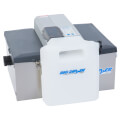
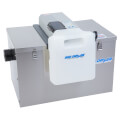
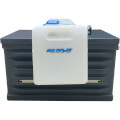
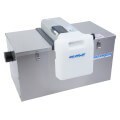
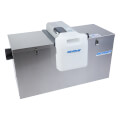

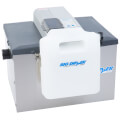
Thermaco, the company behind the Big Dipper grease recovery line, was founded in 1983 in Asheboro, North Carolina, by Bill and Susan Batten. The company built its reputation around designing automatic grease recovery units rugged enough for daily use in working commercial kitchens.
Family leadership continued for decades, with Randy Batten guiding the company before Danny Mull stepped in as president, while the Batten family remains involved as owners. Big Dipper has grown into one of the most widely installed names in commercial grease management, with more than 50,000 units installed worldwide.
Product Lines
The Big Dipper lineup centers on automatic grease recovery units sized for a range of commercial kitchen volumes, designed to separate and collect fats, oils, and grease from wastewater before it reaches a building's plumbing system. Replacement parts are also available for older Pre-2000 series Big Dipper units already installed in the field, allowing existing systems to be serviced rather than fully replaced.
Why Contractors Specify Big Dipper
Plumbing contractors and foodservice equipment installers specify Big Dipper units for their compact footprint and straightforward operation in tight kitchen mechanical spaces. Long-term performance data backs up the choice: more than 95 percent of Big Dipper units installed decades ago reportedly remain in operation, a track record that matters when a kitchen cannot afford repeated problems around its grease interceptor.
How to Choose Big Dipper Products
Sizing a Big Dipper unit starts with the kitchen's flow rate and the number of fixtures draining into it, since undersizing a grease recovery unit leads to more frequent maintenance and reduced separation performance. Available installation space, local plumbing code requirements for grease interceptors, and whether the job is new construction versus a retrofit of an older Big Dipper model all factor into the right unit and parts selection.
Frequently Asked Questions
What does a Big Dipper grease recovery unit do?
A Big Dipper unit separates fats, oils, and grease from kitchen wastewater before they reach the building drain line, helping prevent clogs and grease-related sewer backups.
How often does a Big Dipper unit need to be serviced?
Service frequency depends on kitchen volume and the type of food being prepared, but routine cleaning typically happens on a set schedule based on grease accumulation rather than a fixed calendar interval alone. Heavier-volume kitchens generally need more frequent attention than lower-volume operations.
Can a Big Dipper unit replace a traditional grease trap?
In many commercial kitchen settings, yes. Big Dipper units are designed as an automatic alternative to manual grease traps, separating grease continuously rather than relying on staff to manually skim or pump a trap on a regular basis.
Are parts still available for older Big Dipper models?
Replacement parts are available for earlier Pre-2000 series Big Dipper units, which lets an existing installation continue running without a full unit replacement.
What size Big Dipper unit is right for a given kitchen?
Sizing depends on factors like the number of connected fixtures, peak flow rate, and meal volume, so matching a unit to actual kitchen demand rather than guessing based on kitchen size alone gives the most reliable separation performance.
