




Big Dipper Grease Traps

 --%3E %3Csvg version='1.1' id='No-RB' xmlns='http://www.w3.org/2000/svg' xmlns:xlink='http://www.w3.org/1999/xlink' x='0px' y='0px' viewBox='0 0 100 100' enable-background='new 0 0 100 100' xml:space='preserve'%3E %3Cpath fill='%23CECECE' d='M79.44,0.95H20.56C9.78,0.95,0.95,9.78,0.95,20.56v58.87c0,10.79,8.82,19.61,19.61,19.61h58.87 c10.79,0,19.61-8.83,19.61-19.61V20.56C99.05,9.78,90.22,0.95,79.44,0.95z M65.38,58.24l9.38,29.58L49.69,69.78L24.5,87.82 l9.34-29.6L8.8,39.6l30.73-0.17c0,0,6.98-19.61,10-28.93c0.54,1.36,9.88,29.1,9.88,29.1H91.2L65.38,58.24z'/%3E %3C/svg%3E)
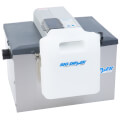

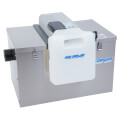
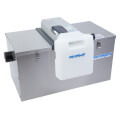
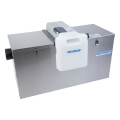
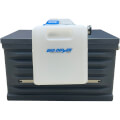
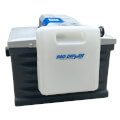

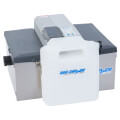
Big Dipper grease traps are automatic grease recovery units that separate and remove fats, oils, and grease from commercial kitchen wastewater before it reaches the sanitary sewer line. Thermaco's Big Dipper lineup spans models from the W-200-IS, rated for 20 GPM, up through the W-750-IS, rated for 75 GPM, so a kitchen can match capacity to its actual wastewater flow rather than oversizing equipment. Every model in the line is rated to PDI-G 101 and ASME A112.14.3 and A112.14.4 standards, the certifications most health departments and plumbing inspectors check for on a commercial kitchen grease interceptor. Unlike a passive gravity grease trap that needs manual pumping and disposal, the Big Dipper automates the removal cycle, cutting down on the manual labor and mess that comes with servicing a traditional interceptor. Restaurants, cafeterias, and other high-volume food service kitchens install these units under a three-compartment sink or dish machine to keep grease out of the building drain line and the municipal sewer system.
Subcategories
- W-200-IS (Compact, 20 GPM): The W-200-IS is rated for 20 GPM, making it the entry point into the Big Dipper automatic lineup. Kitchens with a single three-compartment sink or a light-volume dish machine typically fall within this flow range. Like the rest of the line, it is rated to PDI-G 101 and ASME A112.14.3 and A112.14.4 standards. Its smaller footprint suits kitchens with limited under-counter or mechanical room space.
- W-250-IS and W-350-IS (25 to 35 GPM): The W-250-IS and W-350-IS cover the 25 to 35 GPM range, a step up from the compact model for kitchens running more simultaneous fixtures. Both units carry the same PDI-G 101 and ASME A112.14.3/A112.14.4 certifications as the rest of the Big Dipper line. The 25 to 35 GPM range fits mid-size restaurant kitchens with a combination of sinks, prep stations, and a moderate-volume dish machine. Sizing correctly at this stage avoids overloading the unit during peak service hours.
- W-500-IS and W-750-IS (50 to 75 GPM): The W-500-IS handles up to 50 GPM while the W-750-IS is rated for 75 GPM, covering higher-volume kitchens with multiple fixtures draining simultaneously. Larger units in this range still automate the grease removal cycle rather than requiring manual pumping, which matters more, not less, as flow volume and grease load increase. Large restaurant kitchens, institutional cafeterias, and multi-station dish rooms typically fall in this flow range. Correct sizing at this tier prevents the unit from being overwhelmed during high-volume service periods.
Buying Guide
Sizing starts with totaling the flow rate of every fixture draining into the unit, since Big Dipper Grease Traps range from 20 GPM on the compact W-200-IS up to 75 GPM on the W-750-IS. Undersizing the unit relative to actual kitchen flow leads to grease carryover into the sewer line, while oversizing wastes floor space and budget on capacity the kitchen will never use. Confirm the local health department and plumbing code requirements before ordering, since most jurisdictions specifically check for PDI-G 101 and ASME A112.14.3 and A112.14.4 certification on commercial grease interceptors. Compare the automated removal cycle against a traditional passive gravity trap: an automatic unit removes accumulated grease on a set schedule without a technician manually pumping and hauling waste, which cuts ongoing labor and disposal costs over the life of the equipment. Placement matters as much as sizing, since the unit needs to sit close enough to the fixtures it serves to avoid excessive pipe runs that let grease solidify before reaching the trap. Consider the kitchen's peak service volume rather than its average flow, since a Friday dinner rush or banquet event can push flow well above a slow weekday lunch service. Confirm inlet and outlet connection sizes match the existing drain lines before ordering, since retrofitting an undersized connection adds unplanned plumbing work to the installation. Finally, factor in maintenance access, since even an automated unit needs periodic inspection to confirm the removal cycle is functioning correctly.
Frequently Asked Questions
How is a Big Dipper grease trap sized for a commercial kitchen?
Sizing is based on the combined flow rate of every fixture draining into the unit, with Big Dipper models ranging from 20 GPM on the W-200-IS up to 75 GPM on the W-750-IS. Totaling fixture flow rather than guessing at kitchen size keeps the unit from being overwhelmed during peak service. Local code and health department requirements often set minimum sizing rules on top of actual flow calculations.
What certifications do Big Dipper grease traps carry?
The line is rated to PDI-G 101 and ASME A112.14.3 and A112.14.4 standards, which are the certifications most plumbing inspectors and health departments look for on a commercial grease interceptor. Confirming these certifications before installation avoids a failed inspection. The certifications cover both the interceptor's construction and its grease removal performance.
How does an automatic grease trap differ from a traditional grease interceptor?
A traditional grease interceptor relies on gravity separation and needs periodic manual pumping and waste hauling to stay effective. Big Dipper units automate the grease removal cycle, reducing the manual labor involved in keeping the unit working correctly. Kitchens with limited staff time for maintenance often prefer the automated approach for this reason.
What size kitchen fits the W-200-IS versus the W-750-IS?
The W-200-IS at 20 GPM suits a single three-compartment sink or light-volume dish machine, while the W-750-IS at 75 GPM covers high-volume kitchens with multiple fixtures draining at once. Matching the model to actual peak flow, not just average flow, keeps the unit from being overwhelmed. Institutional cafeterias and large restaurant kitchens typically need a unit toward the higher end of the range.
Where should a Big Dipper grease trap be installed in a commercial kitchen?
The unit should sit as close as practical to the fixtures it serves, since long pipe runs give grease time to cool and solidify before reaching the trap. Installation also needs to account for maintenance access, since even an automated unit needs periodic inspection. Inlet and outlet connections should match the existing drain line sizes to avoid additional plumbing work during installation.
