



Filters
SORT
Product Availability –
Review Score –
 --%3E %3Csvg version='1.1' id='Fill' xmlns='http://www.w3.org/2000/svg' xmlns:xlink='http://www.w3.org/1999/xlink' x='0px' y='0px' viewBox='0 0 100 100' enable-background='new 0 0 100 100' xml:space='preserve'%3E %3Cpath fill='%23F15C02' d='M79.44,0.95H20.56C9.78,0.95,0.95,9.78,0.95,20.56v58.87c0,10.79,8.82,19.61,19.61,19.61h58.87 c10.79,0,19.61-8.83,19.61-19.61V20.56C99.05,9.78,90.22,0.95,79.44,0.95z M65.38,58.24l9.38,29.58L49.69,69.78L24.5,87.82 l9.34-29.6L8.8,39.6l30.73-0.17c0,0,6.98-19.61,10-28.93c0.54,1.36,9.88,29.1,9.88,29.1H91.2L65.38,58.24z'/%3E %3C/svg%3E)
 --%3E %3Csvg version='1.1' id='With-RB' xmlns='http://www.w3.org/2000/svg' xmlns:xlink='http://www.w3.org/1999/xlink' x='0px' y='0px' viewBox='0 0 100 100' enable-background='new 0 0 100 100' xml:space='preserve'%3E %3Cpath fill='%23FBC8B4' d='M79.44,0.95H20.56C9.78,0.95,0.95,9.78,0.95,20.56v58.87c0,10.79,8.82,19.61,19.61,19.61h58.87 c10.79,0,19.61-8.83,19.61-19.61V20.56C99.05,9.78,90.22,0.95,79.44,0.95z M65.38,58.24l9.38,29.58L49.69,69.78L24.5,87.82 l9.34-29.6L8.8,39.6l30.73-0.17c0,0,6.98-19.61,10-28.93c0.54,1.36,9.88,29.1,9.88,29.1H91.2L65.38,58.24z'/%3E %3C/svg%3E)
Price Range –
Bosch Boiler Parts


 --%3E %3Csvg version='1.1' id='Half' xmlns='http://www.w3.org/2000/svg' xmlns:xlink='http://www.w3.org/1999/xlink' x='0px' y='0px' viewBox='0 0 100 100' enable-background='new 0 0 100 100' xml:space='preserve'%3E %3Cg%3E %3Cpath fill='%23F15C02' d='M30.05,70.23l3.79-12.01L8.8,39.6l30.73-0.17c0,0,6.98-19.61,10-28.93c0.54,1.36,9.88,29.1,9.88,29.1h1.58 L93.71,7.18c-3.58-3.82-8.66-6.23-14.28-6.23H20.56C9.78,0.95,0.95,9.78,0.95,20.56v58.87c0,5.41,2.22,10.32,5.79,13.88 L30.05,70.23z'/%3E %3C/g%3E %3Cpath fill='%23FBC8B4' d='M93.71,7.18L60.98,39.6H91.2L65.38,58.24l9.38,29.58L49.69,69.78L24.5,87.82l5.55-17.59L6.75,93.32 c3.55,3.54,8.44,5.73,13.82,5.73h58.87c10.79,0,19.61-8.83,19.61-19.61V20.56C99.05,15.4,97.01,10.69,93.71,7.18z'/%3E %3C/svg%3E)

 --%3E %3Csvg version='1.1' id='No-RB' xmlns='http://www.w3.org/2000/svg' xmlns:xlink='http://www.w3.org/1999/xlink' x='0px' y='0px' viewBox='0 0 100 100' enable-background='new 0 0 100 100' xml:space='preserve'%3E %3Cpath fill='%23CECECE' d='M79.44,0.95H20.56C9.78,0.95,0.95,9.78,0.95,20.56v58.87c0,10.79,8.82,19.61,19.61,19.61h58.87 c10.79,0,19.61-8.83,19.61-19.61V20.56C99.05,9.78,90.22,0.95,79.44,0.95z M65.38,58.24l9.38,29.58L49.69,69.78L24.5,87.82 l9.34-29.6L8.8,39.6l30.73-0.17c0,0,6.98-19.61,10-28.93c0.54,1.36,9.88,29.1,9.88,29.1H91.2L65.38,58.24z'/%3E %3C/svg%3E)
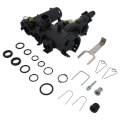

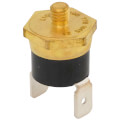
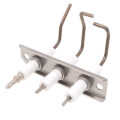
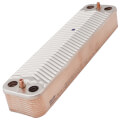
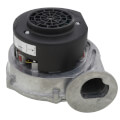


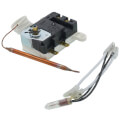
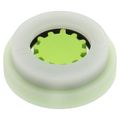
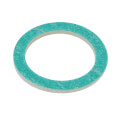
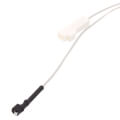
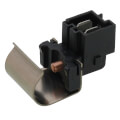
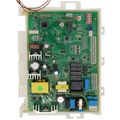
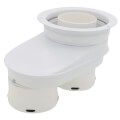

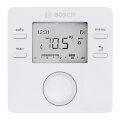

Bosch boiler parts keep condensing and combi boilers firing safely and transferring heat efficiently after a component wears out or fails. Modern condensing boilers depend on a tightly coordinated set of parts, the heat exchanger, ignition electrodes, control board, and gas valve chief among them, to fire reliably and extract heat from the flue gases before they exhaust outdoors. When one of these parts drifts out of spec, a boiler often responds with a lockout code on the display rather than an obvious mechanical symptom, which makes matching the fault code to the right part important before ordering anything. Bosch has produced several boiler platforms across its residential and light commercial lines, each with parts tied to that specific model's design, so pulling the serial number off the unit's data plate before ordering avoids a part that looks correct but does not fit the harness or gas train. Stocking the parts behind the most common lockout codes for the Bosch models serviced most often turns a diagnostic visit into a same-day repair.
Subcategories
- Heat Exchangers: The heat exchanger transfers combustion heat into the system water and, on a condensing boiler, extracts additional heat from flue gases as they cool below their dew point. A cracked or scaled heat exchanger reduces efficiency and can trigger a lockout or, in serious cases, a flue gas leak. Replacement exchangers must match the boiler's exact model and firing rate.
- Ignition Electrodes & Sensors: Ignition electrodes create the spark that lights the burner, while flame sensing electrodes confirm the flame is present so the control board can keep the gas valve open. A worn or fouled electrode is a frequent cause of ignition lockouts on an otherwise healthy boiler. These parts are inexpensive relative to a full board or heat exchanger replacement and worth checking first.
- Control Boards: The control board manages ignition sequencing, modulation, and safety lockouts, translating sensor input into gas valve and igniter commands. A failed board can produce erratic lockout codes that do not match any single mechanical fault. Boards are tied to specific boiler firmware and wiring configurations, so exact model matching matters.
- Gas Valves: The gas valve regulates fuel delivery to the burner and modulates flow to match the boiler's current heat demand. A valve that is sticking or failing to modulate correctly can cause short cycling, poor efficiency, or a failure to reach setpoint. Gas valves are matched to the boiler's fuel type and firing rate, so confirming both before ordering avoids a mismatch.
Buying Guide
Pull the exact model and serial number from the boiler's data plate before ordering any part, since Bosch has built several condensing and combi platforms and parts are generally not interchangeable across them even when they look similar.
Use the boiler's diagnostic display to narrow down which system is at fault before assuming the most expensive part is the problem. An ignition lockout points toward the electrodes or gas valve, while an erratic or unexplained code with no clear mechanical symptom often points toward the control board.
Bosch boiler parts break down into the heat exchanger, ignition and flame sensing electrodes, the control board, and the gas valve, and checking the least expensive, easiest to access parts first, electrodes especially, before condemning a heat exchanger or board saves time and cost on the visit.
Confirm fuel type and firing rate when ordering a gas valve, since a valve built for the wrong fuel type or a mismatched firing rate will not modulate correctly even if it physically threads into the gas train.
Stocking ignition electrodes and the control boards tied to the Bosch models installed most often in a service area covers the majority of lockout calls, while heat exchangers can typically be special-ordered once a technician confirms the failure on-site.
Frequently Asked Questions
What does a Bosch boiler lockout code actually indicate?
A lockout code points to which safety system detected a fault, such as ignition failure or a limit trip, but it does not always name the exact failed part directly. Technicians still need to test the components tied to that code to find the actual failure.
How often do ignition electrodes need to be replaced?
Electrodes wear gradually with use and should be inspected during routine maintenance visits. A pitted or fouled electrode that is causing intermittent ignition failure should be replaced rather than cleaned repeatedly, since wear eventually affects spark gap and flame sensing reliability.
Can a heat exchanger be repaired instead of replaced?
Minor scaling can sometimes be cleaned, but a cracked or significantly corroded heat exchanger needs full replacement, since a compromised exchanger risks a flue gas leak or a loss of the boiler's efficiency rating.
Why would a Bosch boiler short cycle even with a good thermostat?
Short cycling often points to the gas valve failing to modulate correctly, a heat exchanger that is scaled and losing efficiency, or a control board issue with the modulation logic, rather than the thermostat itself.
Are Bosch boiler parts interchangeable between residential and light commercial models?
No. Parts are matched to a specific boiler platform's firing rate, wiring, and gas train design, so confirming the exact model and serial number before ordering is necessary even between models that look similar.
