




Filters
SORT
Product Availability –
Brand –
Product Type –
Size –
Length (Inches) –
Review Score –
 --%3E %3Csvg version='1.1' id='Fill' xmlns='http://www.w3.org/2000/svg' xmlns:xlink='http://www.w3.org/1999/xlink' x='0px' y='0px' viewBox='0 0 100 100' enable-background='new 0 0 100 100' xml:space='preserve'%3E %3Cpath fill='%23F15C02' d='M79.44,0.95H20.56C9.78,0.95,0.95,9.78,0.95,20.56v58.87c0,10.79,8.82,19.61,19.61,19.61h58.87 c10.79,0,19.61-8.83,19.61-19.61V20.56C99.05,9.78,90.22,0.95,79.44,0.95z M65.38,58.24l9.38,29.58L49.69,69.78L24.5,87.82 l9.34-29.6L8.8,39.6l30.73-0.17c0,0,6.98-19.61,10-28.93c0.54,1.36,9.88,29.1,9.88,29.1H91.2L65.38,58.24z'/%3E %3C/svg%3E)
 --%3E %3Csvg version='1.1' id='With-RB' xmlns='http://www.w3.org/2000/svg' xmlns:xlink='http://www.w3.org/1999/xlink' x='0px' y='0px' viewBox='0 0 100 100' enable-background='new 0 0 100 100' xml:space='preserve'%3E %3Cpath fill='%23FBC8B4' d='M79.44,0.95H20.56C9.78,0.95,0.95,9.78,0.95,20.56v58.87c0,10.79,8.82,19.61,19.61,19.61h58.87 c10.79,0,19.61-8.83,19.61-19.61V20.56C99.05,9.78,90.22,0.95,79.44,0.95z M65.38,58.24l9.38,29.58L49.69,69.78L24.5,87.82 l9.34-29.6L8.8,39.6l30.73-0.17c0,0,6.98-19.61,10-28.93c0.54,1.36,9.88,29.1,9.88,29.1H91.2L65.38,58.24z'/%3E %3C/svg%3E)
Price Range –
Brass Pipe Nipples

 --%3E %3Csvg version='1.1' id='Half' xmlns='http://www.w3.org/2000/svg' xmlns:xlink='http://www.w3.org/1999/xlink' x='0px' y='0px' viewBox='0 0 100 100' enable-background='new 0 0 100 100' xml:space='preserve'%3E %3Cg%3E %3Cpath fill='%23F15C02' d='M30.05,70.23l3.79-12.01L8.8,39.6l30.73-0.17c0,0,6.98-19.61,10-28.93c0.54,1.36,9.88,29.1,9.88,29.1h1.58 L93.71,7.18c-3.58-3.82-8.66-6.23-14.28-6.23H20.56C9.78,0.95,0.95,9.78,0.95,20.56v58.87c0,5.41,2.22,10.32,5.79,13.88 L30.05,70.23z'/%3E %3C/g%3E %3Cpath fill='%23FBC8B4' d='M93.71,7.18L60.98,39.6H91.2L65.38,58.24l9.38,29.58L49.69,69.78L24.5,87.82l5.55-17.59L6.75,93.32 c3.55,3.54,8.44,5.73,13.82,5.73h58.87c10.79,0,19.61-8.83,19.61-19.61V20.56C99.05,15.4,97.01,10.69,93.71,7.18z'/%3E %3C/svg%3E)

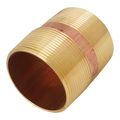
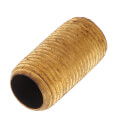

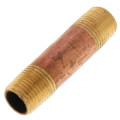
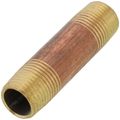
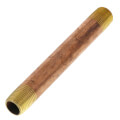
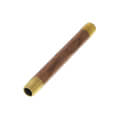
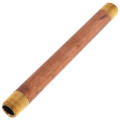
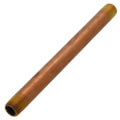
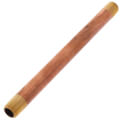
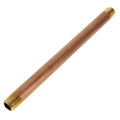
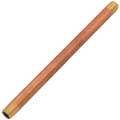
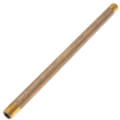
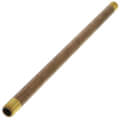
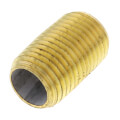
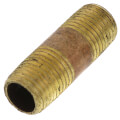
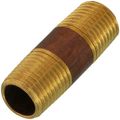

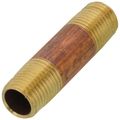
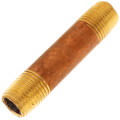

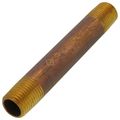
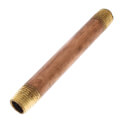
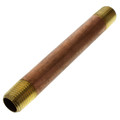
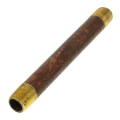
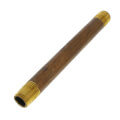
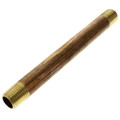
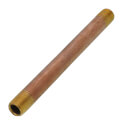

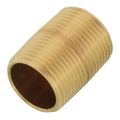
Brass nipples are short, externally threaded pipe fittings used to connect two female-threaded fittings, valves, or equipment ports where a compact, corrosion-resistant connection is needed. Plumbers and HVAC technicians reach for brass over galvanized steel in applications exposed to moisture or dissimilar metals, since brass resists corrosion better than steel and won't react galvanically with copper the way steel fittings can. They're commonly used for water heater connections, gas appliance hookups, and general plumbing repairs where a short threaded extension needs to bridge two components. Most are manufactured to NPT thread standards, which is what allows a brass nipple to thread directly into steel, brass, or cast fittings without an adapter. Choosing the right length and diameter for the specific gap being bridged, rather than assuming a close-enough size will work, is what keeps a repair from turning into a return trip for a different nipple length.
Subcategories
- Close Nipples: Close nipples are threaded along their entire short length with no unthreaded shoulder in between, which makes them the choice when two fittings need to sit as close together as possible. They're common where space is tight, such as inside a mechanical closet or behind an appliance. Because there's no smooth section to grip evenly, tightening a close nipple with a pipe wrench carries a higher risk of splitting the fitting if it's overtightened.
- Standard Length Nipples: Standard nipples include an unthreaded shoulder between the threaded ends, giving a wrench a solid section to grip during installation without stressing the threads. They come in a range of lengths to bridge different gaps between fittings, valves, or equipment connections. Selecting the correct length up front avoids needing a coupling or a second, shorter nipple to make up the difference.
- Reducing Nipples: Reducing nipples have a different thread size on each end, allowing a direct transition between two pipe sizes without a separate reducing coupling. They're useful anywhere a larger supply line needs to step down to a smaller appliance or fixture connection in a single fitting. Confirming both thread sizes against the fittings on each end prevents a mismatched connection that won't seal properly.
Buying Guide
Thread size and length are the first two measurements to confirm before ordering. Brass Nipples come in a range of NPT sizes and lengths, and a nipple that's a fraction of an inch too long or short will either force stress onto the connected fittings or leave a gap that needs an additional coupling to close. Close nipples fit tight spaces but have no unthreaded shoulder for a wrench to grip evenly, so they carry more risk of cracking if overtightened, which makes standard-length nipples the safer default whenever the installation has room for them. Material compatibility matters just as much as fit. Brass resists corrosion better than galvanized steel and won't create a galvanic reaction against copper piping, which is why it's the common choice for water heater connections and other damp or mixed-metal installations. Reducing nipples solve a specific problem: stepping between two pipe sizes without adding a separate coupling, which simplifies a connection but only works if both thread sizes are confirmed against the fittings on each end beforehand. Thread sealant compatibility is worth checking too, since gas line connections typically call for a sealant rated for fuel gas rather than a general-purpose pipe dope. Buying a few extra lengths on a job with multiple similar connections is often cheaper than a second trip for one missing size.
Frequently Asked Questions
What's the difference between a close nipple and a standard nipple?
A close nipple is threaded along its entire length with no smooth shoulder in the middle, while a standard nipple has an unthreaded section a wrench can grip without stressing the threads. Close nipples fit tighter spaces but are more prone to cracking if overtightened.
Why use brass instead of galvanized steel for a water heater connection?
Brass resists corrosion better than galvanized steel in damp environments and doesn't create a galvanic reaction when connected to copper piping. Combining those two properties makes brass a common choice around water heaters and other fittings exposed to moisture.
Can a reducing nipple replace a reducing coupling?
In many cases, yes. A reducing nipple has two different thread sizes built into one fitting, which can simplify a connection that would otherwise need a separate coupling. Both thread sizes still need to be confirmed against the fittings on each end before installation.
What thread standard do brass nipples use?
Most brass nipples use NPT (National Pipe Taper) threads, which is the standard that lets them thread directly into steel, brass, or cast fittings without an adapter. Confirming NPT compatibility matters most when connecting to older or specialty fittings that may use a different thread standard.
Is a specific thread sealant required for gas connections?
Yes. Fuel gas connections typically call for a thread sealant or tape rated specifically for gas service rather than a general-purpose pipe dope. Using the wrong sealant on a gas connection can compromise the seal even if the threads themselves are properly engaged.
