




Bray Ball Valves


 --%3E %3Csvg version='1.1' id='No-RB' xmlns='http://www.w3.org/2000/svg' xmlns:xlink='http://www.w3.org/1999/xlink' x='0px' y='0px' viewBox='0 0 100 100' enable-background='new 0 0 100 100' xml:space='preserve'%3E %3Cpath fill='%23CECECE' d='M79.44,0.95H20.56C9.78,0.95,0.95,9.78,0.95,20.56v58.87c0,10.79,8.82,19.61,19.61,19.61h58.87 c10.79,0,19.61-8.83,19.61-19.61V20.56C99.05,9.78,90.22,0.95,79.44,0.95z M65.38,58.24l9.38,29.58L49.69,69.78L24.5,87.82 l9.34-29.6L8.8,39.6l30.73-0.17c0,0,6.98-19.61,10-28.93c0.54,1.36,9.88,29.1,9.88,29.1H91.2L65.38,58.24z'/%3E %3C/svg%3E)




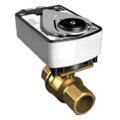


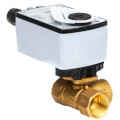
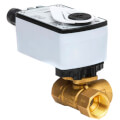


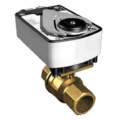
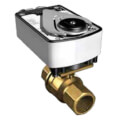

Bray Ball Valves are quarter-turn shutoff valves built for general service, water, oil, and gas applications across commercial and industrial piping systems. The Series S70-S90 threaded line covers sizes from 1/4 inch to 3 inches and carries a pressure rating up to 2000 psi WOG on the smaller end of that range, dropping to 1000 psi WOG at 3 inches. Stainless steel S70 bodies and carbon steel S90 bodies both use a 316 stainless steel ball and stem with RPTFE seats, giving the line a broad temperature range suited to steam, air, and liquid service. Contractors specify these valves where tight shutoff and long service life matter more than initial cost, particularly on process piping and mechanical room isolation points. Because a single series covers such a wide pressure and size range, matching the right body material and size to the application keeps the valve rated correctly for the system it isolates.
Subcategories
- Series S70 Stainless Steel Ball Valves: Series S70 valves use a 316 stainless steel body, making them the corrosion-resistant option within the threaded ball valve line. Contractors working with chemical, water treatment, or coastal installations choose S70 valves for their resistance to corrosive media and outdoor exposure. The series carries a temperature range of negative 50 to 450 degrees Fahrenheit. Sizes run from 1/4 inch to 3 inches with threaded NPT end connections.
- Series S90 Carbon Steel Ball Valves: Series S90 valves use a WCB carbon steel body, a lower-cost alternative to stainless steel for applications that do not require corrosion resistance. Mechanical contractors specify S90 valves on steam, air, and general water service where budget matters and the media is not corrosive. The series carries a temperature range of negative 20 to 450 degrees Fahrenheit. Like the S70 line, sizes run from 1/4 inch to 3 inches with threaded NPT connections.
- Three-Piece Ball Valves: Three-piece ball valve designs, such as Bray's Flow-Tek 7000/8000 series, split the valve body into three sections to allow in-line maintenance without removing the valve from the pipe run. Maintenance technicians favor this design on systems where downtime for valve service needs to stay minimal. The three-piece body is available in materials including stainless steel, carbon steel, and PVC depending on the application. This design contrasts with the fixed threaded body used in the S70-S90 series.
Buying Guide
Start with body material based on the media being isolated. Bray Ball Valves are available in 316 stainless steel through the Series S70 line for corrosive or outdoor applications, and in WCB carbon steel through the Series S90 line for general water, air, and steam service where corrosion resistance is not a priority. Matching material to media avoids premature seat or ball wear over the valve's service life.
Pressure rating drops as size increases within the same series, so confirm the exact size before assuming a pressure rating applies. The S70-S90 line holds up to 2000 psi WOG at 1/4 through 1 inch, drops to 1500 psi WOG at 1-1/4 through 2 inches, and settles at 1000 psi WOG at 2-1/4 through 3 inches. Pulling the rated pressure for the specific size needed prevents an undersized valve from ending up on a high-pressure line.
Consider maintenance access next. A fixed threaded body works fine for most isolation points, but a three-piece design like the Flow-Tek 7000/8000 series allows technicians to service internal components without cutting the valve out of the pipe run, which matters on systems where downtime is costly. Finally, confirm the end connection type matches the piping, since the S70-S90 series uses threaded NPT connections while three-piece models are available in additional connection styles depending on the application.
Frequently Asked Questions
What is the pressure rating on Bray's threaded ball valves?
The Series S70-S90 threaded ball valve line carries a WOG pressure rating that varies by size, reaching up to 2000 psi at 1/4 through 1 inch and dropping to 1000 psi at 2-1/4 through 3 inches. Confirming the exact size before ordering ensures the correct pressure rating applies. Both the S70 and S90 lines share this same size-based rating structure.
What is the difference between the Series S70 and Series S90 ball valves?
Series S70 uses a 316 stainless steel body suited to corrosive or outdoor applications, while Series S90 uses a WCB carbon steel body for general, non-corrosive service. Both series share the same 316 stainless steel ball and stem with RPTFE seats. Choosing between them comes down to the media being handled and budget considerations.
What sizes are available in Bray's threaded ball valve line?
The Series S70-S90 threaded ball valves are available from 1/4 inch through 3 inches. All sizes use threaded NPT end connections. Pressure rating decreases as size increases within this range, so size and pressure rating should be confirmed together.
Why would a three-piece ball valve be chosen over a standard threaded valve?
Three-piece ball valves, like Bray's Flow-Tek 7000/8000 series, split into three body sections to allow internal maintenance without cutting the valve out of the pipe run. This matters most on systems where minimizing downtime during service is a priority. Standard threaded valves in the S70-S90 series do not offer this in-line maintenance feature.
What temperature range do Bray Ball Valves handle?
The Series S70 stainless steel line handles negative 50 to 450 degrees Fahrenheit, while the Series S90 carbon steel line handles negative 20 to 450 degrees Fahrenheit. Both use RPTFE seats rated for this range. Confirming the operating temperature against these ranges helps avoid premature seat failure.
