




Zoning Accessories
Zoning accessories cover the actuators, controls, and linkages that operate dampers and valves in a zoned HVAC system, including Honeywell's Modutrol IV motor line and the pneumatic controls still found in some older commercial buildings.
Damper and valve linkages mechanically connect an actuator's output shaft to the damper or valve blade, and a worn or disconnected linkage is a common cause of a zone not responding to its thermostat. Pneumatic controls and fittings keep older zoning systems functioning without a full conversion to electronic controls.

Subcategories
- Damper Controls and Accessories: Damper controls and accessories cover the switches, relays, and end-fitting hardware that connect a zone panel's output to a damper actuator. They round out a zoning job when the actuator itself is already specified but the control wiring or mounting hardware still needs a part number.
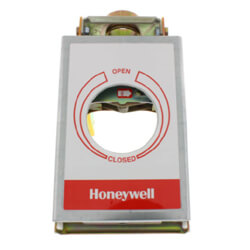
- Damper and Valve Linkages: Damper and valve linkages mechanically connect an actuator's output shaft to the damper blade or valve stem, translating rotational motion into the movement that actually opens or closes airflow. Matching the linkage arm length and mounting pattern to the actuator brand keeps the connection from binding.
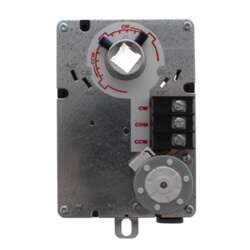
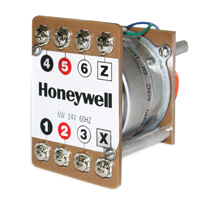
- HVAC Actuators and Valves: HVAC actuators and valves provide the motorized force behind a zoning system, driving a damper blade or valve stem open and closed on command from the zone panel. Torque rating and rotation angle vary by model, so replacement should match the original actuator's specification rather than airflow needs alone.
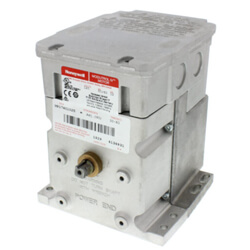
- Modutrol IV Motors: Modutrol IV motors are a Honeywell actuator line used widely on larger commercial dampers and valves, driving a wider rotation range than typical residential zone actuators. Replacement units in this line are commonly stocked because so many existing commercial systems still run the original motor.
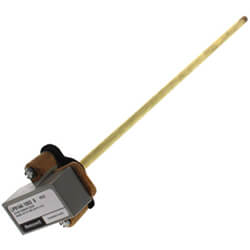
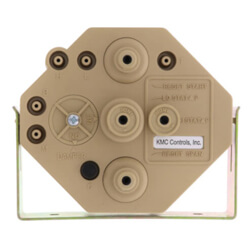
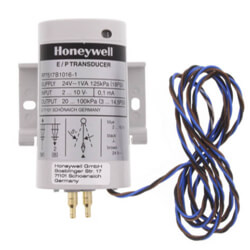
- Pneumatic Controls: Pneumatic controls regulate compressed air pressure to operate older zoning systems built before electronic actuators became standard. A thermostat or receiver-controller varies the air signal sent to a pneumatic actuator, and these controls remain in service on many existing commercial buildings.
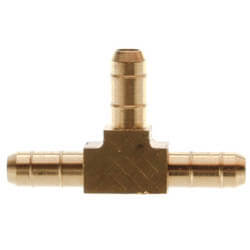
- Pneumatic Fittings: Pneumatic fittings connect the tubing that carries the compressed air signal between a pneumatic control and its actuator. Push-to-connect and barbed styles both appear across existing systems, so matching the fitting type to the tubing already installed avoids a leaking joint.
Buying Guide
Identify whether the zoning system is electric, pneumatic, or a mix of both before ordering any accessory, since electric actuators, linkages, and controls are not interchangeable with pneumatic controls and fittings even when they perform a similar function.
When replacing an actuator, matching the original manufacturer and model keeps the linkage, mounting bracket, and control wiring compatible without additional adapters. A generic actuator can sometimes fit physically but still need a different linkage arm or voltage.
Linkages should be sized to the actual damper blade or valve stem travel, not estimated by eye. An undersized linkage arm can bind partway through its rotation, leaving a zone stuck partially open or closed.
On commercial jobs still running Modutrol or similar legacy motors, keeping a small stock of the exact replacement model on hand shortens a callback considerably, since many buildings still depend on the original actuator line decades after installation.
Pneumatic systems require checking the existing air pressure and fitting type before ordering, since a mismatched fitting can leak the control signal and cause a zone to drift out of calibration over time.
Frequently Asked Questions
What is the difference between a damper linkage and a damper actuator?
An actuator provides the motorized force that rotates a shaft, while a linkage is the mechanical connection that transfers that rotation to the damper blade or valve stem. A zoning job typically needs both parts working together.
Are Modutrol motors still commonly used?
Yes, many existing commercial buildings still run the original Modutrol actuator on their zone dampers, so replacement units in this line remain a regular stocked item for HVAC service work.
Can pneumatic zoning parts be mixed with electric zoning parts?
Pneumatic controls and fittings operate on compressed air signals and are not compatible with electric actuators or controls, so a system should stay within one type unless a conversion component is specifically installed.
How is the correct linkage arm length determined for a damper?
Linkage length is set by the actual travel distance of the damper blade or valve stem being connected, measured at the installation point rather than estimated from the actuator size alone.
What causes a zone to respond slowly to a thermostat call?
A slow zone response often traces back to a worn linkage, a failing actuator, or in pneumatic systems a leaking fitting reducing the control air pressure reaching the actuator.
Resources
Subcategories
- Damper Controls and Accessories: Damper controls and accessories cover the switches, relays, and end-fitting hardware that connect a zone panel's output to a damper actuator. They round out a zoning job when the actuator itself is already specified but the control wiring or mounting hardware still needs a part number.
- Damper and Valve Linkages: Damper and valve linkages mechanically connect an actuator's output shaft to the damper blade or valve stem, translating rotational motion into the movement that actually opens or closes airflow. Matching the linkage arm length and mounting pattern to the actuator brand keeps the connection from binding.
- HVAC Actuators and Valves: HVAC actuators and valves provide the motorized force behind a zoning system, driving a damper blade or valve stem open and closed on command from the zone panel. Torque rating and rotation angle vary by model, so replacement should match the original actuator's specification rather than airflow needs alone.
- Modutrol IV Motors: Modutrol IV motors are a Honeywell actuator line used widely on larger commercial dampers and valves, driving a wider rotation range than typical residential zone actuators. Replacement units in this line are commonly stocked because so many existing commercial systems still run the original motor.
- Pneumatic Controls: Pneumatic controls regulate compressed air pressure to operate older zoning systems built before electronic actuators became standard. A thermostat or receiver-controller varies the air signal sent to a pneumatic actuator, and these controls remain in service on many existing commercial buildings.
- Pneumatic Fittings: Pneumatic fittings connect the tubing that carries the compressed air signal between a pneumatic control and its actuator. Push-to-connect and barbed styles both appear across existing systems, so matching the fitting type to the tubing already installed avoids a leaking joint.
Buying Guide
Identify whether the zoning system is electric, pneumatic, or a mix of both before ordering any accessory, since electric actuators, linkages, and controls are not interchangeable with pneumatic controls and fittings even when they perform a similar function.
When replacing an actuator, matching the original manufacturer and model keeps the linkage, mounting bracket, and control wiring compatible without additional adapters. A generic actuator can sometimes fit physically but still need a different linkage arm or voltage.
Linkages should be sized to the actual damper blade or valve stem travel, not estimated by eye. An undersized linkage arm can bind partway through its rotation, leaving a zone stuck partially open or closed.
On commercial jobs still running Modutrol or similar legacy motors, keeping a small stock of the exact replacement model on hand shortens a callback considerably, since many buildings still depend on the original actuator line decades after installation.
Pneumatic systems require checking the existing air pressure and fitting type before ordering, since a mismatched fitting can leak the control signal and cause a zone to drift out of calibration over time.
Frequently Asked Questions
What is the difference between a damper linkage and a damper actuator?
An actuator provides the motorized force that rotates a shaft, while a linkage is the mechanical connection that transfers that rotation to the damper blade or valve stem. A zoning job typically needs both parts working together.
Are Modutrol motors still commonly used?
Yes, many existing commercial buildings still run the original Modutrol actuator on their zone dampers, so replacement units in this line remain a regular stocked item for HVAC service work.
Can pneumatic zoning parts be mixed with electric zoning parts?
Pneumatic controls and fittings operate on compressed air signals and are not compatible with electric actuators or controls, so a system should stay within one type unless a conversion component is specifically installed.
How is the correct linkage arm length determined for a damper?
Linkage length is set by the actual travel distance of the damper blade or valve stem being connected, measured at the installation point rather than estimated from the actuator size alone.
What causes a zone to respond slowly to a thermostat call?
A slow zone response often traces back to a worn linkage, a failing actuator, or in pneumatic systems a leaking fitting reducing the control air pressure reaching the actuator.