




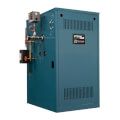
Burnham SteamMax Steam Boilers

 --%3E %3Csvg version='1.1' id='No-RB' xmlns='http://www.w3.org/2000/svg' xmlns:xlink='http://www.w3.org/1999/xlink' x='0px' y='0px' viewBox='0 0 100 100' enable-background='new 0 0 100 100' xml:space='preserve'%3E %3Cpath fill='%23CECECE' d='M79.44,0.95H20.56C9.78,0.95,0.95,9.78,0.95,20.56v58.87c0,10.79,8.82,19.61,19.61,19.61h58.87 c10.79,0,19.61-8.83,19.61-19.61V20.56C99.05,9.78,90.22,0.95,79.44,0.95z M65.38,58.24l9.38,29.58L49.69,69.78L24.5,87.82 l9.34-29.6L8.8,39.6l30.73-0.17c0,0,6.98-19.61,10-28.93c0.54,1.36,9.88,29.1,9.88,29.1H91.2L65.38,58.24z'/%3E %3C/svg%3E)


Burnham SteamMax steam boilers are gas-fired boilers built specifically for residential and light commercial steam heating systems. Unlike hot water boilers, a steam boiler heats water to the point of producing steam, which travels through supply piping to radiators and condenses back into water as it releases heat, then returns to the boiler through the same or separate piping depending on the system's one-pipe or two-pipe design. Technicians work with these boilers most often on replacement jobs in older homes that already have steam radiators and piping installed, since converting a home from steam to hot water heat is a much larger undertaking than replacing the boiler itself. Correct near-boiler piping, proper water level control, and matching the boiler's steaming rate to the connected radiation are what keep a steam system running quietly and efficiently rather than banging or short-cycling.
Subcategories
- SteamMax Boiler Units: SteamMax boiler units are the gas-fired heat source itself, sized by their steaming rate to match the total square footage of radiation connected to the system. Selecting the right unit size depends on adding up the radiator output already installed in the home rather than the size of the boiler being replaced. These units are intended for steam-specific piping configurations, not hot water baseboard or radiant systems.
- Boiler Controls: Boiler controls for steam systems include components like low water cutoffs, pressure controls, and water feeders that protect the boiler from operating with insufficient water or excessive steam pressure. A low water cutoff is a required safety component on any steam boiler installation. Technicians replace these controls individually as they age or fail without needing to replace the entire boiler.
- Near-Boiler Piping Components: Near-boiler piping components include the fittings, headers, and equalizer piping installed close to the boiler that are critical to how well a steam system performs. Correct near-boiler piping keeps water from carrying over into the steam supply lines, which otherwise causes banging pipes and wet steam reaching the radiators. Following the manufacturer's piping diagram for the specific boiler model is standard practice on these installations.
Buying Guide
Calculate the total square footage of radiation already connected to the system before selecting a replacement boiler size. Steam boilers are sized to match connected radiation rather than a general square-footage-of-the-home estimate, and installing a boiler that is too large for the radiation leads to short-cycling and wasted fuel.
Confirm whether the existing system uses one-pipe or two-pipe steam piping, since this affects near-boiler piping requirements and how the system vents air as steam fills the radiators. Retrofitting a boiler into the wrong piping configuration without adjustment can cause water hammer or uneven heat distribution.
Check the condition of existing near-boiler piping during a replacement job rather than assuming it can be reused as-is. Corroded or improperly sized header piping is a common cause of poor steam quality even when the boiler itself is new, so budgeting time to correct piping issues during the replacement pays off in system performance.
Include a proper low water cutoff and, where required by local code, a secondary low water cutoff as part of the installation. These safety controls protect the boiler from operating without adequate water, which can cause serious damage to the boiler's heat exchanger.
Plan for professional water treatment or periodic water quality checks after installation, since steam boilers are more sensitive to water chemistry issues like sediment and oxygen contamination than hot water systems. Skimming a new boiler at startup to remove manufacturing oils is a standard step that affects how well it steams going forward.
Frequently Asked Questions
How is a SteamMax boiler sized for a home?
Sizing is based on the total square footage of radiation already connected to the steam system, not the size of the home or the boiler being replaced. Oversizing the boiler relative to connected radiation causes short-cycling and wasted fuel.
What is the difference between one-pipe and two-pipe steam systems?
A one-pipe system uses the same piping for both steam supply and condensate return at each radiator, while a two-pipe system uses separate supply and return piping. The near-boiler piping and venting requirements differ between the two configurations.
Why does near-boiler piping matter so much on a steam boiler installation?
Correct near-boiler piping keeps water from carrying over into the steam supply lines, which otherwise causes banging pipes and wet steam at the radiators. Reusing corroded or incorrectly sized piping from an old installation is a common cause of poor performance even with a new boiler.
What safety controls are required on a steam boiler?
A low water cutoff is a required safety control that shuts down the burner if water level drops too low, protecting the heat exchanger from damage. Some jurisdictions also require a secondary low water cutoff as an added safeguard.
Why do new steam boilers need to be skimmed at startup?
Skimming removes manufacturing oils left in the boiler from production, and residual oil can cause foaming and poor-quality steam if it is not cleaned out. This is a standard step technicians perform shortly after startup on a new steam boiler.
