




Filters
SORT
Product Availability –
Duct Size –
0" Ps –
0.2" Ps –
0.4" Ps –
0.6" Ps –
0.8" Ps –
1.0" Ps –
1.5" Ps –
Review Score –
 --%3E %3Csvg version='1.1' id='Fill' xmlns='http://www.w3.org/2000/svg' xmlns:xlink='http://www.w3.org/1999/xlink' x='0px' y='0px' viewBox='0 0 100 100' enable-background='new 0 0 100 100' xml:space='preserve'%3E %3Cpath fill='%23F15C02' d='M79.44,0.95H20.56C9.78,0.95,0.95,9.78,0.95,20.56v58.87c0,10.79,8.82,19.61,19.61,19.61h58.87 c10.79,0,19.61-8.83,19.61-19.61V20.56C99.05,9.78,90.22,0.95,79.44,0.95z M65.38,58.24l9.38,29.58L49.69,69.78L24.5,87.82 l9.34-29.6L8.8,39.6l30.73-0.17c0,0,6.98-19.61,10-28.93c0.54,1.36,9.88,29.1,9.88,29.1H91.2L65.38,58.24z'/%3E %3C/svg%3E)
Price Range –
CVS Series Central Ventilation Multi-Port Exhaust Fans



 --%3E %3Csvg version='1.1' id='Half' xmlns='http://www.w3.org/2000/svg' xmlns:xlink='http://www.w3.org/1999/xlink' x='0px' y='0px' viewBox='0 0 100 100' enable-background='new 0 0 100 100' xml:space='preserve'%3E %3Cg%3E %3Cpath fill='%23F15C02' d='M30.05,70.23l3.79-12.01L8.8,39.6l30.73-0.17c0,0,6.98-19.61,10-28.93c0.54,1.36,9.88,29.1,9.88,29.1h1.58 L93.71,7.18c-3.58-3.82-8.66-6.23-14.28-6.23H20.56C9.78,0.95,0.95,9.78,0.95,20.56v58.87c0,5.41,2.22,10.32,5.79,13.88 L30.05,70.23z'/%3E %3C/g%3E %3Cpath fill='%23FBC8B4' d='M93.71,7.18L60.98,39.6H91.2L65.38,58.24l9.38,29.58L49.69,69.78L24.5,87.82l5.55-17.59L6.75,93.32 c3.55,3.54,8.44,5.73,13.82,5.73h58.87c10.79,0,19.61-8.83,19.61-19.61V20.56C99.05,15.4,97.01,10.69,93.71,7.18z'/%3E %3C/svg%3E)
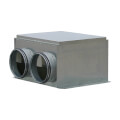
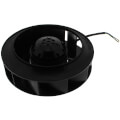


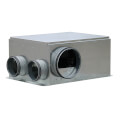
CVS Series Central Ventilation Multi-Port Exhaust Fans are ventilation units that combine several bathroom or utility exhaust points into one centrally located fan, cutting down the number of wall or roof penetrations a building needs. The lineup includes models like the CVS275A, rated for 245 CFM across 2 ports, and the CVS300A and CVS400A, rated for 355 CFM and 404 CFM respectively across 4 ports each. Multiple exhaust points connect into the same fan without extra adapters or transitions, simplifying ductwork in multi-story installations. Property managers and HVAC contractors specify these fans in apartment buildings, high-rise offices, and other multi-unit properties where individual roof penetrations for every bathroom would add cost and roofing complications. Consolidating exhaust into one fan also concentrates maintenance to a single accessible location instead of multiple units scattered across a roof.
Subcategories
- 2-Port Multi-Port Fans: 2-port multi-port fans, such as the CVS275A rated for 245 CFM, combine exhaust from two separate bathrooms or utility spaces into a single fan. Smaller apartment buildings or duplex units commonly use this configuration where only two fixtures need central exhaust. Consolidating two points into one fan still cuts the roof penetration count in half compared to individual fans. Contractors specify this size where duct runs from both exhaust points can reasonably reach a common fan location.
- 4-Port Multi-Port Fans: 4-port multi-port fans, including the CVS300A rated for 355 CFM and the CVS400A rated for 404 CFM, combine exhaust from four separate points into one centrally located unit. Larger apartment buildings and high-rise properties use this configuration to serve multiple units from a single roof or wall penetration. The higher CFM rating on the CVS400A suits installations with longer duct runs or higher static pressure from additional ductwork. Choosing between the 355 CFM and 404 CFM models depends on the total exhaust demand across all four connected points.
- Higher-CFM Models for Longer Duct Runs: Higher-CFM models like the CVS400A, rated for 404 CFM, handle installations where duct length or additional fittings add static pressure beyond what a standard 4-port fan can overcome. Contractors working on taller buildings with longer vertical duct runs specify this rating to maintain adequate airflow at every connected port. Matching the fan's CFM rating to the combined demand of all connected exhaust points, plus a margin for duct losses, keeps airflow balanced across the system. Undersizing the fan for the total duct run results in weak exhaust at the farthest connected point.
Buying Guide
Total exhaust demand across every connected point is the starting number for sizing any fan in the CVS Series Central Ventilation Multi-Port Exhaust Fans lineup, since a single central fan has to move enough air to serve every bathroom or utility space tied into it. The CVS275A covers 2 ports at 245 CFM, which suits smaller buildings where only two fixtures share a common duct run. Larger properties with four connected points should look at the CVS300A, rated for 355 CFM, or the CVS400A, rated for 404 CFM, depending on duct length and the number of fittings between the fan and each exhaust point. Longer duct runs and additional elbows add static pressure that reduces actual airflow below the fan's rated CFM, so buildings with vertical runs spanning multiple floors typically need the higher-rated model to maintain adequate exhaust at the farthest port. Roof or wall penetration count drops significantly with a multi-port design compared to installing a separate fan for every bathroom, which matters on properties where roofing warranties limit the number of new penetrations. Contractors should confirm that duct runs from every connected point can physically reach the planned fan location before finalizing a multi-port layout, since combining exhaust from opposite ends of a building isn't always practical. Matching port count and CFM rating to the building layout keeps exhaust performance consistent at every connected fixture rather than strong at the nearest port and weak at the farthest.
Frequently Asked Questions
How many exhaust points can connect to one CVS Series fan?
CVS Series fans come in 2-port and 4-port configurations, with the CVS275A handling 2 points and the CVS300A and CVS400A each handling 4 points. Every connected point ties into the same centrally located fan without extra adapters or transitions. Building layout and available duct routing typically determine which port count fits a given installation. Larger buildings with more bathrooms per floor usually specify the 4-port configuration.
What's the CFM difference between the CVS300A and CVS400A?
The CVS300A is rated for 355 CFM across 4 ports, while the CVS400A is rated for 404 CFM across the same 4-port configuration. The higher CFM rating on the CVS400A suits installations with longer duct runs or more fittings between the fan and each exhaust point. Both models serve the same basic 4-port layout, so the choice comes down to total static pressure in the duct system. Contractors calculate duct losses before choosing between the two ratings.
Where are multi-port exhaust fans typically installed?
Multi-port exhaust fans commonly serve apartment buildings, high-rise offices, and other multi-unit properties where individual roof penetrations for every bathroom would add cost. Property managers specify a centrally located fan to consolidate maintenance access to one point instead of several scattered units. Buildings with multiple floors often run vertical duct branches from each floor into a single fan location. The reduced penetration count also simplifies roof warranty compliance on properties with strict roofing requirements.
Do multi-port fans need special adapters to connect multiple ducts?
Multiple exhaust points connect into a CVS Series fan without extra adapters or transitions, simplifying the ductwork compared to older multi-port designs. Each port on the fan housing accepts a duct connection directly. Contractors still need to size each duct run correctly to avoid unbalanced airflow between ports. Following the manufacturer's port layout keeps installation straightforward across every connected point.
How does a contractor choose between a 2-port and 4-port model?
Total number of bathrooms or utility spaces needing central exhaust determines whether a 2-port or 4-port model fits a project. Smaller buildings or duplex units typically pair well with a 2-port model like the CVS275A. Larger apartment buildings or high-rise properties usually need a 4-port model such as the CVS300A or CVS400A to serve more fixtures from one fan. Duct routing feasibility from every connected point back to the planned fan location should factor into the final decision.
