




Carrier Energy Recovery Ventilators
 --%3E %3Csvg version='1.1' id='No-RB' xmlns='http://www.w3.org/2000/svg' xmlns:xlink='http://www.w3.org/1999/xlink' x='0px' y='0px' viewBox='0 0 100 100' enable-background='new 0 0 100 100' xml:space='preserve'%3E %3Cpath fill='%23CECECE' d='M79.44,0.95H20.56C9.78,0.95,0.95,9.78,0.95,20.56v58.87c0,10.79,8.82,19.61,19.61,19.61h58.87 c10.79,0,19.61-8.83,19.61-19.61V20.56C99.05,9.78,90.22,0.95,79.44,0.95z M65.38,58.24l9.38,29.58L49.69,69.78L24.5,87.82 l9.34-29.6L8.8,39.6l30.73-0.17c0,0,6.98-19.61,10-28.93c0.54,1.36,9.88,29.1,9.88,29.1H91.2L65.38,58.24z'/%3E %3C/svg%3E)


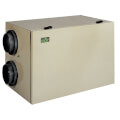
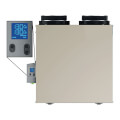

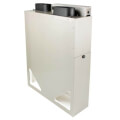
Carrier energy recovery ventilators are mechanical ventilation units that bring fresh outdoor air into a building while exhausting stale indoor air, transferring heat and humidity between the two airstreams along the way. The energy recovery core lets incoming air pick up warmth and moisture from outgoing air in winter, or shed heat and moisture in summer, so the ventilation system does not force the heating or cooling equipment to work as hard to condition the fresh air. Contractors spec ERVs on tightly sealed new construction and deep energy retrofits where reduced air infiltration improves efficiency but also traps stale air, odors, and excess humidity indoors without some form of mechanical ventilation. Carrier's lineup covers both residential and light commercial applications, giving contractors a way to add code required ventilation without a large energy penalty on the equipment already sized for heating and cooling the space. For a building tight enough to need mechanical fresh air, an ERV meets the ventilation requirement while working with the HVAC system rather than against it.
Subcategories
- Residential ERVs: Residential Carrier ERVs are sized for single family homes and typically tie into existing ductwork or run as a dedicated fresh air duct system feeding key rooms. Builders spec these units on homes tight enough to require mechanical ventilation under current energy codes, particularly in cold climates where heat recovery has the biggest efficiency payoff. Homeowners benefit from reduced humidity swings and fresher indoor air without a noticeable jump in heating and cooling costs.
- Light Commercial ERVs: Light commercial units handle higher airflow volumes for spaces such as offices, schools, and multi-family common areas where occupant density drives a larger fresh air requirement. Facility managers pair these units with rooftop or packaged HVAC equipment to meet ventilation code without oversizing the primary heating and cooling system just to handle outdoor air loads. Maintenance access and filter replacement schedules become more important at this scale since the units run longer duty cycles than a residential unit.
- Ducted vs Standalone Configurations: Ducted configurations tie an ERV into existing supply and return ductwork, which simplifies installation on a retrofit where ductwork already reaches most rooms. Standalone or dedicated duct systems run independent ventilation ducting to specific rooms, which gives more control over where fresh air lands but adds material and labor to the installation. Contractors weigh existing ductwork condition and access against the added cost of running dedicated ventilation ducts when picking a configuration.
Buying Guide
Sizing a Carrier energy recovery ventilator starts with the building's actual ventilation requirement rather than a rule of thumb based on square footage alone. Current energy codes typically set a minimum outdoor air rate based on occupancy and floor area, and undersizing the unit leaves a home or building short of that requirement even though the ERV is technically installed and running.
Climate plays a bigger role in the ERV decision than many contractors expect. Energy recovery ventilators deliver the biggest efficiency benefit in climates with large temperature and humidity swings between indoor and outdoor conditions, since that is where transferring heat and moisture between airstreams saves the most energy. In milder climates, a simpler heat recovery ventilator without the humidity transfer may cover the ventilation need at lower equipment cost.
Ductwork condition and layout decide whether a ducted or standalone Carrier Energy Recovery Ventilator configuration makes more sense on a given job. Tying into existing supply and return ducts is usually faster and cheaper on a retrofit, but only works well if that ductwork already reaches the rooms that need fresh air most, such as bedrooms and living areas.
Maintenance access deserves attention before the unit goes in, not after. Filters need regular replacement to keep airflow and energy recovery performance from degrading, so placing the unit somewhere a technician can reach without disassembling a ceiling or crawling through tight framing saves time on every future service call.
Frequently Asked Questions
How is an energy recovery ventilator different from a heat recovery ventilator?
An energy recovery ventilator transfers both heat and moisture between the incoming and outgoing airstreams, while a heat recovery ventilator transfers heat only. Climates with significant humidity swings generally benefit more from the moisture transfer an ERV provides.
Does adding an ERV increase heating and cooling costs?
Properly sized ERVs are designed to reduce that penalty by preconditioning incoming fresh air with energy recovered from outgoing air, so the heating and cooling system does not have to condition that air from scratch. Oversizing or undersizing the unit relative to the actual ventilation requirement is what typically causes complaints about energy use.
Can an ERV tie into existing ductwork?
In many retrofit installations, yes, provided the existing ductwork already reaches the rooms that need fresh air and has enough capacity for the added airflow. A standalone dedicated duct system is usually a better fit when existing ductwork does not reach key rooms or is already undersized.
How often do ERV filters need replacement?
Filter replacement intervals depend on the specific unit and the building's air quality, so a technician should follow the manufacturer's schedule rather than guessing. Skipping filter changes reduces both airflow and the unit's energy recovery performance over time.
Is an ERV required by code on new construction?
Requirements vary by jurisdiction and how tightly the building envelope is sealed, so a contractor should check the ventilation requirement in the local energy code before assuming an ERV is optional. Tighter building envelopes generally trigger a mechanical ventilation requirement that an ERV can satisfy.
