




Filters
SORT
Product Availability –
Review Score –
 --%3E %3Csvg version='1.1' id='Fill' xmlns='http://www.w3.org/2000/svg' xmlns:xlink='http://www.w3.org/1999/xlink' x='0px' y='0px' viewBox='0 0 100 100' enable-background='new 0 0 100 100' xml:space='preserve'%3E %3Cpath fill='%23F15C02' d='M79.44,0.95H20.56C9.78,0.95,0.95,9.78,0.95,20.56v58.87c0,10.79,8.82,19.61,19.61,19.61h58.87 c10.79,0,19.61-8.83,19.61-19.61V20.56C99.05,9.78,90.22,0.95,79.44,0.95z M65.38,58.24l9.38,29.58L49.69,69.78L24.5,87.82 l9.34-29.6L8.8,39.6l30.73-0.17c0,0,6.98-19.61,10-28.93c0.54,1.36,9.88,29.1,9.88,29.1H91.2L65.38,58.24z'/%3E %3C/svg%3E)
 --%3E %3Csvg version='1.1' id='With-RB' xmlns='http://www.w3.org/2000/svg' xmlns:xlink='http://www.w3.org/1999/xlink' x='0px' y='0px' viewBox='0 0 100 100' enable-background='new 0 0 100 100' xml:space='preserve'%3E %3Cpath fill='%23FBC8B4' d='M79.44,0.95H20.56C9.78,0.95,0.95,9.78,0.95,20.56v58.87c0,10.79,8.82,19.61,19.61,19.61h58.87 c10.79,0,19.61-8.83,19.61-19.61V20.56C99.05,9.78,90.22,0.95,79.44,0.95z M65.38,58.24l9.38,29.58L49.69,69.78L24.5,87.82 l9.34-29.6L8.8,39.6l30.73-0.17c0,0,6.98-19.61,10-28.93c0.54,1.36,9.88,29.1,9.88,29.1H91.2L65.38,58.24z'/%3E %3C/svg%3E)
Price Range –
Carrier Heat Exchangers


 --%3E %3Csvg version='1.1' id='No-RB' xmlns='http://www.w3.org/2000/svg' xmlns:xlink='http://www.w3.org/1999/xlink' x='0px' y='0px' viewBox='0 0 100 100' enable-background='new 0 0 100 100' xml:space='preserve'%3E %3Cpath fill='%23CECECE' d='M79.44,0.95H20.56C9.78,0.95,0.95,9.78,0.95,20.56v58.87c0,10.79,8.82,19.61,19.61,19.61h58.87 c10.79,0,19.61-8.83,19.61-19.61V20.56C99.05,9.78,90.22,0.95,79.44,0.95z M65.38,58.24l9.38,29.58L49.69,69.78L24.5,87.82 l9.34-29.6L8.8,39.6l30.73-0.17c0,0,6.98-19.61,10-28.93c0.54,1.36,9.88,29.1,9.88,29.1H91.2L65.38,58.24z'/%3E %3C/svg%3E)
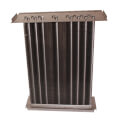
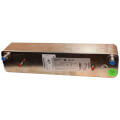
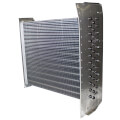

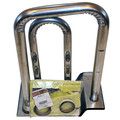
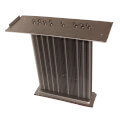
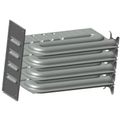
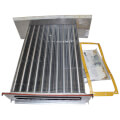

Carrier heat exchangers transfer heat from burning fuel into the air a furnace circulates through a home or building's ductwork, and technicians replace them when the original exchanger cracks or corrodes beyond repair. A cracked heat exchanger is a safety concern because it can let combustion byproducts, including carbon monoxide, mix with the air the system circulates. Technicians identify the failure with a visual inspection or a combustion analyzer test before recommending replacement, since a subtle crack isn't always visible without specific testing. Matching the exact heat exchanger model to the furnace's BTU rating and cabinet size matters, since Carrier uses different exchanger designs across furnace generations and efficiency tiers. Sourcing the correct exchanger the first time keeps a heating system repair from stretching into a multi-visit job while a home goes without reliable heat.
Subcategories
- Primary Heat Exchangers: Primary heat exchangers absorb heat directly from the burner flame and transfer it into the air circulating through the furnace's supply ducts. Technicians replace this component when it develops cracks from repeated heating and cooling cycles over the furnace's service life. A cracked primary exchanger is treated as a safety issue rather than a simple efficiency problem, since it can allow combustion gases into the circulated air. Furnace age and cycle count both factor into how likely this component is to need replacement.
- Secondary Heat Exchangers: Secondary heat exchangers capture additional heat from exhaust gases before they vent outside, which is what gives high-efficiency condensing furnaces their higher efficiency ratings. Technicians servicing condensing furnaces check this component for corrosion, since the condensation it produces during normal operation is mildly acidic and can degrade the metal over time. A failing secondary exchanger often shows up as a drop in efficiency or a condensate leak before it fails completely. Replacing it restores the furnace's condensing efficiency rather than just its basic heating function.
- Heat Exchanger Gaskets and Seals: Heat exchanger gaskets and seals maintain the airtight seal between exchanger sections and the furnace cabinet, preventing flue gases from escaping into the living space. Technicians replace these anytime a heat exchanger itself is serviced, rather than reusing the old gaskets, since a compromised seal undermines even a correctly installed new exchanger. A worn gasket sometimes causes symptoms similar to a cracked exchanger, which is why inspecting the seals is a standard step before condemning the exchanger itself. Keeping a stock of common gasket sizes on hand speeds up exchanger replacement jobs.
- Condensing Furnace Exchangers: Condensing furnace exchangers are built from corrosion-resistant materials specifically to handle the acidic condensate that high-efficiency furnaces produce during normal operation. Technicians servicing 90 percent-plus efficiency furnaces need this specific exchanger type rather than a standard exchanger built for a mid-efficiency unit. Matching the exchanger's material and design to the furnace's efficiency tier is critical, since a standard exchanger won't hold up to condensing operation. Confirming the furnace's efficiency rating before ordering prevents installing an exchanger that fails prematurely in this environment.
Buying Guide
Start by confirming the exact furnace model and serial number before ordering a replacement, since Carrier Heat Exchangers vary by furnace generation, BTU rating, and efficiency tier, and a mismatch means the new part won't fit the cabinet or seal properly.
Next, determine whether the furnace is a standard mid-efficiency unit or a high-efficiency condensing model, since these use different exchanger designs built from different materials. A condensing furnace's secondary exchanger has to handle acidic condensate that a standard primary exchanger was never designed to withstand, so the two aren't interchangeable.
Diagnosis matters just as much as the part itself. Confirming a cracked or corroded exchanger with a visual inspection or combustion analyzer test, rather than assuming based on symptoms alone, avoids replacing a part that wasn't actually the problem. A gasket or seal issue can sometimes mimic exchanger failure symptoms.
Finally, order new gaskets and seals along with the exchanger rather than reusing the old ones. A new exchanger installed with a worn gasket can still develop the same flue gas leakage the replacement was meant to fix, undermining the whole repair.
Frequently Asked Questions
How can a technician tell if a Carrier furnace heat exchanger is cracked?
A visual inspection with a mirror and flashlight catches some cracks, but a combustion analyzer test that checks for carbon monoxide levels in the circulated air is more reliable for finding subtle cracks that aren't visible. Relying on visual inspection alone can miss a failure that still poses a safety risk.
Why is a cracked heat exchanger considered a safety issue rather than just a repair?
A crack in the exchanger can let combustion byproducts, including carbon monoxide, mix with the air the furnace circulates through the building. Furnaces with a confirmed cracked exchanger are typically shut down and tagged out until the exchanger is replaced.
What's the difference between a primary and secondary heat exchanger?
A primary heat exchanger absorbs heat directly from the burner flame, while a secondary heat exchanger, found only in high-efficiency condensing furnaces, captures additional heat from the exhaust before it vents outside. Only condensing furnaces have both components.
Can a standard furnace heat exchanger be used in a condensing furnace?
No. Condensing furnaces produce acidic condensate during normal operation, and a standard exchanger isn't built to withstand that corrosion over time. The exchanger has to match the furnace's efficiency tier.
Should gaskets be replaced along with a new heat exchanger?
Yes. Reusing an old gasket with a new exchanger risks the same flue gas leakage the replacement was meant to fix, so replacing the gaskets and seals during the same job is standard practice.
