




Filters
SORT
Product Availability –
Review Score –
 --%3E %3Csvg version='1.1' id='Fill' xmlns='http://www.w3.org/2000/svg' xmlns:xlink='http://www.w3.org/1999/xlink' x='0px' y='0px' viewBox='0 0 100 100' enable-background='new 0 0 100 100' xml:space='preserve'%3E %3Cpath fill='%23F15C02' d='M79.44,0.95H20.56C9.78,0.95,0.95,9.78,0.95,20.56v58.87c0,10.79,8.82,19.61,19.61,19.61h58.87 c10.79,0,19.61-8.83,19.61-19.61V20.56C99.05,9.78,90.22,0.95,79.44,0.95z M65.38,58.24l9.38,29.58L49.69,69.78L24.5,87.82 l9.34-29.6L8.8,39.6l30.73-0.17c0,0,6.98-19.61,10-28.93c0.54,1.36,9.88,29.1,9.88,29.1H91.2L65.38,58.24z'/%3E %3C/svg%3E)
 --%3E %3Csvg version='1.1' id='With-RB' xmlns='http://www.w3.org/2000/svg' xmlns:xlink='http://www.w3.org/1999/xlink' x='0px' y='0px' viewBox='0 0 100 100' enable-background='new 0 0 100 100' xml:space='preserve'%3E %3Cpath fill='%23FBC8B4' d='M79.44,0.95H20.56C9.78,0.95,0.95,9.78,0.95,20.56v58.87c0,10.79,8.82,19.61,19.61,19.61h58.87 c10.79,0,19.61-8.83,19.61-19.61V20.56C99.05,9.78,90.22,0.95,79.44,0.95z M65.38,58.24l9.38,29.58L49.69,69.78L24.5,87.82 l9.34-29.6L8.8,39.6l30.73-0.17c0,0,6.98-19.61,10-28.93c0.54,1.36,9.88,29.1,9.88,29.1H91.2L65.38,58.24z'/%3E %3C/svg%3E)
Price Range –
Carrier Heat Exchangers & Heaters


 --%3E %3Csvg version='1.1' id='Half' xmlns='http://www.w3.org/2000/svg' xmlns:xlink='http://www.w3.org/1999/xlink' x='0px' y='0px' viewBox='0 0 100 100' enable-background='new 0 0 100 100' xml:space='preserve'%3E %3Cg%3E %3Cpath fill='%23F15C02' d='M30.05,70.23l3.79-12.01L8.8,39.6l30.73-0.17c0,0,6.98-19.61,10-28.93c0.54,1.36,9.88,29.1,9.88,29.1h1.58 L93.71,7.18c-3.58-3.82-8.66-6.23-14.28-6.23H20.56C9.78,0.95,0.95,9.78,0.95,20.56v58.87c0,5.41,2.22,10.32,5.79,13.88 L30.05,70.23z'/%3E %3C/g%3E %3Cpath fill='%23FBC8B4' d='M93.71,7.18L60.98,39.6H91.2L65.38,58.24l9.38,29.58L49.69,69.78L24.5,87.82l5.55-17.59L6.75,93.32 c3.55,3.54,8.44,5.73,13.82,5.73h58.87c10.79,0,19.61-8.83,19.61-19.61V20.56C99.05,15.4,97.01,10.69,93.71,7.18z'/%3E %3C/svg%3E)



 --%3E %3Csvg version='1.1' id='No-RB' xmlns='http://www.w3.org/2000/svg' xmlns:xlink='http://www.w3.org/1999/xlink' x='0px' y='0px' viewBox='0 0 100 100' enable-background='new 0 0 100 100' xml:space='preserve'%3E %3Cpath fill='%23CECECE' d='M79.44,0.95H20.56C9.78,0.95,0.95,9.78,0.95,20.56v58.87c0,10.79,8.82,19.61,19.61,19.61h58.87 c10.79,0,19.61-8.83,19.61-19.61V20.56C99.05,9.78,90.22,0.95,79.44,0.95z M65.38,58.24l9.38,29.58L49.69,69.78L24.5,87.82 l9.34-29.6L8.8,39.6l30.73-0.17c0,0,6.98-19.61,10-28.93c0.54,1.36,9.88,29.1,9.88,29.1H91.2L65.38,58.24z'/%3E %3C/svg%3E)










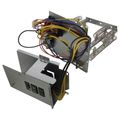


Carrier Heat Exchangers & Heaters cover replacement heat exchanger assemblies and related heating components for Carrier residential and light commercial gas furnaces. Heat exchangers vary by furnace generation, BTU rating, and efficiency tier, and confirming the furnace's exact model and serial number before ordering is critical since a mismatch means the replacement won't fit the cabinet or seal correctly. High-efficiency condensing furnaces, generally 90 percent AFUE and above, require a heat exchanger built from corrosion-resistant materials to handle the acidic condensate that forms during normal operation, which sets that exchanger apart from one built for a mid-efficiency furnace. Technicians servicing Carrier equipment rely on matching the correct heat exchanger type to the furnace's efficiency tier rather than assuming interchangeability across models. Getting this match right the first time keeps a heating system safe and code-compliant while avoiding a second service call for a part that doesn't seal properly in the cabinet.
Subcategories
- Standard Efficiency Heat Exchangers: Standard efficiency heat exchangers serve mid-efficiency Carrier furnaces that don't produce condensate during normal operation. Technicians install these when replacing the primary heat exchanger on a non-condensing furnace model. Matching the exchanger to the furnace's exact model and BTU rating keeps the cabinet seal and airflow within factory specification.
- Condensing Heat Exchangers: Condensing heat exchangers are built with corrosion-resistant materials specifically to withstand the acidic condensate produced by high-efficiency furnaces rated around 90 percent AFUE and above. Technicians servicing these furnaces need this specific exchanger type rather than a standard exchanger meant for mid-efficiency units. Confirming the furnace's efficiency tier before ordering avoids installing the wrong exchanger type.
- Rear Air Baffles: Rear air baffles sit between heat exchanger cells and the condensing unit to direct airflow properly through the furnace cabinet. Technicians check whether a given Carrier model requires this component when replacing a heat exchanger, since not every model uses one. Installing the correct baffle keeps combustion airflow routed as designed.
Buying Guide
Pulling the furnace's model and serial number is the first step before ordering from Carrier Heat Exchangers & Heaters, since heat exchangers vary by furnace generation, BTU rating, and efficiency tier and a mismatch means the replacement won't fit the cabinet or seal properly. The next decision point is efficiency tier: furnaces rated around 90 percent AFUE and above produce acidic condensate during normal operation, so those units require a condensing heat exchanger built from corrosion-resistant materials rather than the standard exchanger used on mid-efficiency furnaces. Installing a standard exchanger in a condensing furnace, or the reverse, leads to premature failure or improper combustion, so confirming efficiency tier against the furnace's rating plate before ordering is worth the extra step. Beyond the exchanger itself, checking whether the specific model requires a rear air baffle between heat exchanger cells and the condensing unit prevents a return trip for a component that's easy to miss on the first pass. Sourcing genuine OEM parts that match the furnace's documented specifications keeps warranty coverage intact and keeps the repair aligned with the equipment's original design intent. With proper maintenance, major furnace components including the heat exchanger typically last 15 to 20 years, so replacement decisions on older units should also weigh remaining furnace life against the cost of the repair.
Frequently Asked Questions
How do I know if my Carrier furnace needs a standard or condensing heat exchanger?
Furnaces rated around 90 percent AFUE and above are condensing units that produce acidic condensate and require a heat exchanger built from corrosion-resistant materials. Mid-efficiency furnaces that don't produce condensate use a standard heat exchanger instead. Checking the furnace's rating plate for its AFUE rating confirms which type is needed.
Why does the exact furnace model matter when ordering a heat exchanger?
Heat exchangers vary by furnace generation, BTU rating, and efficiency tier, so a mismatch means the replacement part won't fit the cabinet or seal correctly. Pulling the model and serial number from the furnace's rating plate before ordering prevents this. A wrong-fit exchanger can also affect combustion safety, not just installation ease.
What is a rear air baffle and when is it needed?
A rear air baffle sits between heat exchanger cells and the condensing unit to direct airflow properly through the furnace. Not every Carrier furnace model uses one, so checking the specific model's parts requirements before starting the job avoids a missed component. Skipping a required baffle can disrupt intended airflow through the cabinet.
How long do Carrier heat exchangers typically last?
With proper maintenance, major furnace components including the heat exchanger can last 15 to 20 years. Actual service life depends on maintenance history and operating conditions at the specific property. Age alone isn't always the deciding factor in a replace-versus-repair decision, so condition should be assessed directly.
Where can genuine Carrier heat exchanger parts be sourced?
Genuine Carrier furnace parts are available through Carrier Factory Authorized Dealers, which provides OEM parts that fit the specific furnace model and are backed by warranty. Confirming the exact model and efficiency tier before ordering still applies regardless of the sourcing channel. Matching part specifications to the furnace's documentation keeps the repair aligned with original design intent.
