




Cast Iron Companion Flanges

 --%3E %3Csvg version='1.1' id='No-RB' xmlns='http://www.w3.org/2000/svg' xmlns:xlink='http://www.w3.org/1999/xlink' x='0px' y='0px' viewBox='0 0 100 100' enable-background='new 0 0 100 100' xml:space='preserve'%3E %3Cpath fill='%23CECECE' d='M79.44,0.95H20.56C9.78,0.95,0.95,9.78,0.95,20.56v58.87c0,10.79,8.82,19.61,19.61,19.61h58.87 c10.79,0,19.61-8.83,19.61-19.61V20.56C99.05,9.78,90.22,0.95,79.44,0.95z M65.38,58.24l9.38,29.58L49.69,69.78L24.5,87.82 l9.34-29.6L8.8,39.6l30.73-0.17c0,0,6.98-19.61,10-28.93c0.54,1.36,9.88,29.1,9.88,29.1H91.2L65.38,58.24z'/%3E %3C/svg%3E)

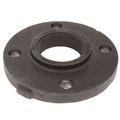
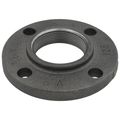
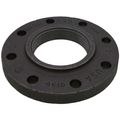
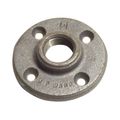
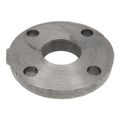
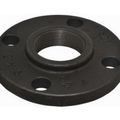
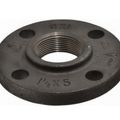


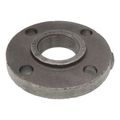
Cast Iron Companion Flanges give plumbers and heating contractors a bolted transition between flanged valves, pumps, or fittings and threaded cast iron pipe. Rather than relying on thread sealant to close a joint, a companion flange seats against a gasket, so it holds tight under the vibration and thermal cycling common in steam and hydronic heating lines. Bore sizes typically run from 1 inch up to 6 inches to match standard heating pipe diameters, and the flange face is machined flat to seat evenly against the mating equipment. Contractors reach for companion flanges most often when replacing a pump volute, boiler trim, or isolation valve on an older cast iron system, since bolting a new flange onto the existing pipe run avoids cutting and re-threading the whole line. Getting the bore size and bolt pattern right the first time keeps the retrofit on schedule and avoids a return trip for a leaking gasket.
Subcategories
- Flat Face Companion Flanges: Flat face companion flanges have a smooth, unbroken face that spans the full flange diameter, giving even gasket contact across a wide area. Plumbers pair them with cast iron pumps and valves rated for the same low-pressure service, since the flat design does not concentrate stress on the gasket. They work well on older steam and gravity hot water systems where the mating equipment is also flat-faced. Matching the flange style to the equipment on both sides of the joint keeps the gasket from being crushed unevenly.
- Raised Face Companion Flanges: Raised face companion flanges have a narrow raised ring around the bore that concentrates bolt load onto a smaller gasket area, giving a tighter seal at higher pressures. Contractors use them when connecting to ANSI-rated steel valves or pumps built to the same raised-face standard. The raised ring must match the mating flange type, since bolting a raised face against a flat face can crack a cast iron flange under uneven load. Raised face designs show up most often on commercial hydronic and process piping.
- Threaded Companion Flanges: Threaded companion flanges have NPT female threads in the bore, so they screw directly onto pipe without welding or grooving. Screwing directly onto pipe makes them a common retrofit choice on residential and light commercial jobs where the existing pipe is threaded cast iron or steel. A contractor still needs to true up the flange face square to the pipe run before bolting on the mating equipment, since threaded connections can seat at a slight angle if over-tightened.
- Grooved Companion Flanges: Grooved companion flanges use a coupling housing instead of bolt holes, clamping onto pipe that has been roll-grooved rather than threaded or welded. Fire protection and larger hydronic systems favor this style because it installs faster than a bolted or threaded joint and allows for some axial movement to absorb thermal expansion. Grooved flanges pair with grooved-end valves and pumps from the same piping system rather than mixed bolt-pattern equipment.
Buying Guide
Start by confirming the bore size and pressure class of the equipment being connected, since a companion flange has to match both dimensions exactly or the joint will leak or bind under load. Measure the existing pipe diameter and check whether it is threaded, grooved, or plain end, because that determines which flange style fits without additional adapters.
Bolt pattern matters just as much as bore size. A flange with the wrong number or spacing of bolt holes will not line up with the mating equipment, and drilling new holes in cast iron risks cracking the casting. When replacing a pump or valve on an existing system, pull the bolt pattern from the part being removed rather than guessing from a catalog photo.
Cast Iron Companion Flanges also come in flat face and raised face versions, and mixing the two styles on the same joint puts uneven stress on the gasket and can shorten its life. Confirm which style the mating flange uses before ordering.
Finally, check the gasket material against the system's fluid and temperature range. A gasket rated for cold water service will not hold up on a steam line, and using the wrong material is one of the most common causes of a companion flange joint failing shortly after installation.
Frequently Asked Questions
What is the difference between a flat face and raised face companion flange?
A flat face flange has a smooth face across its full diameter, while a raised face flange has a narrow ring around the bore that concentrates bolt load onto a smaller gasket area. The two styles should not be mixed on the same joint, since the mismatch puts uneven stress on the gasket and can crack a cast iron flange over time.
Can a companion flange be welded onto pipe instead of bolted?
Most cast iron companion flanges are designed for threaded or grooved connections rather than welding, since cast iron does not weld the way steel does. Contractors typically thread the flange onto NPT pipe or clamp it onto grooved-end pipe, then bolt the flange face to the mating equipment.
How do I know what bolt pattern I need?
The safest way is to match the bolt pattern of the part being replaced, whether that's an old pump volute, valve body, or fitting. Bolt spacing and hole count vary by pressure class, so a flange pulled from a catalog without checking the existing hardware can end up with holes that don't line up.
What gasket should I use with a cast iron companion flange?
Gasket choice depends on the system's fluid and operating temperature. A gasket built for cold water service will break down quickly on a steam or high-temperature hydronic line, so it's worth confirming the gasket's temperature rating matches the system before final assembly.
Why is my companion flange leaking after installation?
A leak right after installation usually traces back to an uneven bolt torque pattern, a mismatched flange face style, or a gasket that isn't rated for the system's temperature. Retightening bolts in a crisscross pattern rather than around the circle and rechecking the gasket material are the first two things to check.
