




Cummins

 --%3E %3Csvg version='1.1' id='No-RB' xmlns='http://www.w3.org/2000/svg' xmlns:xlink='http://www.w3.org/1999/xlink' x='0px' y='0px' viewBox='0 0 100 100' enable-background='new 0 0 100 100' xml:space='preserve'%3E %3Cpath fill='%23CECECE' d='M79.44,0.95H20.56C9.78,0.95,0.95,9.78,0.95,20.56v58.87c0,10.79,8.82,19.61,19.61,19.61h58.87 c10.79,0,19.61-8.83,19.61-19.61V20.56C99.05,9.78,90.22,0.95,79.44,0.95z M65.38,58.24l9.38,29.58L49.69,69.78L24.5,87.82 l9.34-29.6L8.8,39.6l30.73-0.17c0,0,6.98-19.61,10-28.93c0.54,1.36,9.88,29.1,9.88,29.1H91.2L65.38,58.24z'/%3E %3C/svg%3E)
 --%3E %3Csvg version='1.1' id='Fill' xmlns='http://www.w3.org/2000/svg' xmlns:xlink='http://www.w3.org/1999/xlink' x='0px' y='0px' viewBox='0 0 100 100' enable-background='new 0 0 100 100' xml:space='preserve'%3E %3Cpath fill='%23F15C02' d='M79.44,0.95H20.56C9.78,0.95,0.95,9.78,0.95,20.56v58.87c0,10.79,8.82,19.61,19.61,19.61h58.87 c10.79,0,19.61-8.83,19.61-19.61V20.56C99.05,9.78,90.22,0.95,79.44,0.95z M65.38,58.24l9.38,29.58L49.69,69.78L24.5,87.82 l9.34-29.6L8.8,39.6l30.73-0.17c0,0,6.98-19.61,10-28.93c0.54,1.36,9.88,29.1,9.88,29.1H91.2L65.38,58.24z'/%3E %3C/svg%3E)


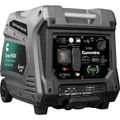
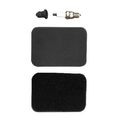
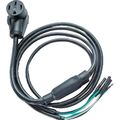
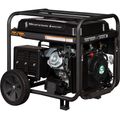
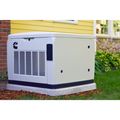

Cummins traces its founding to February 3, 1919, when inventor Clessie Cummins partnered with banker William G. Irwin to start the Cummins Engine Company in Columbus, Indiana, betting on the long-term promise of diesel engine technology. The company's first distinctive engine line, the Model F, appeared in 1924 and went on to power some of North America's first diesel-powered fishing vessels.
More than a century later, Cummins remains headquartered in Columbus, Indiana, and has grown into a global power technology company. Its Power Generation segment, which includes products built under the Onan name, supplies engine-driven generators for home standby, RV, marine, and commercial mobility use.
Product Lines
Cummins home standby generators are sold under the QuietConnect series, built around the RS line of air-cooled units offered in multiple kW ratings and designed for permanent installation alongside an automatic transfer switch.
Beyond home standby equipment, Cummins also supplies engines, alternators, controls, and transfer switches and switchgear that make up larger power generation systems, along with portable and mobile generator options carried through the Onan and Cummins Power Generation lines.
Why Contractors Specify Cummins
Electrical contractors who install standby power systems specify Cummins generators for engineering built around the QuietConnect RS series, which is designed to start automatically during a utility outage and run until power is restored. Weather-protective, sound-insulated enclosures are part of the QuietConnect design, helping installers place units in residential settings where noise and weather exposure are concerns.
Decades of diesel and generator engineering experience also mean parts, transfer switch compatibility, and service documentation are well established, which simplifies maintenance planning for contractors who service standby systems over the long term.
How to Choose Cummins Products
Sizing a home standby generator starts with calculating the household's total running load plus its highest single starting load, such as a central air conditioner compressor, then matching that figure to a QuietConnect RS model rated in kW. Fuel type, natural gas or propane, also factors into model selection, along with the installation clearance specified for the chosen model.
For mobile or backup power outside the home, matching generator output to the connected equipment's running and surge wattage helps avoid an undersized installation, and confirming transfer switch compatibility ahead of time avoids mismatched components on installation day.
Frequently Asked Questions
What size Cummins home standby generator does a typical house need?
Sizing depends on total connected load and the largest single starting load in the home, such as a central air conditioner, with the appropriate kW rating selected from the QuietConnect RS lineup to cover both figures.
Does a Cummins QuietConnect generator start automatically during an outage?
Yes, when paired with an automatic transfer switch, the generator monitors utility power continuously and starts on its own when an outage is detected, then shuts down once utility power is restored.
What fuel types do Cummins home standby generators run on?
QuietConnect RS models run on natural gas or liquid propane, with fuel type confirmed during installation based on what's available at the property.
How close to a house can a Cummins home standby generator be installed?
Required clearance varies by model and is specified in the installation manual and applicable local code, so the exact clearance for the chosen QuietConnect model and jurisdiction should be confirmed before placement.
What is the difference between Cummins and Onan generators?
Onan is a long-established generator brand that became part of Cummins Power Generation, so Onan-branded units, particularly for RV, marine, and portable use, are manufactured and supported under the broader Cummins organization.
