



Filters
SORT
Product Availability –
Brand –
Product Type –
Used With –
Review Score –
 --%3E %3Csvg version='1.1' id='Fill' xmlns='http://www.w3.org/2000/svg' xmlns:xlink='http://www.w3.org/1999/xlink' x='0px' y='0px' viewBox='0 0 100 100' enable-background='new 0 0 100 100' xml:space='preserve'%3E %3Cpath fill='%23F15C02' d='M79.44,0.95H20.56C9.78,0.95,0.95,9.78,0.95,20.56v58.87c0,10.79,8.82,19.61,19.61,19.61h58.87 c10.79,0,19.61-8.83,19.61-19.61V20.56C99.05,9.78,90.22,0.95,79.44,0.95z M65.38,58.24l9.38,29.58L49.69,69.78L24.5,87.82 l9.34-29.6L8.8,39.6l30.73-0.17c0,0,6.98-19.61,10-28.93c0.54,1.36,9.88,29.1,9.88,29.1H91.2L65.38,58.24z'/%3E %3C/svg%3E)
Price Range –
Damper and Valve Linkages




 --%3E %3Csvg version='1.1' id='No-RB' xmlns='http://www.w3.org/2000/svg' xmlns:xlink='http://www.w3.org/1999/xlink' x='0px' y='0px' viewBox='0 0 100 100' enable-background='new 0 0 100 100' xml:space='preserve'%3E %3Cpath fill='%23CECECE' d='M79.44,0.95H20.56C9.78,0.95,0.95,9.78,0.95,20.56v58.87c0,10.79,8.82,19.61,19.61,19.61h58.87 c10.79,0,19.61-8.83,19.61-19.61V20.56C99.05,9.78,90.22,0.95,79.44,0.95z M65.38,58.24l9.38,29.58L49.69,69.78L24.5,87.82 l9.34-29.6L8.8,39.6l30.73-0.17c0,0,6.98-19.61,10-28.93c0.54,1.36,9.88,29.1,9.88,29.1H91.2L65.38,58.24z'/%3E %3C/svg%3E)
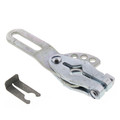
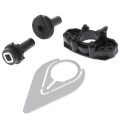
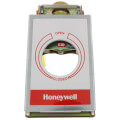
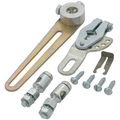
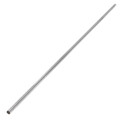
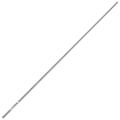
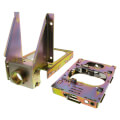
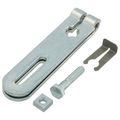
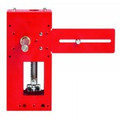
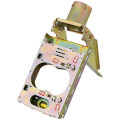



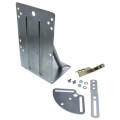
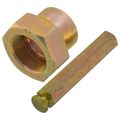

Damper and valve linkages are the mechanical connectors that translate the rotational or linear motion of an actuator into movement at a damper blade or valve ball, keeping HVAC airflow and fluid control systems responding accurately to a building's control signals. A linkage typically pairs a connecting rod or arm with ball joints or clevis fittings at each end, letting an actuator mounted away from the damper shaft still drive it through a full range of motion without binding. Contractors reach for these parts most often when replacing a worn or seized linkage that has started slipping, since a linkage that no longer holds its adjustment lets a damper drift out of calibration even while the actuator itself keeps working correctly. Because dampers and valves vary widely in shaft size, throw distance, and mounting geometry, matching a linkage to the specific application keeps the actuator's stroke aligned with the full range of motion the damper or valve needs to open and close properly.
Subcategories
- Adjustable Connecting Rods: Adjustable connecting rods link an actuator crank arm to a damper or valve linkage point across a range of mounting distances, with a threaded or slotted design that lets the effective length be set on site. Field adjustment matters because actuator placement often changes from one installation to the next depending on duct or pipe clearance. A properly set rod length keeps the actuator centered in its stroke so it can drive the damper fully open and fully closed without stalling against a mechanical limit.
- Ball Joint Linkages: Ball joint linkages allow a connecting rod to pivot smoothly even when the actuator and damper shaft are not perfectly aligned, which is common in field installations with tight mounting space. The pivoting joint reduces binding and wear compared to a rigid connection point. Ball joints are a frequent replacement item on older systems, since the joint itself tends to wear before the connecting rod does.
- Damper Blade Arms and Clips: Damper blade arms attach directly to a damper shaft and provide the mounting point where a connecting rod or jackshaft links into the blade's rotation. Clips and fasteners secure the arm to the shaft without slipping under repeated cycling. Selecting an arm sized for the shaft diameter and blade orientation on the specific damper model keeps torque transfer consistent over years of operation.
- Jackshaft Couplings: Jackshaft couplings connect a series of damper sections along a shared shaft so a single actuator can drive multiple blades in unison. This setup is common on large multi-section dampers where mounting an actuator on every blade would not be practical. A coupling that is not properly tightened is a common source of uneven blade movement across a multi-section damper.
Buying Guide
Choosing the right damper and valve linkage starts with identifying whether the existing part has failed mechanically, such as a stripped ball joint or a bent connecting rod, or whether the linkage is simply out of adjustment and needs recalibrating rather than replacing. Confirming the actuator's stroke length and crank arm geometry before ordering avoids a mismatch that leaves the damper unable to reach either its fully open or fully closed position. Measuring the distance between the actuator's mounting point and the damper or valve linkage point on the existing setup gives a reliable target length for a replacement connecting rod, since Damper and Valve Linkages come in a range of adjustable lengths built for different mounting distances. For jackshaft-driven multi-section dampers, checking that every coupling along the shaft is tightened evenly matters as much as the linkage parts themselves, because a single loose coupling can throw off blade alignment across the entire assembly even with new components installed. Ball joints tend to wear faster than connecting rods in systems that cycle frequently, so replacing a worn joint alone is often enough to restore smooth operation without swapping the whole linkage assembly. Keeping a record of the actuator model and stroke length on file speeds up future replacements when a linkage eventually wears out again.
Frequently Asked Questions
How do I know if a damper linkage needs replacing versus just readjusting?
A linkage that has visible wear at the ball joint, a bent connecting rod, or a stripped adjustment point needs replacement, while a damper that is simply out of calibration but has intact hardware often just needs the rod length reset. Cycling the actuator manually and watching for slipping or binding at each connection point helps tell the two apart.
Can one linkage work with actuators from different manufacturers?
Many linkages are designed to be compatible across actuator brands as long as the crank arm hole spacing and connecting rod length match, but stroke length and mounting geometry still need to line up with the specific actuator installed. Checking the actuator's stroke specification before ordering avoids a mismatch.
Why does a damper stop short of fully closing even with a new linkage installed?
This is usually a sign that the connecting rod length is not adjusted correctly for the actuator's stroke, or that a jackshaft coupling elsewhere in the run is loose and absorbing part of the actuator's movement. Rechecking rod length and coupling tightness typically resolves it.
How often do ball joints in a linkage need to be replaced?
Ball joints wear based on cycling frequency rather than a fixed calendar schedule, so a damper that cycles constantly in a commercial system will wear its joints faster than one in a lightly used residential zone. Listening for looseness or visible play at the joint during operation is the most reliable way to catch wear early.
Does a jackshaft coupling need to match the shaft diameter exactly?
Yes, a coupling sized too loosely for the shaft will slip under torque and cause uneven blade movement across the multi-section damper, while one that is too tight can be difficult to install without damaging the shaft. Measuring shaft diameter before ordering is worth the extra step.
