



Dampers
Dampers install directly into ductwork to regulate or shut off airflow through a branch or trunk line. The category covers rectangular dampers for sheet metal trunk and branch ducts and round dampers sized for round sheet metal or flexible duct runs.
Choosing between rectangular and round styles depends entirely on the duct shape already in place, since the damper has to match the duct's cross-section to seal properly. Balancing airflow to individual rooms or zones is one of the most common reasons contractors add dampers during a system installation or retrofit.

Subcategories
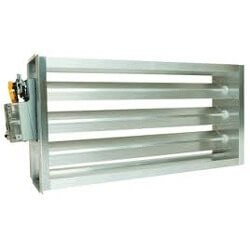
- Rectangular Dampers: Rectangular dampers install directly into sheet metal trunk and branch ductwork, where a wider duct cross-section needs even airflow control. A parallel or opposed-blade design lets a contractor throttle volume gradually instead of an abrupt open or closed swing. Sizing to the exact duct opening keeps the frame airtight and avoids leakage at the seams.
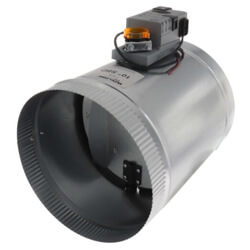
- Round Dampers: Round dampers mount inline on round sheet metal or flexible duct, typically feeding a single branch, room, or diffuser. A butterfly-style blade rotates within the duct to throttle airflow, and a splice collar on each end lets the fitting join standard round duct sizes without extra hardware.
Buying Guide
Start with the duct shape already on site. A rectangular duct run calls for a rectangular damper sized to the exact sheet metal opening, and a round duct run calls for a round damper matched to its diameter. Forcing a mismatched shape into an opening usually means custom sheet metal work that adds labor and cost to a straightforward repair.
Manual dampers cover most single-zone jobs, giving a technician a quadrant handle to set and lock the blade position by hand. Motorized dampers add an actuator that ties into a zoning control board or thermostat, letting the system open and close the blade automatically as each zone calls for conditioning.
Blade and frame material should match the duct gauge already installed. Galvanized steel holds up in standard residential and light commercial runs, while heavier gauge or coated options handle higher static pressure or corrosive environments such as commercial kitchen exhaust.
Static pressure rating matters on longer duct runs or systems with a high-output blower. A damper rated below the system's operating pressure can vibrate, leak air past the blade edges, or fail to seal fully closed, so checking the rating against the system's design pressure prevents a callback.
Replacing a single damper is almost always faster and less disruptive than reworking the duct section around it. Keeping a small stock of both rectangular and round dampers in common sizes on the truck covers the bulk of service calls without a special order.
Frequently Asked Questions
What is the difference between a rectangular and a round damper?
A rectangular damper fits sheet metal trunk and branch ductwork with a flat cross-section, while a round damper mounts inline on round duct feeding a single branch or diffuser. The shape is chosen to match the existing duct, not personal preference.
Can a manual damper be converted to motorized operation later?
Some manual damper bodies accept an aftermarket actuator kit, but many are built specifically for a quadrant handle and cannot be retrofitted. Checking the manufacturer's actuator compatibility before ordering saves a second trip if motorized zoning gets added later.
How is damper size determined for a duct run?
Size is set by the duct's internal dimensions at the installation point, not by the airflow volume alone. Measuring the exact opening, whether rectangular width and height or round diameter, is the fastest way to avoid an exchange.
Do dampers need regular maintenance?
A damper blade and linkage benefit from an annual check for smooth movement, since dust buildup or a loose linkage arm can cause it to stick partway open or closed. A quick inspection during routine duct maintenance usually catches this early.
What causes a damper to leak air when closed?
Air can bypass a closed blade when the frame is undersized for the duct opening, when the blade edge seal has degraded, or when the static pressure exceeds the damper's rating. Confirming the size and pressure rating during selection prevents most leakage complaints.
Resources
Subcategories
- Rectangular Dampers: Rectangular dampers install directly into sheet metal trunk and branch ductwork, where a wider duct cross-section needs even airflow control. A parallel or opposed-blade design lets a contractor throttle volume gradually instead of an abrupt open or closed swing. Sizing to the exact duct opening keeps the frame airtight and avoids leakage at the seams.
- Round Dampers: Round dampers mount inline on round sheet metal or flexible duct, typically feeding a single branch, room, or diffuser. A butterfly-style blade rotates within the duct to throttle airflow, and a splice collar on each end lets the fitting join standard round duct sizes without extra hardware.
Buying Guide
Start with the duct shape already on site. A rectangular duct run calls for a rectangular damper sized to the exact sheet metal opening, and a round duct run calls for a round damper matched to its diameter. Forcing a mismatched shape into an opening usually means custom sheet metal work that adds labor and cost to a straightforward repair.
Manual dampers cover most single-zone jobs, giving a technician a quadrant handle to set and lock the blade position by hand. Motorized dampers add an actuator that ties into a zoning control board or thermostat, letting the system open and close the blade automatically as each zone calls for conditioning.
Blade and frame material should match the duct gauge already installed. Galvanized steel holds up in standard residential and light commercial runs, while heavier gauge or coated options handle higher static pressure or corrosive environments such as commercial kitchen exhaust.
Static pressure rating matters on longer duct runs or systems with a high-output blower. A damper rated below the system's operating pressure can vibrate, leak air past the blade edges, or fail to seal fully closed, so checking the rating against the system's design pressure prevents a callback.
Replacing a single damper is almost always faster and less disruptive than reworking the duct section around it. Keeping a small stock of both rectangular and round dampers in common sizes on the truck covers the bulk of service calls without a special order.
Frequently Asked Questions
What is the difference between a rectangular and a round damper?
A rectangular damper fits sheet metal trunk and branch ductwork with a flat cross-section, while a round damper mounts inline on round duct feeding a single branch or diffuser. The shape is chosen to match the existing duct, not personal preference.
Can a manual damper be converted to motorized operation later?
Some manual damper bodies accept an aftermarket actuator kit, but many are built specifically for a quadrant handle and cannot be retrofitted. Checking the manufacturer's actuator compatibility before ordering saves a second trip if motorized zoning gets added later.
How is damper size determined for a duct run?
Size is set by the duct's internal dimensions at the installation point, not by the airflow volume alone. Measuring the exact opening, whether rectangular width and height or round diameter, is the fastest way to avoid an exchange.
Do dampers need regular maintenance?
A damper blade and linkage benefit from an annual check for smooth movement, since dust buildup or a loose linkage arm can cause it to stick partway open or closed. A quick inspection during routine duct maintenance usually catches this early.
What causes a damper to leak air when closed?
Air can bypass a closed blade when the frame is undersized for the duct opening, when the blade edge seal has degraded, or when the static pressure exceeds the damper's rating. Confirming the size and pressure rating during selection prevents most leakage complaints.