




Filters
SORT
Product Availability –
Size –
Position –
Review Score –
 --%3E %3Csvg version='1.1' id='Fill' xmlns='http://www.w3.org/2000/svg' xmlns:xlink='http://www.w3.org/1999/xlink' x='0px' y='0px' viewBox='0 0 100 100' enable-background='new 0 0 100 100' xml:space='preserve'%3E %3Cpath fill='%23F15C02' d='M79.44,0.95H20.56C9.78,0.95,0.95,9.78,0.95,20.56v58.87c0,10.79,8.82,19.61,19.61,19.61h58.87 c10.79,0,19.61-8.83,19.61-19.61V20.56C99.05,9.78,90.22,0.95,79.44,0.95z M65.38,58.24l9.38,29.58L49.69,69.78L24.5,87.82 l9.34-29.6L8.8,39.6l30.73-0.17c0,0,6.98-19.61,10-28.93c0.54,1.36,9.88,29.1,9.88,29.1H91.2L65.38,58.24z'/%3E %3C/svg%3E)
 --%3E %3Csvg version='1.1' id='With-RB' xmlns='http://www.w3.org/2000/svg' xmlns:xlink='http://www.w3.org/1999/xlink' x='0px' y='0px' viewBox='0 0 100 100' enable-background='new 0 0 100 100' xml:space='preserve'%3E %3Cpath fill='%23FBC8B4' d='M79.44,0.95H20.56C9.78,0.95,0.95,9.78,0.95,20.56v58.87c0,10.79,8.82,19.61,19.61,19.61h58.87 c10.79,0,19.61-8.83,19.61-19.61V20.56C99.05,9.78,90.22,0.95,79.44,0.95z M65.38,58.24l9.38,29.58L49.69,69.78L24.5,87.82 l9.34-29.6L8.8,39.6l30.73-0.17c0,0,6.98-19.61,10-28.93c0.54,1.36,9.88,29.1,9.88,29.1H91.2L65.38,58.24z'/%3E %3C/svg%3E)
Price Range –
Round Dampers

 --%3E %3Csvg version='1.1' id='Half' xmlns='http://www.w3.org/2000/svg' xmlns:xlink='http://www.w3.org/1999/xlink' x='0px' y='0px' viewBox='0 0 100 100' enable-background='new 0 0 100 100' xml:space='preserve'%3E %3Cg%3E %3Cpath fill='%23F15C02' d='M30.05,70.23l3.79-12.01L8.8,39.6l30.73-0.17c0,0,6.98-19.61,10-28.93c0.54,1.36,9.88,29.1,9.88,29.1h1.58 L93.71,7.18c-3.58-3.82-8.66-6.23-14.28-6.23H20.56C9.78,0.95,0.95,9.78,0.95,20.56v58.87c0,5.41,2.22,10.32,5.79,13.88 L30.05,70.23z'/%3E %3C/g%3E %3Cpath fill='%23FBC8B4' d='M93.71,7.18L60.98,39.6H91.2L65.38,58.24l9.38,29.58L49.69,69.78L24.5,87.82l5.55-17.59L6.75,93.32 c3.55,3.54,8.44,5.73,13.82,5.73h58.87c10.79,0,19.61-8.83,19.61-19.61V20.56C99.05,15.4,97.01,10.69,93.71,7.18z'/%3E %3C/svg%3E)



 --%3E %3Csvg version='1.1' id='No-RB' xmlns='http://www.w3.org/2000/svg' xmlns:xlink='http://www.w3.org/1999/xlink' x='0px' y='0px' viewBox='0 0 100 100' enable-background='new 0 0 100 100' xml:space='preserve'%3E %3Cpath fill='%23CECECE' d='M79.44,0.95H20.56C9.78,0.95,0.95,9.78,0.95,20.56v58.87c0,10.79,8.82,19.61,19.61,19.61h58.87 c10.79,0,19.61-8.83,19.61-19.61V20.56C99.05,9.78,90.22,0.95,79.44,0.95z M65.38,58.24l9.38,29.58L49.69,69.78L24.5,87.82 l9.34-29.6L8.8,39.6l30.73-0.17c0,0,6.98-19.61,10-28.93c0.54,1.36,9.88,29.1,9.88,29.1H91.2L65.38,58.24z'/%3E %3C/svg%3E)
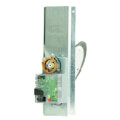
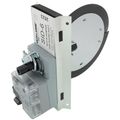
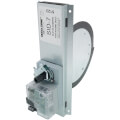
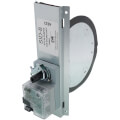
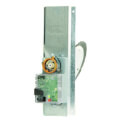
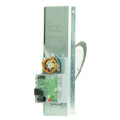
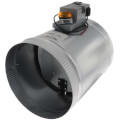

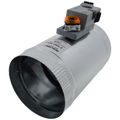
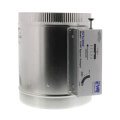
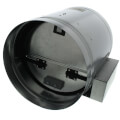

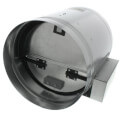
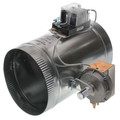
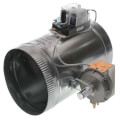
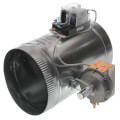
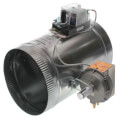
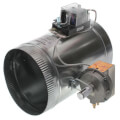
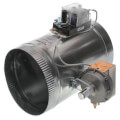
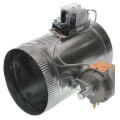
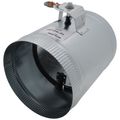
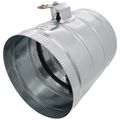

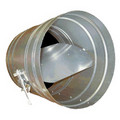
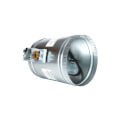
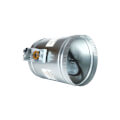
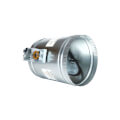
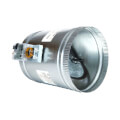
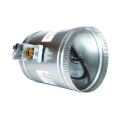
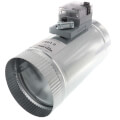
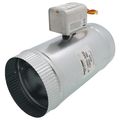
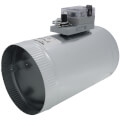
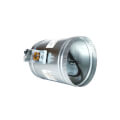
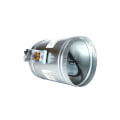
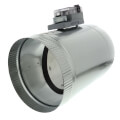
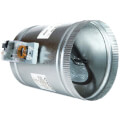
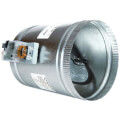

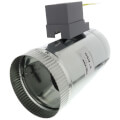
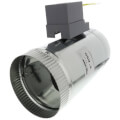
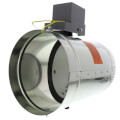
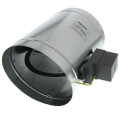
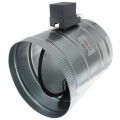
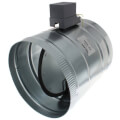
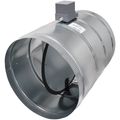
Round Dampers regulate airflow inside round HVAC ductwork, giving installers a way to balance supply air between branches or zones after a system is installed. Manual balancing models use a single blade controlled by a hand-adjustable, self-locking quadrant handle and commonly come in sizes from 4 to 20 inches in diameter to fit standard round duct and takeoff collars. Motorized versions add a low-voltage actuator, often 24V, so a zoning control board can open and close the damper automatically to direct conditioned air to the zone calling for it. Contractors size and place round dampers according to duct diameter and the airflow balance the system design calls for, whether that's a simple manual trim adjustment during startup or automated zone control tied into a thermostat. Getting damper placement and blade type right keeps airflow balanced across every branch and prevents one zone from starving another of conditioned air.
Subcategories
- Manual Balancing Dampers: Manual balancing dampers use a single blade inside the duct, adjusted by hand and held in place with a self-locking quadrant handle on the outside of the duct. Installers use them during system startup and air balancing to trim airflow to each branch without needing power or controls wiring. Common sizes run from 4 to 20 inches in diameter, covering most residential and light commercial round duct runs. Field balancing with a manual damper is typically a one-time adjustment rather than something changed on a daily basis.
- Motorized Zone Dampers: Motorized zone dampers use a low-voltage actuator, commonly 24V, to open and close the blade automatically based on signals from a zoning control panel or thermostat. HVAC contractors install these in multi-zone systems where different areas of a building need independent temperature control from a single air handler or furnace. Sizes in this category commonly range from 5 to 20 inches in diameter to match residential and light commercial duct sizing. Automatic operation lets a zoning system redirect airflow to whichever zone is calling for heating or cooling.
- Retrofit Dampers: Retrofit round dampers install into existing round duct without requiring the installer to cut out and replace a full section of duct. An 8-inch retrofit damper, for example, is sized to fit directly into an existing duct run during a service call or zoning upgrade. Technicians use retrofit-style dampers when adding zoning to a system that was not originally designed with dampers in place. Reduced installation time makes this style a common choice for existing-home zoning add-on projects.
Buying Guide
Selecting a round damper starts with duct diameter, since the damper must match the existing round duct or takeoff collar size exactly to seal properly and avoid air leakage at the joint. Confirm whether the application calls for manual or motorized control. Manual balancing dampers work for one-time airflow trims made during system startup, while motorized dampers suit multi-zone systems where a control panel needs to open and close individual zones automatically throughout the day. Round Dampers used in zoning systems should be sized according to the zone's airflow requirement in cubic feet per minute, not just the duct diameter, since an undersized damper can restrict airflow even when fully open. For retrofit projects on existing ductwork, a damper designed to insert into the current duct run without full duct replacement saves installation time and reduces disruption to finished ceilings or walls. Actuator voltage matters for motorized models. Most residential and light commercial zoning panels run on 24V, so matching that voltage avoids compatibility problems with the existing control board. Blade and housing material, typically galvanized steel, should be confirmed against the duct material already in place to avoid a poor seal or premature corrosion. Contractors adding zoning to an existing single-zone system should also verify the control panel supports the number of additional zones the new dampers will create before ordering hardware.
Frequently Asked Questions
What size round damper is needed for a given duct?
Round dampers need to match the exact duct diameter, commonly ranging from 4 to 20 inches, so the blade seals correctly against the duct wall. An undersized damper leaves gaps that let air bypass the blade even when closed, while an oversized damper won't fit the duct or collar at all. Measuring the inside diameter of the existing duct before ordering avoids a return trip for the correct size. Manufacturer sizing charts list the exact duct diameter each damper model is built to fit.
What's the difference between a manual and a motorized round damper?
Manual round dampers use a hand-adjustable quadrant handle on the outside of the duct, letting a technician set airflow once during balancing and leave it in place. Motorized dampers add a low-voltage actuator, typically 24V, that opens and closes the blade automatically based on signals from a zoning panel or thermostat. Manual dampers suit simple airflow trims, while motorized dampers suit multi-zone systems needing automatic control throughout the day. Choosing between the two depends on whether the system calls for one-time balancing or ongoing automated zone control.
Can a round damper be added to existing ductwork without replacing the duct?
Retrofit-style round dampers install directly into an existing duct run without requiring the full section to be cut out and replaced. Technicians commonly use retrofit dampers when adding zoning to a home or building that wasn't originally designed with zone control. Installation typically involves cutting a small access opening in the existing duct rather than removing an entire duct section. Retrofit dampers save time on service calls compared with rebuilding a section of ductwork from scratch.
What voltage do motorized round dampers use?
Most residential and light commercial motorized round dampers run on 24V, matching the low-voltage output of standard zoning control panels and thermostats. Confirming the actuator voltage against the existing control panel avoids a mismatch that would keep the damper from operating correctly. Some commercial-grade dampers use different voltages, so checking the actuator's rating against the panel's output before installation matters. Wiring a damper with the wrong voltage can damage the actuator or the control board.
How does a manual balancing damper stay in position once it's set?
Manual balancing dampers use a self-locking quadrant handle on the outside of the duct that holds the blade at whatever angle it's set to during air balancing. Friction in the quadrant mechanism keeps the blade from drifting out of position due to airflow or vibration. Technicians typically set this type of damper once during system startup and rarely need to adjust it again unless the duct layout changes. Marking the handle position after balancing helps future technicians confirm the damper hasn't moved.
