



Drills
Drills cover the powered boring and driving tools used across HVAC, plumbing, and electrical trade work, from general-purpose power drills to hammer drills built for concrete and masonry. Impact drivers and electric screwdrivers round out the category for fastener-driving tasks.
Selecting between a standard drill and a hammer drill usually depends on the material being drilled, since masonry and concrete need the added hammer action to bore efficiently. Bits and adapters sold in this category let one drill body handle multiple bit types and sizes across a job.
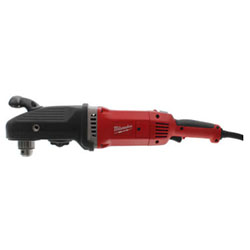
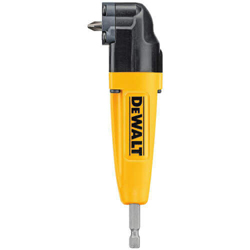
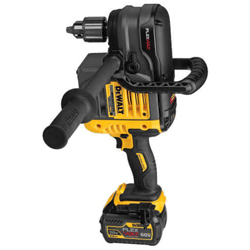
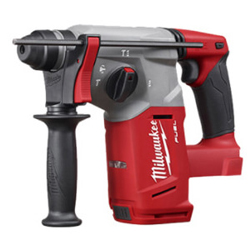

Subcategories
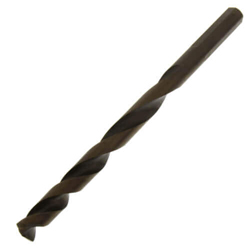
- Drill & Driver Bits: Bits and driver bits sized for wood, metal, and masonry, along with the holders and extensions that let a drill reach into tight framing bays.
- Drill Adapters & Accessories: Chucks, adapters, and other accessories that let a single drill body accept different bit and attachment styles.
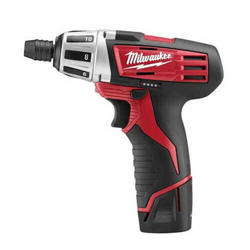
- Electric Screwdrivers: Compact drivers built for driving screws and fasteners quickly, favored for cabinet, trim, and fixture installs where a full-size drill is too bulky.
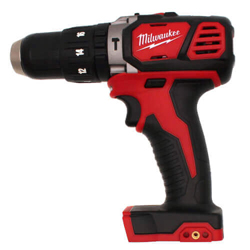
- Hammer Drills: Drills with a hammer action added for boring into concrete, block, and brick, useful for anchor holes and light masonry work.
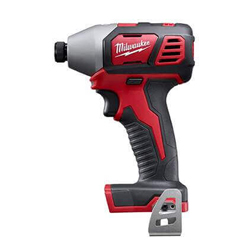
- Impact Drivers: Impact-driven drivers that deliver extra rotational force for driving long fasteners or breaking loose stuck screws without stripping the head.
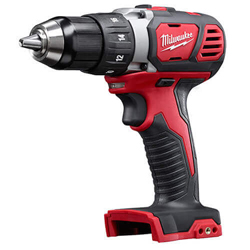
- Power Drills: General-purpose drills sized for everyday drilling and driving across wood, metal, and light-duty masonry.
Buying Guide
Match the drill to the material it will see most often. A crew drilling mostly wood and light metal does fine with a standard drill or driver, while anyone boring into concrete or block regularly needs a hammer drill or rotary hammer rated for that duty.
Battery platform matters for a crew already invested in cordless tools. Staying on one battery system across drills, drivers, and other power tools cuts down on chargers and spare batteries a truck has to carry.
Weight and grip style affect how long a tech can run a drill overhead or in a tight crawlspace. A right angle drill reaches into joist bays a standard drill cannot, while a compact driver is easier to hold one-handed for extended fixture work.
Torque and clutch settings help prevent overdriving screws into drywall or trim. Drivers with adjustable clutches are worth the extra cost for finish work where stripped or overdriven fasteners mean redoing a task.
Bit and chuck compatibility is worth checking before buying a new drill, since a crew that already owns a set of bits and holders may want a drill that accepts the same accessories rather than buying a second set.
Frequently Asked Questions
What is the difference between a hammer drill and a rotary hammer?
A hammer drill adds a light hammering action on top of rotation, suited for occasional anchor holes in block or brick. A rotary hammer delivers a stronger, piston-driven hammer action built for repeated or heavier concrete drilling.
When does a right angle drill make more sense than a standard drill?
A right angle drill is built for tight joist bays and wall cavities where a standard drill body will not fit or swing. It is common on plumbing and electrical rough-in work running pipe or wire through framing.
Do impact drivers replace a standard drill?
Not entirely. Impact drivers excel at driving fasteners and loosening stuck screws, but a standard drill still gives smoother control for precise hole drilling and bit-sensitive tasks like using a hole saw.
How does battery voltage affect drill performance?
Higher voltage generally means more power for tougher materials or longer fasteners, but it also adds weight. Matching voltage to the toughest regular task, rather than buying the highest voltage available, usually gives the best balance of power and comfort.
What bit types should a service truck stock alongside a drill?
A mix of wood and metal bits, a masonry bit set, and a few driver bit tips covering common screw heads covers most calls. Stud and joist drills also pair well with long auger-style bits for running lines through framing.
Resources
Subcategories
- Drill & Driver Bits: Bits and driver bits sized for wood, metal, and masonry, along with the holders and extensions that let a drill reach into tight framing bays.
- Drill Adapters & Accessories: Chucks, adapters, and other accessories that let a single drill body accept different bit and attachment styles.
- Electric Screwdrivers: Compact drivers built for driving screws and fasteners quickly, favored for cabinet, trim, and fixture installs where a full-size drill is too bulky.
- Hammer Drills: Drills with a hammer action added for boring into concrete, block, and brick, useful for anchor holes and light masonry work.
- Impact Drivers: Impact-driven drivers that deliver extra rotational force for driving long fasteners or breaking loose stuck screws without stripping the head.
- Power Drills: General-purpose drills sized for everyday drilling and driving across wood, metal, and light-duty masonry.
Buying Guide
Match the drill to the material it will see most often. A crew drilling mostly wood and light metal does fine with a standard drill or driver, while anyone boring into concrete or block regularly needs a hammer drill or rotary hammer rated for that duty.
Battery platform matters for a crew already invested in cordless tools. Staying on one battery system across drills, drivers, and other power tools cuts down on chargers and spare batteries a truck has to carry.
Weight and grip style affect how long a tech can run a drill overhead or in a tight crawlspace. A right angle drill reaches into joist bays a standard drill cannot, while a compact driver is easier to hold one-handed for extended fixture work.
Torque and clutch settings help prevent overdriving screws into drywall or trim. Drivers with adjustable clutches are worth the extra cost for finish work where stripped or overdriven fasteners mean redoing a task.
Bit and chuck compatibility is worth checking before buying a new drill, since a crew that already owns a set of bits and holders may want a drill that accepts the same accessories rather than buying a second set.
Frequently Asked Questions
What is the difference between a hammer drill and a rotary hammer?
A hammer drill adds a light hammering action on top of rotation, suited for occasional anchor holes in block or brick. A rotary hammer delivers a stronger, piston-driven hammer action built for repeated or heavier concrete drilling.
When does a right angle drill make more sense than a standard drill?
A right angle drill is built for tight joist bays and wall cavities where a standard drill body will not fit or swing. It is common on plumbing and electrical rough-in work running pipe or wire through framing.
Do impact drivers replace a standard drill?
Not entirely. Impact drivers excel at driving fasteners and loosening stuck screws, but a standard drill still gives smoother control for precise hole drilling and bit-sensitive tasks like using a hole saw.
How does battery voltage affect drill performance?
Higher voltage generally means more power for tougher materials or longer fasteners, but it also adds weight. Matching voltage to the toughest regular task, rather than buying the highest voltage available, usually gives the best balance of power and comfort.
What bit types should a service truck stock alongside a drill?
A mix of wood and metal bits, a masonry bit set, and a few driver bit tips covering common screw heads covers most calls. Stud and joist drills also pair well with long auger-style bits for running lines through framing.