




Hammer Drills


 --%3E %3Csvg version='1.1' id='Fill' xmlns='http://www.w3.org/2000/svg' xmlns:xlink='http://www.w3.org/1999/xlink' x='0px' y='0px' viewBox='0 0 100 100' enable-background='new 0 0 100 100' xml:space='preserve'%3E %3Cpath fill='%23F15C02' d='M79.44,0.95H20.56C9.78,0.95,0.95,9.78,0.95,20.56v58.87c0,10.79,8.82,19.61,19.61,19.61h58.87 c10.79,0,19.61-8.83,19.61-19.61V20.56C99.05,9.78,90.22,0.95,79.44,0.95z M65.38,58.24l9.38,29.58L49.69,69.78L24.5,87.82 l9.34-29.6L8.8,39.6l30.73-0.17c0,0,6.98-19.61,10-28.93c0.54,1.36,9.88,29.1,9.88,29.1H91.2L65.38,58.24z'/%3E %3C/svg%3E)


 --%3E %3Csvg version='1.1' id='No-RB' xmlns='http://www.w3.org/2000/svg' xmlns:xlink='http://www.w3.org/1999/xlink' x='0px' y='0px' viewBox='0 0 100 100' enable-background='new 0 0 100 100' xml:space='preserve'%3E %3Cpath fill='%23CECECE' d='M79.44,0.95H20.56C9.78,0.95,0.95,9.78,0.95,20.56v58.87c0,10.79,8.82,19.61,19.61,19.61h58.87 c10.79,0,19.61-8.83,19.61-19.61V20.56C99.05,9.78,90.22,0.95,79.44,0.95z M65.38,58.24l9.38,29.58L49.69,69.78L24.5,87.82 l9.34-29.6L8.8,39.6l30.73-0.17c0,0,6.98-19.61,10-28.93c0.54,1.36,9.88,29.1,9.88,29.1H91.2L65.38,58.24z'/%3E %3C/svg%3E)


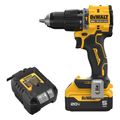


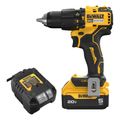


Hammer Drills are power tools that combine rotary drilling with a rapid hammering action, delivering repeated blows along the bit's axis to break through brick, block, and concrete while boring a hole. Chuck size is one of the first specs worth checking, since hammer drills come with either a 3/8 inch or 1/2 inch chuck depending on the model and the bit shank sizes a job calls for. Smaller chucks handle lighter drilling and driving tasks, while larger 1/2 inch chucks accept bigger masonry bits for heavier anchor and fastener work. Corded and cordless versions cover different needs on a jobsite: corded models deliver steady power for long stretches of drilling, while cordless models trade some runtime for mobility on a site without a cord to manage. Electricians, plumbers, and HVAC installers reach for a hammer drill any time a job calls for setting anchors, running conduit through masonry, or mounting equipment to concrete or block walls.
Subcategories
- Corded Hammer Drills: Corded hammer drills plug into standard power and deliver continuous output without worrying about battery runtime, a fit for long anchor-setting sessions or repetitive drilling into block and concrete. Models like the Bosch HD18-2 use a heavy-duty 1/2 inch three-jaw chuck built for high clamping force so bits don't slip during hammering. Contractors working from a fixed location, like a mechanical room or a basement buildout, often prefer a corded model since power output stays consistent no matter how long the tool runs. The tradeoff is a cord that limits mobility on tight or elevated work areas.
- Cordless Hammer Drills: Cordless hammer drills run on battery packs, trading some raw power for the freedom to move across a site without dragging a cord. The Bosch HDH181BL uses a 1/2 inch metal auto-lock chuck for quick bit changes between drilling and driving tasks. Plumbers and electricians working across multiple rooms or floors on a single job lean on cordless models to avoid running extension cords through a house or building. Battery capacity determines runtime, so techs running a cordless hammer drill all day typically carry a spare pack.
- Compact Hammer Drills: Compact hammer drills use a smaller 3/8 inch chuck and a lighter body, built for detail work and tight spaces rather than heavy masonry drilling. The Bosch PS130N runs on a 12-volt platform with a three-jaw 3/8 inch keyless chuck for fast bit changes. Techs working in cabinets, crawlspaces, or panel boxes reach for a compact hammer drill when a full-size tool won't fit the space. The smaller chuck limits bit size compared to full-size 1/2 inch models.
- Rotary Hammers (SDS-Plus): Rotary hammers step up from standard hammer drills with an SDS-plus chuck and a piston-driven hammering mechanism built for heavier concrete and masonry work. The Milwaukee M18 5/8 inch SDS Plus Rotary Hammer delivers 0 to 1,300 RPM and 0 to 7,000 BPM for drilling holes up to 5/8 inch in concrete. Crews setting large anchors, drilling repeated holes in poured concrete, or running conduit through foundation walls turn to rotary hammers over standard hammer drills for the added impact energy. Bits lock into the SDS-plus chuck without a keyed chuck, which speeds up bit changes on repetitive jobs.
Buying Guide
Chuck size is the first thing to check when narrowing down a hammer drill, since it determines which bit shanks a tool accepts. A 3/8 inch chuck works fine for smaller masonry bits and general drilling and driving, while a 1/2 inch chuck handles larger bits for bigger anchors and heavier fastening work. Techs working in tight spaces like cabinets or panel boxes often prefer the smaller, lighter body that comes with a 3/8 inch chuck model.
Power source matters just as much. Corded hammer drills deliver steady output for long stretches without worrying about battery life, a fit for fixed work locations like mechanical rooms. Cordless models trade some runtime for mobility, letting a tech move between rooms or floors on a job without managing a cord. Battery capacity and charge time become part of the decision for any crew relying on cordless Hammer Drills throughout a full shift.
For heavier concrete work, a rotary hammer with an SDS-plus chuck outperforms a standard hammer drill, since the piston-driven mechanism delivers more impact energy per blow. Rotary hammers also switch to hammer-only mode for chiseling or demolition tasks that a standard hammer drill can't handle. Matching BPM and RPM specs to the task at hand, whether that's setting a few anchors or drilling repeated holes through poured concrete, helps narrow down which model fits a given job before making a final decision.
Frequently Asked Questions
What's the difference between a hammer drill and a rotary hammer?
A hammer drill uses a standard chuck and a lighter hammering action suited to drilling smaller holes in brick, block, and light concrete, while a rotary hammer uses an SDS-plus chuck and a piston-driven mechanism that delivers more impact energy for heavier concrete work. The Milwaukee M18 5/8 inch SDS Plus Rotary Hammer, for example, delivers up to 7,000 BPM for larger holes. Choosing between them comes down to how much material needs to be removed and how large the holes need to be.
What chuck size should a hammer drill have?
Chuck size depends on the bit shanks a job requires, with 3/8 inch chucks handling smaller bits and 1/2 inch chucks accepting larger masonry bits for bigger anchors. The Bosch HDH181BL uses a 1/2 inch metal auto-lock chuck built for quick bit changes on larger drilling jobs. Techs working mostly with smaller fasteners often find a 3/8 inch chuck lighter and easier to maneuver.
Are cordless hammer drills powerful enough for concrete work?
Cordless hammer drills handle plenty of drilling and driving tasks, but heavier concrete work with larger anchors often calls for a corded model or a dedicated rotary hammer instead. Battery capacity affects how long a cordless model can run before needing a recharge. For repeated drilling into poured concrete, a rotary hammer with an SDS-plus chuck typically outperforms a standard cordless hammer drill.
Can a hammer drill be used without the hammer function?
Most hammer drills include a switch to turn off the hammering action, letting the tool work as a standard drill for wood, metal, or general drilling and driving tasks. Switching off the hammer function also reduces wear on bits not rated for masonry work. Keeping both modes on one tool means a single hammer drill can cover more tasks on a job without swapping tools.
What BPM rating is good for a hammer drill or rotary hammer?
BPM, or blows per minute, measures how fast a tool delivers hammering action, and higher BPM generally means faster drilling through masonry and concrete. The Milwaukee M18 5/8 inch SDS Plus Rotary Hammer delivers up to 7,000 BPM alongside up to 1,300 RPM. Matching BPM to the task, like setting a few anchors versus drilling repeated holes through poured concrete, helps determine which model fits the job best.
